







The Golden Retriever
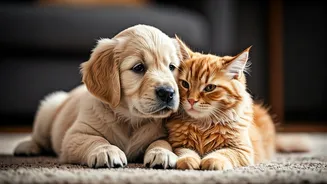
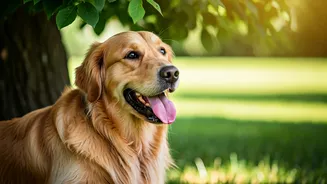
Often hailed as nature's diplomats, Golden Retrievers possess an innate desire to appease and a remarkable absence of aggression. Their amiable disposition
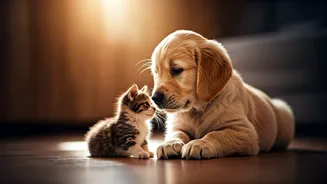
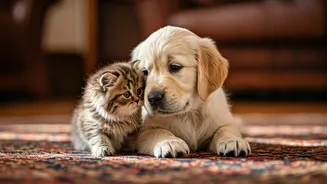
means they rarely perceive a cat as prey. Instead, a Golden views felines as potential companions, approaching them with immense patience. Should a cat exhibit a more spirited or defensive stance, a Golden is inclined to disengage rather than escalate conflict, making them ideal for cat-centric environments.
Labrador Retriever's Adaptability
Universally recognized for their remarkable adaptability, Labrador Retrievers are exceptionally amenable to training, a key factor in successful multi-pet households. By establishing clear boundaries from the outset and reinforcing calm behaviour around cats, Labs quickly grasp expectations. Their playful yet sensitive nature allows them to readily adjust their energy levels, harmonizing with the quieter inclinations of their feline housemates.
The Gentle Basset Hound
For households where a cat prefers a tranquil companion that moves at a leisurely pace, the Basset Hound is an excellent choice. Though classified as hounds, their primary drive stems from scent rather than sight, meaning they'd rather investigate a fascinating aroma for an extended period than pursue a cat. Bassets are famously easygoing, bordering on lethargic, a low-energy lifestyle that perfectly complements a cat's penchant for serene naps in sunny spots.
Beagle's Social Nature
Beagles are inherently pack-oriented creatures who generally welcome more members into their social circle. They tend to view cats as integral parts of the family unit. While Beagles can be vocally expressive, often with characteristic howls, they are seldom aggressive. Any perceived 'play-chasing' typically stems from a desire for interaction rather than a predatory instinct, making them generally good-natured companions for cats.
Cavalier King Charles Spaniel Charm
When seeking a canine companion that won't overwhelm a cat with sheer size or excessive energy, the Cavalier King Charles Spaniel stands out. Meticulously bred for companionship, these small spaniels exhibit profound gentleness and sensitivity. Their diminutive stature, often comparable to a larger house cat, significantly reduces any potential intimidation factor. Cavaliers are typically content to share living spaces, making them a non-threatening and delightful addition to a cat's domain.
Ensuring a Peaceful Introduction
Even the most placid dog requires a thoughtful introduction to a feline friend to foster genuine companionship. To cultivate those coveted 'BFF' moments, implement a scent swap by exchanging bedding before they meet, allowing each animal to acclimate to the other's aroma. Utilize baby gates to facilitate visual contact from a safe distance, minimizing stress for the cat. Crucially, associate each other's presence with positive reinforcement by offering high-value treats during initial encounters. With the right breed choice and a patient approach, you can cultivate a truly harmonious multi-pet household.