




Gold's Resilience Examined
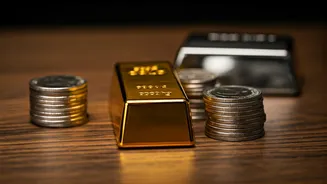
Gold prices exhibited resilience, showing little change on Friday. This stability occurred despite a stronger US dollar, which typically puts downward
pressure on gold. Despite this challenge, the precious metal was heading for a weekly gain, signaling underlying strength. Investors often view gold as a safe-haven asset, and its ability to maintain value during periods of currency strength highlights its enduring appeal. The market's reaction suggests a balanced interplay of factors, where the dollar's influence is offset by other considerations, such as global economic uncertainties and investor sentiment. This allows gold to remain relatively unaffected by short-term currency fluctuations.
Silver's Price Surge
Silver experienced a significant surge, reaching record highs during the trading week. This upward movement reflects strong investor interest and possibly increased industrial demand for the metal. Silver's performance often correlates with gold, but it can sometimes exhibit more volatile price swings. The recent price increase indicates a bullish sentiment surrounding silver, driven by factors such as its use in electronics and solar panels, and its potential as an investment asset. The record highs suggest that investors are actively seeking exposure to silver, and they are confident in its future prospects. This trend highlights the importance of keeping a close eye on precious metal markets and investor behavior, as these factors determine price movements and market dynamics.
Platinum's Positive Trajectory
Platinum also showed positive momentum, touching a multi-year high, indicating robust demand and positive market sentiment. Platinum's use in catalytic converters for automobiles, among other industrial applications, influences its price performance. The price increase suggests that the demand for platinum in industrial applications is strong, potentially due to increasing production in the automotive sector or a surge in investments in the metal itself. This positive development reinforces the importance of the industrial use of precious metals, and it underscores the critical need for constant monitoring to ensure that market dynamics are in line with industrial realities. Investors should carefully analyze market trends and industrial demands to determine their next moves.
Palladium's Slight Dip
Palladium, after an earlier surge, experienced a slight dip in its price. Palladium is another key metal for catalytic converters, and its price swings may be affected by the automotive industry's production levels. The dip is a short-term correction, following an initial rally, indicating that market players are now reassessing the metal's valuation. Such fluctuations are a normal part of the trading landscape, driven by various factors such as supply and demand dynamics and investor attitudes. Despite the dip, palladium retains its value as an important metal and it remains an asset that needs to be assessed with a close eye.
Indian & Chinese Demand
Demand for precious metals in India and China saw markdowns. India and China are among the largest consumers of gold and silver globally, and their domestic demand plays a pivotal role in influencing global price movements. Markdowns may reflect changing consumer preferences, seasonal variations, or the impacts of local economic factors. The market’s response to these situations indicates that there is a delicate interplay of factors that impact the trade, which can result in variations in demand in the Indian and Chinese markets. Those who invest in gold and silver, both domestically and globally, must pay attention to how demand fluctuates in these key markets.