



AI Chip Powerhouse
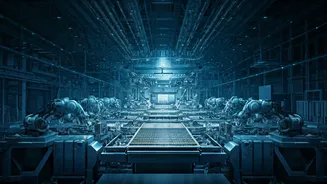
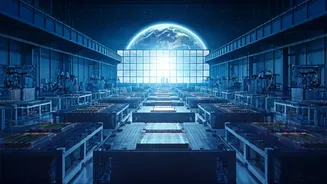
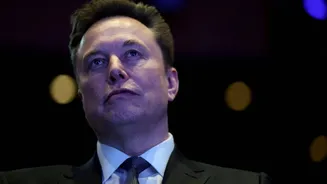
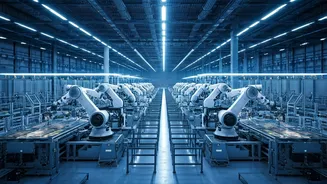
Elon Musk is spearheading the development of 'Tera-fab,' an enormous chip fabrication facility slated for construction near Tesla's Gigafactory in Austin,
Texas. This strategic venture, a joint undertaking by Tesla and SpaceX, is intended to directly produce the sophisticated semiconductors necessary to drive the advanced AI, robotics, autonomous driving, and even orbital data center projects that are central to Musk's technological empire. The facility is designed to be a comprehensive manufacturing hub, equipped with all the cutting-edge machinery required for both the production and rigorous testing of a wide array of chip types. Musk's stated goal for Tera-fab is to eventually achieve an annual computing power output equivalent to one terawatt, a significant increase as his investments in AI and robotics continue to accelerate. This initiative underscores a growing industry-wide concern regarding chip availability, a bottleneck that could potentially impede the rapid expansion of compute-intensive AI applications.
Addressing Supply Gaps
The decision to construct 'Tera-fab' stems directly from a perceived inadequacy in the current semiconductor industry's capacity to meet the escalating demand, particularly from Musk's burgeoning AI and robotics initiatives at Tesla. Musk himself has articulated that the pace of chip production from external partners simply isn't sufficient for his ambitious timelines and technological advancements. He emphasized that without building Tera-fab, the necessary chips would not be available, thus necessitating this significant in-house manufacturing effort. While not all tech companies possess the immense capital and specialized expertise required for semiconductor fabrication, Musk's commitment signifies a determined effort to overcome these hurdles. This move could potentially reshape supply chain dynamics for AI hardware, as major players grapple with similar shortages and the race to secure adequate computing power.
Advanced Chip Production
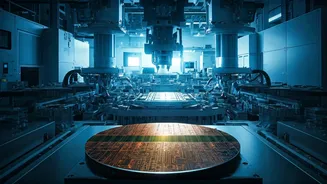
The 'Tera-fab' facility is engineered to produce cutting-edge 2-nanometre chips, representing a significant advancement in semiconductor technology. Its output is projected to support between 100 to 200 gigawatts of computing power for terrestrial applications annually, with an ambitious target of a terawatt of power for space-based operations. The factory will focus on manufacturing two distinct types of chips. The first category will be optimized for edge computing and inference, making them ideal for deployment in applications like Tesla's robotaxis and the Optimus humanoid robots. The second type will comprise high-power chips specifically designed for use in orbital data centers, a key component of SpaceX's and xAI's future infrastructure. According to Musk, xAI will be the primary recipient of the majority of the chips produced by Tera-fab, highlighting its central role in the AI firm's operations.
Orbital Data Centers
Beyond terrestrial AI applications, 'Tera-fab' plays a pivotal role in Musk's visionary plan for establishing orbital data centers. This ambitious project is set to commence with the launch of a compact 'mini' AI data center satellite, capable of delivering 100 kilowatts of computing power. This initial satellite is envisioned as the precursor to an expansive network of orbital data centers, each potentially scalable to megawatt capacities. Musk's far-reaching aspirations also include launching satellites from the lunar surface, contributing to a broader vision of widespread technological abundance. To this end, Musk has petitioned the US Federal Communications Commission (FCC) for authorization to deploy a staggering one million data center satellites into Earth's orbit. This proposal has encountered opposition from Amazon's satellite division, indicating the competitive landscape of space-based data infrastructure.