







Echoes of the Cold War
Imagine a colossal underground structure, built in 1959 for a staggering $47 million (equivalent to $350 million today), designed to house and launch intercontinental
ballistic missiles capable of reaching over 6,000 miles. This was the reality for the Titan I missile silos, one of which, located in Colorado, has been acquired by entrepreneur Nik Halik. This particular silo, a marvel of engineering costing over $10 million, was once capable of launching three 4.5-megaton nuclear missiles, representing a critical component of America's defense strategy during the tense Cold War era. The facility, a sprawling 200,000-square-foot complex, descended 165 feet underground and comprised seventeen distinct chambers interconnected by 4,500 feet of tunnels, including specialized launcher rooms and control domes. Its power source relied on four large diesel engines, capable of sustaining operation independently of the electrical grid for weeks, with single diesel tanks holding an immense 50,000 gallons of fuel. The operational lifespan of these Titan I missiles and their silos was remarkably brief, lasting only from April 1962 to January 1965, before rapid technological advancements rendered them obsolete, paving the way for newer missile systems like the Titan II and Minuteman I.
A Visionary Transformation
Entrepreneur Nik Halik, a self-proclaimed 'thrillionaire' with a penchant for extreme ventures, acquired this historic Cold War artifact in 2021 for more than $10 million. Driven by his passion for 'value-facturing'—adding value to unique structures—Halik embarked on an ambitious $30 million renovation project to convert the 200,000-square-foot underground facility into a state-of-the-art data center to power artificial intelligence. His journey is meticulously documented on his YouTube channel, 'Nuclear Bunker Living,' where he shares the raw realities of exploring and renovating the complex, which he purchased five years ago. The renovation process itself is fraught with peril; the silo contains remnants of cyanide, lead paint, mercury, and asbestos, alongside rusted metal and loose wires. Halik has personally navigated these dangers, even crawling through a pipe with a live wire, underscoring the unforgiving nature of the environment. Despite these risks, his vision is clear: to harness the unique advantages of the silo for modern technological needs, transforming a symbol of past conflict into a beacon for future innovation.
AI's Subterranean Haven
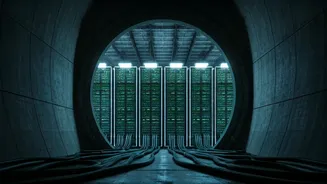
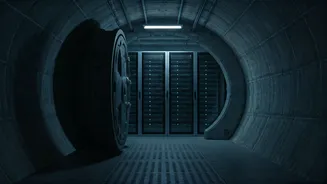
The strategic underground location and inherent stability of the decommissioned missile silo make it an ideal candidate for a high-performance AI data center. Artificial intelligence requires immense computational power and a secure, reliable environment, qualities this subterranean facility inherently possesses. A significant advantage is the bunker's consistent, cool temperature of 52 degrees Fahrenheit, even during summer months. This natural cooling capability is crucial for data centers, where server overheating can consume a substantial portion of energy—potentially over 30% of a facility's electricity. By leveraging this natural attribute, Halik aims to drastically reduce cooling costs and energy expenditure. Furthermore, his ambitious plan includes powering the data center entirely in-house, envisioning the replacement of the original diesel infrastructure with small nuclear reactors to eliminate the logistical challenges of refueling. This self-sufficient power solution, combined with the secure, climate-controlled environment, has already attracted the attention of various tech and AI companies, signaling a growing trend towards utilizing underground spaces for critical data infrastructure, as exemplified by other companies like Iron Mountain with their vast underground data storage facilities.
Beyond Data: A Multifaceted Future
While the primary focus of the transformed silo is to serve as a cutting-edge data center for AI, Nik Halik harbors broader aspirations for its extensive subterranean spaces. Recognizing the historical significance of the site, he intends to dedicate a portion of the facility to a museum. This area will preserve the remnants of the silo's past, including artifacts found in the control room and other chambers, such as pieces of the original launch desks and recently discovered documents containing launch codes and operational protocols. These relics offer a tangible connection to the high-stakes decisions made within these walls during the Cold War. Looking towards a more unconventional future, Halik also envisions other chambers repurposed for entertainment. One proposal includes transforming a space into a vibrant nightclub, complete with a DJ, bar, lounges, and even performers, drawing inspiration from similar concepts at other decommissioned missile sites. This multifaceted approach highlights a desire to honor the past while embracing a bold and creative future, turning a site of potential destruction into a hub for innovation, history, and unique cultural experiences.