

A Seasonal Celebration
The India-AI Impact Summit 2026 saw Prime Minister Narendra Modi host an exceptional dinner at Bharat Mandapam for international dignitaries and tech leaders.
This gastronomic event, masterfully curated by the ITC Group, was designed to harmonize India's deep-rooted agricultural traditions with its ambitious trajectory in artificial intelligence. The menu embraced the essence of 'Shishir Ritu,' the Indian season signaling the transition from late winter to early spring. It was presented under the guiding principle of "Vikas bhi, Virasat bhi," meaning Development and Heritage, underscoring a commitment to nourishing and revitalizing through the use of indigenous millets and produce recognized for their geographical significance. Attendees, including notable figures like French President Emmanuel Macron and Brazilian President Luiz Inácio Lula da Silva, experienced a culinary narrative that celebrated India's past while looking towards its future.
Old Delhi Street Charms
The culinary journey commenced with an appetizer that artfully captured the vibrant spirit of Old Delhi's street food, presented with a modern flair. This initial offering, named 'Varnila,' which translates to Vivid, was conceived to deliver an immediate and striking burst of color and multifaceted textures. The star of this starter was a beautifully crafted chaat, featuring delicately fried baby spinach crisps paired with ethereal yogurt spheres. Adding a complex layer of flavor, it incorporated a masterful balance of sweet and tangy tamarind-date chutney alongside a refreshing cilantro relish. The dish was further elevated with a dusting of authentic Old Delhi masala and crowned with a crisp made from multifloral Jowar, or Sorghum millet, offering a delightful crunch. This starter contained approximately 213 kcal per 100 g, setting a tone of sophisticated yet accessible flavors for the meal ahead.
Uttarakhand's Mountain Bounty
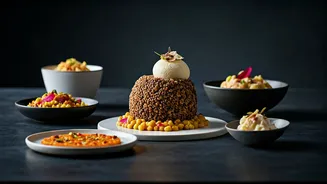
The main course, aptly named 'Sasya,' meaning The Harvest, delved deep into the distinctive "Pahadi" or mountain flavors originating from the Kumaon region of Uttarakhand. Central to this dish was the celebrated 'Rajma Gilawat,' prepared using the esteemed GI-tagged Munsyari Rajma. This particular variety of kidney bean is renowned for its exceptionally creamy consistency and a subtly nutty flavor profile, representing a true delicacy from the hills. Accompanying the rajma was a fragrant pulao, a delightful amalgamation of traditional Pahadi rice and Jhangora, also known as Barnyard Millet, adding an aromatic and wholesome grain component. Completing the ensemble was 'Kumaoni Aloo Gutke,' which consists of tender potato chunks seasoned and cooked with Jakhya, a characteristic Himalayan spice, served alongside a smooth, tangy sauce made from tomatoes and pomegranate, known as tomato-anari. This main course portion was calorically estimated at 331 kcal per 100 g, offering a hearty and flavorful experience.
Artisanal Breads Selection
The bread basket presented at the dinner was a curated showcase of India's diverse and rich baking heritage, drawing from distinct regional traditions. From Uttar Pradesh, guests were served 'Taftaan,' a wonderfully leavened flatbread that is delicately infused with saffron, resulting in a light and pleasingly flaky texture. Representing the culinary artistry of the Kashmir Valley, the selection included 'Kashmiri Girda.' This traditional round bread is characterized by its unique dimpled surface, and it was baked fresh to embody the authentic spirit of Kashmiri baking. Together, these artisanal breads provided a complementary element to the main courses, offering a taste of different Indian baking styles and traditions that have been passed down through generations.
Fusion Sweet Finale
Concluding the lavish meal, the dessert course, titled 'Nisarga' or Nature's Creation, masterfully blended classic Indian sweet preparations with contemporary global pastry techniques. The highlight was a novel 'Rasmalai Tres Leches.' This creation featured a base of creamy chena cake sponge, meticulously soaked in sweetened milk, offering a delightful fusion of textures and flavors. Providing a contrasting textural element, it was served atop a crunchy Bajra, or Pearl Millet, streusel, complemented by a vibrant winter berry preserve. Guests had a choice of traditional beverages, including fragrant Kashmiri Kahwa, robust South Indian Filter Coffee, and delicate Darjeeling Tea. The meal culminated with an Indian Rose and Mishri Gulkand Chocolate Leaf, a sophisticated take on the traditional paan, providing a sweet and aromatic end to the evening.
Strategic Millet Message
A key strategic element woven into the dinner's menu was the prominent inclusion of various millets, such as Jowar (Sorghum), Jhangora (Barnyard Millet), and Bajra (Pearl Millet). This deliberate choice strongly supported India's ongoing "Millet Mission," an initiative aimed at promoting these climate-resilient and nutritious grains. By featuring millets so prominently in a dinner attended by global leaders and policymakers, India effectively communicated its commitment to sustainable agriculture and food security. It served as a powerful demonstration that the nation's vision for an AI-driven future is intrinsically linked with its dedication to eco-friendly farming practices and the revival of traditional, hardy crops, thereby aligning technological advancement with environmental stewardship and nutritional well-being.