

An Integrated Chip Ecosystem
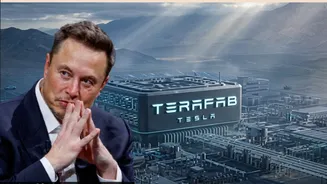
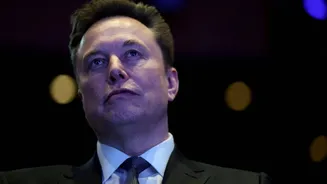
Elon Musk has formally introduced the Terafab, a monumental chip manufacturing initiative that unites Tesla and SpaceX with the explicit purpose of producing
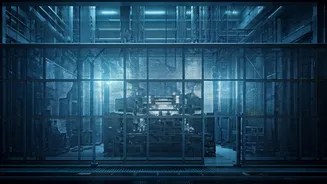
their own semiconductors. This venture is not merely about fabricating chips; it's about creating a fully integrated facility that handles every stage of the process, from initial design and testing to full-scale production and refinement. Musk highlighted that, to his knowledge, no other facility globally offers such a comprehensive, all-in-one solution for logic and memory chip creation, including packaging, testing, and iterative mask improvements. This integrated approach aims to streamline development cycles and accelerate innovation by keeping all critical processes under one roof, a significant departure from the industry's typical separation of design and manufacturing.
Dual Chip Architectures
The Terafab project is set to produce two distinct types of chips, each tailored for specific, high-demand applications. The first category is primarily destined for Tesla's burgeoning fleet of vehicles and its advanced humanoid robot, Optimus. Musk emphasized that the demand for chips for Optimus is anticipated to be substantially higher, potentially ranging from 10 to 100 times that of automotive chips, due to the projected scale of robot deployment. The second chip type, designated 'D3,' is engineered with the rigors of space environments in mind. These chips are crucial for powering the solar-powered AI satellites that Musk envisions, especially for data centers intended for lower Earth orbit, capitalizing on the consistent solar energy availability in space.
Space-Based AI Compute
A cornerstone of Musk's vision for Terafab involves establishing a robust network of AI computing power in space. He unveiled a concept for compact AI satellites, each equipped with solar panels designed to provide a substantial 100 KW of power. The long-term ambition is to scale these satellites to megawatt-level power capacities. This strategy is driven by the desire to decentralize AI computation, addressing the potential public reluctance to host large AI data centers in terrestrial locations. Musk also posited that as the cost of launching payloads into orbit continues to decrease, placing AI infrastructure in space will become economically advantageous, particularly given the perpetual sunlight available for power generation, making it a "no-brainer" proposition.
Petawatt Ambitions and Future Visions
Looking further into the future, Musk's ambitious plans for Terafab extend beyond Earth's atmosphere to potential industrial infrastructure on the Moon. This lunar base, he theorized, could unlock the capacity to generate petawatts of AI compute power, a scale a thousand times greater than a terawatt. This expansive vision is part of a broader, almost utopian outlook on technological advancement, which Musk himself acknowledged has a somewhat "outlandish" quality, drawing parallels to satirical science fiction. His ultimate aim paints a picture of a post-scarcity economy where advanced technology and abundant resources could lead to a society where fundamental needs are met freely, even extending to concepts like free space travel, such as trips to Saturn.