







Challenging Coffee Norms
The prevailing perception of coffee often paints it as a purely functional, intensely bitter beverage, a necessary fuel for demanding schedules. This traditional
view associates the true essence of coffee with a sharp, almost punishing taste that one must learn to tolerate, with additions like milk and sugar seen as mere concessions to palatability. However, this perspective overlooks the vast diversity of coffee's potential flavour profiles. The idea that black coffee, in its purest form, must be bitter is a limiting one, reducing a complex beverage to a single, often unpleasant, characteristic. This viewpoint fails to acknowledge that what is perceived as 'real coffee' is merely one interpretation, neglecting the intricate journey from bean to cup and the many nuances that contribute to its final taste. True appreciation of coffee requires a more deliberate engagement, a willingness to slow down and discern the subtle interplay of acidity, sweetness, and body, rather than simply enduring a harsh flavour.
The Speciality Coffee Revelation
Speciality coffee fundamentally redefines the beverage by focusing on meticulous cultivation and processing, aiming for a score of 80 points or higher from certified tasters. This designation signifies exceptional quality, with an emphasis on traceability, ensuring that every bean's origin and journey are known, from the specific farm and its unique terroir to the hands that nurtured its growth. Unlike mass-produced commercial coffee, which often relies on blending to achieve a uniform taste, speciality coffee celebrates individuality. Each cup offers a unique narrative, reflecting the diverse geographical factors such as altitude and climate, and the human effort involved in its cultivation. This approach transforms a simple drink into an educational experience, a delicious lesson in geography and agricultural excellence, highlighting the inherent differences and complexities that arise from dedicated farming practices.
A Sensory Journey Begins
Within Delhi's vibrant coffee landscape, establishments like Libertario offer an immersive introduction to speciality coffee. At Libertario, the 'coffee Omakase' experience guides patrons through a curated tasting, showcasing various brewing methods and distinct flavour profiles. This thoughtfully designed journey begins with engaging the sense of smell, inviting participants to inhale the aroma of the coffee grounds before even taking a sip. The initial tasting, exemplified by profiles like 'Paz,' often presents familiar notes such as caramel and milk chocolate, offering a smooth and comforting introduction. Subsequent explorations, such as 'Libre,' made with Indian beans, reveal bolder characteristics with hints of cherry and brown sugar, catering to those who prefer a more robust morning brew. The experience culminates in the experimental realm, introducing rare varietals like Geisha, where complex notes of jasmine, black tea, honey, and lavender emerge, demonstrating the extraordinary depth and sophistication achievable in a cup of coffee.
The Art of Slow Brewing
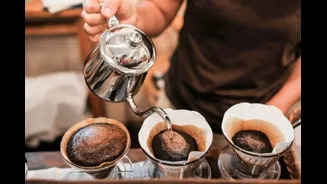
The process of preparing speciality coffee is characterized by a deliberate and almost ceremonial approach, emphasizing patience and precision. Baristas engage in a meticulous ritual, slowly pouring hot water over freshly ground beans to allow for an initial 'bloom' before gently coaxing out the nuanced flavours. This unhurried method encourages consumers to slow down and appreciate the evolving taste as the coffee cools. Rather than merely gulping down a drink, the experience invites a mindful engagement, where subtle notes unfurl like a quiet conversation. When coffee is treated with this level of care, the perception of bitterness transforms; it ceases to be the dominant, harsh element and instead integrates harmoniously with other flavours. Gentle acidity becomes bright rather than sour, the body feels rounded and comforting, and a natural sweetness may emerge. This meticulous preparation doesn't eliminate bitterness but rather reveals the inherent complexity and balanced profile of the coffee bean.
Redefining Coffee Accessibility
Pour Over Coffee Roasters in Delhi adopts a modern, approachable philosophy towards speciality coffee, aiming to make exceptional brews accessible without the pretension often associated with the term. Their focus is on letting the quality of the coffee speak for itself, offering a diverse range of beans, from South and Central American Typica and Bourbon to unique Indian and African harvests, curated to suit various palates. The atmosphere at Pour Over is intentionally informal and welcoming, creating a space where customers can feel at ease exploring different coffee styles, even their traditional milky and chocolatey favourites. This inclusive environment extends to their engagement with the coffee-making process, inviting customers to participate in 'cupping sessions.' These sessions, designed to evaluate coffee's aroma, flavour, acidity, body, and aftertaste, involve tasting coarsely ground coffee brewed in hot water, allowing for a direct comparison of different beans and a deeper understanding of personal taste preferences, questioning the notion that a bitter Americano is inherently superior to a sweeter mocha.
Beyond the Bitter Paradigm
The notion that coffee must inherently be bitter to be considered good is a misconception, often stemming from preparation methods rather than the bean's intrinsic qualities. At Pour Over, experts explain that bitterness typically arises from over-extraction, where excessive hot water strips too much from the grounds, leading to a harsh, astringent taste. Similarly, poorly roasted beans, darkened to mask defects, or brewing with water that is too hot, can contribute to an unpleasantly bitter profile. Pour Over, founded by seasoned roasters, emphasizes meticulous attention to detail in every cup to avoid these pitfalls. Their commitment extends to crafting beverages beyond the standard Americano, such as innovative strawberry mochas and raspberry espresso tonics. These creations are treated with the same respect as black coffee, with fruit and chocolate acting as enhancers rather than overpowering agents, ensuring the coffee's character remains central. This approach underscores the idea that coffee is meant to be savoured and experienced, not just endured.