






Cosmic Shortcut Found
Reaching the Moon is notoriously costly, with fuel expenditure being a major culprit. However, a recent scientific breakthrough, detailed in the Astrodynamics
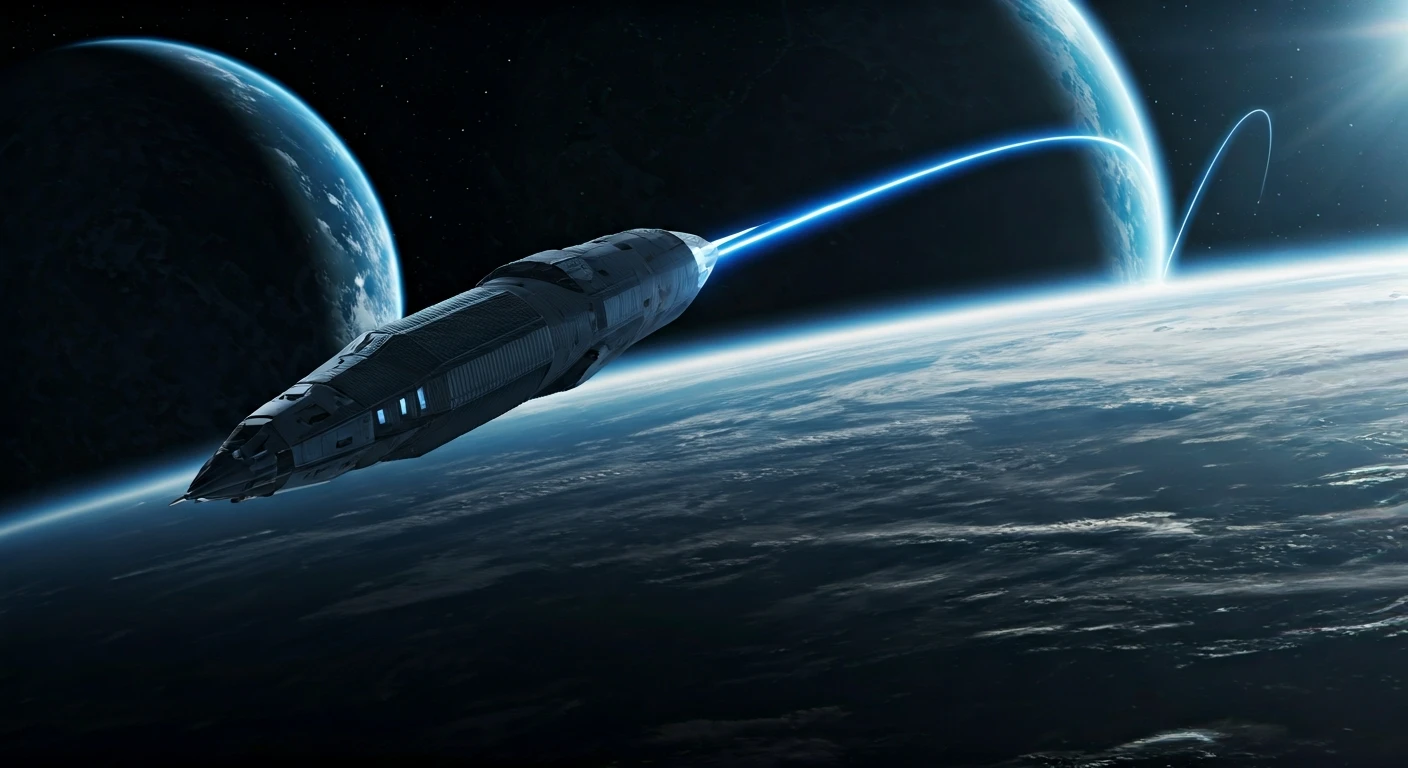
journal, presents an innovative pathway from Earth's orbit to lunar proximity that promises substantial cost reductions. This novel route ingeniously incorporates a temporary stop at the L1 Lagrange point, a stable gravitational equilibrium situated between Earth and the Moon. This strategic maneuver offers a fuel saving of at least 58.80 m/s compared to previously optimized trajectories. While this figure might seem modest, lead researcher Allan Kardec de Almeida Júnior emphasizes that even small velocity changes translate into significant fuel consumption in the vastness of space, making this saving a pivotal advancement for lunar exploration and its economic feasibility.
Computational Power Unleashed
The ingenious discovery of this fuel-efficient route was made possible by a sophisticated mathematical framework known as the Theory of Functional Connections. This theoretical approach dramatically minimizes the computational resources required to model and simulate spacecraft trajectories. By reducing processing demands, the research team was empowered to conduct an unprecedented 30 million route simulations. This far surpasses the 280,000 simulations performed in prior benchmark studies, significantly increasing the probability of identifying more economical paths. The outcome of this extensive computational effort was the identification of a route that, quite unexpectedly, guides the spacecraft to pass near the Moon first. This counterintuitive approach, given the journey's origin from Earth, is effective because it capitalizes on a gravity assist from the Moon, thereby lessening the fuel needed to achieve the desired intermediate orbit.
L1 Lagrange Point Advantage
The strategic inclusion of a 'pit stop' at the L1 Lagrange point offers several compelling advantages for lunar missions. Once a spacecraft arrives at this gravitational nexus, it can maintain its position with minimal energy expenditure by employing a control system, effectively waiting for mission parameters to align for the final approach to lunar orbit. Unlike a direct flight path, this intermediate holding pattern ensures continuous communication with both Earth and the Moon. This uninterrupted connectivity is a substantial operational benefit. Furthermore, the researchers suggest that incorporating the Sun's gravitational influence into their simulations could unlock even greater fuel efficiencies, although this would necessitate precise planning around specific launch dates. The cumulative impact of such fuel savings is profound: enabling larger payloads, lowering overall mission costs, and ultimately facilitating a higher success rate for a greater number of lunar missions.