





The Viral Food Spat
A casual remark comparing the beloved Bengali sweet, rasgulla, to an 'idli dipped in sugar syrup' ignited a passionate online discussion. This seemingly
simple culinary observation quickly transformed into a broader discourse on regional pride, food identity, and the profound emotional connections Indians share with their iconic dishes. The exchange began when a user questioned how to describe Bengali sweets, leading another to dismiss rasgulla as an overrated dessert. However, the conversation took a significant turn when prominent figure Shashi Tharoor intervened, offering a detailed and spirited defense of the South Indian staple, idli, challenging the fundamental inaccuracies of the comparison and highlighting the unique characteristics of both culinary creations. This interaction underscored how deeply ingrained these foods are in India's diverse cultural fabric.
Tharoor's Culinary Defense
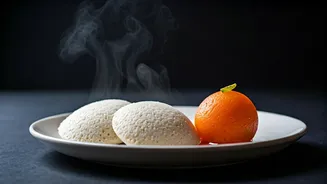
Shashi Tharoor’s response to the rasgulla-idli comparison was far from a simple disagreement; he termed it a 'profound cosmological misunderstanding.' Tharoor meticulously articulated the inherent differences between the two, emphasizing their disparate origins and compositions. He highlighted that rasgulla is crafted from chhena, a delicate curdled milk solid, while idli is born from a meticulously fermented batter of rice and urad dal. Tharoor elaborated on their contrasting textures and preparation methods: rasgulla is a light, syrupy confection, whereas idli is a dense, steamed savory cake. He passionately argued that their 'existential purpose' and structural integrity are poles apart, rejecting the notion that idli could ever be 'drowned in sugar syrup' without compromising its inherent dignity and culinary identity. He lauded idli as a 'masterclass in biotechnology' and a 'savoury monolith of South Indian culinary genius.'
Science of Fermentation
The discussion underscored the sophisticated science behind Indian culinary practices, particularly the art of fermentation, as exemplified by the idli. Experts explain that achieving the perfect idli hinges critically on successful fermentation. This process involves the delicate balance of wild microflora, transforming a batter of rice and lentils into a soft, airy, and digestible food. Food scientists point out that this ancient method predates modern biotechnology, serving as an original tool for food preservation and nutritional enhancement in India's tropical climate. The fermentation process aids in breaking down complex starches and neutralizing anti-nutrients, while simultaneously creating essential B-vitamins. Factors like the rice-to-lentil ratio, grinding texture, ambient temperature, and even human touch play crucial roles in introducing local microflora, making each idli a testament to centuries of perfected culinary wisdom and a unique bio-process.
Food as Identity
Beyond the technicalities of preparation and taste, the debate illuminated how food serves as a powerful symbol of identity, culture, and regional pride. When dishes like rasgulla or idli are trivialized, it can feel like an affront to the collective memory and heritage of a community. Food authors and experts note that regional dishes are often 'cultural shorthand,' deeply tied to specific geographies and time-honored techniques. The idli embodies the patience and tradition of South India, while the rasgulla represents a significant innovation in Bengali confectionery. In India, where migration is common, food often acts as a primary link to one's roots. Therefore, comparisons that dismiss the unique historical and cultural labor embedded in these dishes can inadvertently cause offense, highlighting the profound emotional and cultural significance that food holds for individuals and communities.