






Powering Up Space
Mantis Space, a nascent enterprise based in New Mexico, has officially emerged from its covert development phase, announcing on March 12th the successful
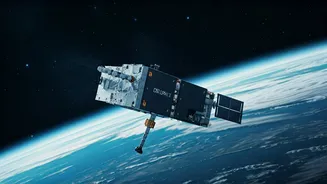
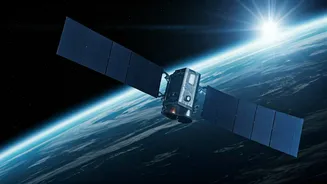
acquisition of $10 million in seed capital. This funding is earmarked for the development of an ambitious constellation of satellites designed to beam solar power directly to existing satellite solar arrays. The company's strategy involves creating advanced products that leverage this new power infrastructure, aiming to significantly enhance current capabilities. CEO Eric Truitt articulated the company's forward-thinking approach, emphasizing the need to redefine what power means both now and in the future for space-based operations. The seed funding round was spearheaded by Rule 1 Ventures and Montauk Capital, entities that also played a pivotal role in nurturing Mantis Space within their venture studio incubator. With this financial infusion, the company's immediate priority is to bolster its team, with plans to expand its 20-person workforce. Furthermore, Mantis Space is set to establish a substantial manufacturing hub spanning 2,000 square meters in Albuquerque, New Mexico, supported by approximately $24 million in grants from the state and the city. An additional office in Silicon Valley is also in the works, intended to attract top-tier talent from major tech firms like Google, Apple, and Meta, bringing extensive experience to the venture.
Addressing a Core Challenge
Throughout his extensive career, Eric Truitt, a veteran of the space industry with prior roles at Terran Orbital and PredaSAR, consistently identified a critical bottleneck: satellite power. A significant challenge for many satellites operating in low-Earth orbit is their intermittent access to solar energy, often losing power for about a third of their orbital path due to Earth's shadow. Current solutions involve designing around this limitation, meticulously planning orbits, or making operational compromises, which Truitt likens to applying a 'Band-Aid' to the problem. Mantis Space's proposed solution is an orbital power constellation, situated in a medium-Earth orbit, designed to actively transmit power to satellites, thereby circumventing the issue of shadow periods. Truitt highlighted the transformative impact of such a power infrastructure, stating that it will enable satellites to accomplish more, gather more data, operate at greater speeds, extend their mission durations, and maintain orbits that are strategically more valuable. Adm. James Winnefeld Jr., a former vice chairman of the Joint Chiefs of Staff and a general partner at Rule 1 Ventures, echoed this sentiment, noting that as the orbital economy matures, the primary constraint is shifting from launch capabilities to operational performance. He sees Mantis Space as addressing a fundamental, yet undeveloped, layer of space infrastructure.
Deployment and Partners
Mantis Space's operational strategy focuses on the development and deployment of power-transmitting payloads and advanced optical systems. Importantly, the company is not involved in manufacturing the satellites themselves. While the specific dimensions of the planned satellites remain undisclosed, they are expected to be substantial in size. However, Truitt assured that these larger satellites will be compatible with a range of existing launch vehicles from prominent providers, including SpaceX, Firefly Aerospace, Rocket Lab, Blue Origin, and Relativity. This compatibility means that Mantis Space's launch plans are not dependent on the development of next-generation super heavy-lift vehicles like Starship. The company, established in 2025, was co-founded by a team of experienced professionals: Hugh Wyman Howard III, formerly an operations director at the National Geospatial-Intelligence Agency; Jeremy Scheerer, who previously served as vice president for defense systems at MapLarge; and Eric Truitt, who brought his extensive background from Terran Orbital and PredaSAR. This collective expertise forms the foundation of Mantis Space's ambitious mission.
Leadership and Expertise
The visionary leadership behind Mantis Space is a testament to its potential for success. CEO Eric Truitt established the company alongside Hugh Wyman Howard III, a former operations director for the National Geospatial-Intelligence Agency, and Jeremy Scheerer, who previously held the position of vice president for defense systems at MapLarge. Howard now serves as the Chairman and Chief Strategy Officer, while Scheerer leads as the Chief Operating Officer. All three co-founders are distinguished U.S. military veterans, bringing a unique perspective to national security and space infrastructure. The technical prowess of the team is further bolstered by key personnel such as John Sandusky, who previously directed space, solar, and laser programs at Sandia National Laboratory, now serving as Mantis Space's Chief Engineer. Greg Brady, instrumental in designing optical systems for Apple's Face ID technology, heads the optical engineering department. Additionally, Quentin Diduck, a former Google engineer specializing in MicroLED technology, leads the company's electrical engineering efforts, ensuring a robust and innovative approach to power transmission technology.