







Preparing for Launch
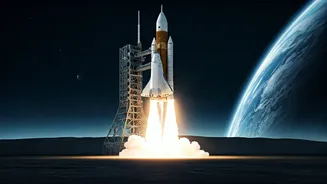
The Artemis II mission, planned by NASA, is eagerly anticipating its launch. Before the crew can embark on their lunar journey, a crucial step must be
undertaken: a wet dress rehearsal. This important event is scheduled for January, serving as a comprehensive simulation of the entire launch procedure. It enables engineers and astronauts to run through every aspect of the mission, from fueling the rocket to simulating the countdown. This exercise ensures that all systems operate seamlessly, allowing them to troubleshoot any potential challenges prior to the actual launch. It's a comprehensive training before the momentous liftoff.
The February Liftoff
Mark your calendars, because the Artemis II mission is scheduled to launch on February 6! This mission signifies a pivotal moment in NASA's ambitious program aimed at returning humans to the Moon, and more importantly, setting the groundwork for crewed missions to Mars. The mission entails sending a crew into lunar orbit, providing a vital test of the Orion spacecraft and the Space Launch System (SLS) rocket. The objective is to gather crucial data and make sure that all the systems are working as they should. The data and insights gained from the mission will contribute towards the safety and effectiveness of forthcoming lunar missions. This planned mission will give essential experience and lay the foundation for future long-duration missions to explore deep space.
Crewed Lunar Mission
The Artemis II mission is not just a routine space flight; it's a profound step towards re-establishing a sustained human presence on the Moon. This crewed mission will have astronauts aboard, who will orbit the Moon, offering the chance to test crucial systems and procedures for future lunar exploration. The Artemis program builds upon the legacy of the Apollo missions, introducing a new era of lunar and deep-space expeditions. NASA's commitment to returning humans to the Moon is supported by cutting-edge technology and international collaborations, highlighting the organization's dedication to spearheading the next giant leap in space exploration. This mission is a testament to the ongoing evolution of space travel.
Orion Spacecraft and SLS
The success of the Artemis II mission depends on the advanced Orion spacecraft and the formidable Space Launch System (SLS) rocket. The SLS, standing as the most powerful rocket ever built by NASA, will propel the Orion spacecraft and its crew into deep space. The Orion spacecraft, designed to house astronauts, is crucial for long-duration space missions. The mission gives an opportunity to evaluate the performance of Orion in the extreme environment of space, assessing its life support systems, communications, and overall functionality. It is the culmination of decades of advanced engineering and collaborative effort.
Wet Dress Rehearsal Details
The wet dress rehearsal, the precursor to the Artemis II launch, is a complex operation involving numerous critical steps. It replicates the full sequence of launch procedures, including fueling the SLS rocket with liquid hydrogen and liquid oxygen. Engineers and mission specialists meticulously check all systems, simulating the countdown from start to finish. This detailed rehearsal allows the team to pinpoint and correct any irregularities before the actual launch day. The simulation helps to guarantee the safety of the crew. Each component will be rigorously tested. It is an essential step in guaranteeing the mission's success.
A New Era Begins
The Artemis II mission signifies a new chapter in space exploration, demonstrating the capabilities of the Orion spacecraft and the SLS. It sets the stage for more complex missions, including those with lunar surface activities. With Artemis II, NASA is paving the way for sustained human presence on and around the Moon. This upcoming mission represents a global collaborative effort, engaging international partners in the shared pursuit of expanding our reach in space. The success of Artemis II will undoubtedly inspire future generations of scientists, engineers, and space enthusiasts, leading towards new horizons in space exploration.