






Pioneering Dual-Environment Testing
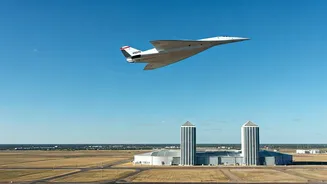
Starfighters Space, known for its development of F-104 supersonic jets intended for satellite air-launch, is strategically repurposing its Texas facility.
This transformation positions it as a pivotal location for microgravity flight testing, a move directly influenced by NASA's recent solicitation for information regarding commercial parabolic flight capabilities. In an expansion of their existing alliance, Starfighters is now collaborating with Mu-G Technologies. This partnership will facilitate the testing of a Dassault Falcon 50 aircraft, which Mu-G is currently modifying for microgravity missions. The testing will occur within Starfighters’ hangar at the Midland International Air & Space Port. This collaboration initially began in March with the shared goal of undertaking microgravity flight missions for a diverse clientele, including NASA, academic institutions, and commercial research entities across North America. Their approach involves utilizing dedicated parabolic aircraft or integrating Mu-G's advanced monitoring systems and software with Starfighters' renowned F-104 fleet. This joint effort was spurred by a request for information from NASA's Armstrong Flight Research Center, which sought to identify commercial parabolic flight providers capable of supporting technology testing and scientific research.
Synergizing Research Environments
The strategic integration of Mu-G's Falcon 50 into the Midland facility marks a significant development, as highlighted by Starfighters CEO Tim Franta. "By bringing Mu-G’s Falcon 50 into our Midland facility, we are creating a single location where researchers and customers will be able to access both microgravity and supersonic test environments," Franta stated. This consolidation offers unparalleled convenience and efficiency for clients. The joint response to NASA’s request for information is considered a crucial next step in solidifying this comprehensive offering, aiming to establish a dependable resource for both the space agency and the wider research community. Under a formal memorandum of understanding, Starfighters will provide essential support to Mu-G's endeavors. This includes comprehensive ground maintenance, chase-plane services for data collection, integration of flight personnel, and assistance with safety and regulatory compliance, all crucial as the venture progresses towards securing Federal Aviation Administration certification for its commercial operations. Starfighters itself is still navigating the regulatory approval process for its own initial suborbital mission, which is designed to pave the way for 'Starlaunch' – a service that intends to use F-104 jets as the primary lifting platform for payloads launched from altitude.
Financial Landscape and Future Prospects
Following a successful suborbital flight, the company has ambitious plans to develop the necessary infrastructure for orbital launches. This announcement coincided with the release of their first quarterly financial results since becoming a public entity. For the three months concluding in March, the company reported no revenue, alongside operating expenses amounting to approximately $4.1 million and a net loss of $4.3 million for the quarter. As of March 31, Starfighters had roughly $1.4 million in cash on hand. The company has issued a cautionary note, indicating that its continued operation as a going concern is contingent upon securing either debt or equity financing. This financial backing is essential to sustain operations until the company achieves positive cash flow. Previously, Starfighters generated revenue primarily through activities involving its fleet of seven F-104 aircraft, which were utilized for training and research support. In past operations, the focus was on high-G, high-altitude maneuvers, catering to clients with specific negative-G requirements. However, with the integration of Mu-G's capabilities, Starfighters is now positioned to offer a full spectrum of services covering all gravitational requirements. This expansion is driven by the substantial recent surge in interest surrounding microgravity research and in-space manufacturing, fueled by both governmental initiatives and a burgeoning commercial sector.
Evolving Demand for Flexibility
The growing demand for advanced research platforms is underscored by the escalating interest in microgravity research and the nascent field of in-space manufacturing. This trend is propelled by both governmental projects and the expansion of the commercial space ecosystem. "As demand expands, there’s a need for more flexible platforms that can support testing, training and technology development in microgravity environments," a representative from Starfighters noted. NASA's proactive search for information on potential microgravity sources is aimed at identifying credible and capable providers in this specialized field. "As of today, it is highly limited," they elaborated. The unique advantage Starfighters brings to the table lies in its capacity to combine a distinctive operational aviation platform with a team that possesses extensive experience in designing and supporting microgravity missions. This potent combination enables the exploration of novel mission concepts, offering researchers and technology developers more adaptable and prompt access to microgravity conditions. To bolster its flight programs and transition Starlaunch from development to operational status, Starfighters has recently recruited two former managers from Blue Origin's New Glenn program.