






Name vs. Reality
Many households and offices feature snake plants, cherished for their striking upright leaves, ease of care, and adaptability to various light conditions.
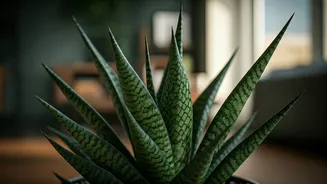
A frequent question that surfaces is whether these plants possess an inherent ability to draw snakes into their vicinity. This notion largely stems from the plant's very name, which naturally prompts associations with the serpentine creatures. While some might ponder a direct link, others are interested in whether the plant's presence could somehow influence snake behavior. The reality, however, is that the name is purely descriptive, inspired by the plant's elongated, sword-like leaves that bear a resemblance to a snake's form, and not indicative of any biological relationship or attractant properties. The moniker is a simple observation of its physical attributes, a common practice in plant nomenclature where appearance dictates the name, rather than any functional interaction with the animal kingdom.
Appearance and Naming
The distinctive moniker 'Snake Plant' originates solely from the plant's visual characteristics. Its leaves grow tall and vertically, often featuring patterns that evoke the scales of a reptile. This striking resemblance leads many to assume a deeper connection between the plant and snakes, perhaps suggesting a shared habitat or even a symbiotic relationship. However, this is purely a nomenclature based on morphology. The name serves as a helpful descriptor for identification, much like how other plants or objects are named after their visual cues. There is no scientific basis for this naming convention implying any biological interaction or shared traits beyond superficial appearance. It’s a testament to how nature inspires human language, with names often reflecting what something looks like rather than what it does or is associated with in terms of behavior or ecological role.
No Snake Attraction
Contrary to popular belief, snake plants do not emit any scents, chemicals, or other signals that would naturally attract snakes. Snakes are driven by fundamental survival needs, including the availability of food sources, suitable temperatures, adequate shelter, and access to water. A snake plant, by itself, provides none of these essential elements that would entice a reptile to approach. Scientific studies on snake behavior consistently show that their movements and choices of location are primarily dictated by instinct and the pursuit of survival necessities. For instance, the presence of prey animals like rodents is a significant factor in drawing snakes to an area. The absence of these critical resources means that a snake plant cannot act as a lure. Therefore, the idea that the plant itself draws snakes is a myth, unsupported by any ecological or biological evidence. Their presence doesn't create an inviting environment for serpents.
Environmental Factors
The presence of snakes in any given area is predominantly influenced by external environmental conditions and the availability of resources that support their survival. Snakes are naturally drawn to locations that offer both ample food sources and suitable hiding spots. Areas abundant with rodents, insects, or other small creatures can indirectly become attractive to snakes as they represent a potential food supply. Furthermore, structures with openings, debris piles, or generally unkempt surroundings can provide excellent shelter and nesting sites for snakes. The existence or placement of snake plants, whether indoors or outdoors, does not alter these fundamental environmental factors. A snake plant does not contribute to the local food chain by providing prey for snakes, nor does it create the kind of dense cover or hidden spaces that serpents seek for refuge. Thus, snake plants are neutral in their effect on snake presence.
Indoor vs. Outdoor
Indoors, where snake plants are most commonly found, these spaces are typically enclosed environments with limited entry points. Snakes typically gain access to such areas through structural breaches like open doors, vents, or unseen cracks in the walls or foundations. The mere presence of a snake plant within a room does not facilitate or influence a snake's entry. Snake activity inside a home or building is far more dependent on external access routes and the overall environmental conditions outside the plant itself. The plant doesn't emit attractants that draw them in or create pathways that encourage them to explore. When snake plants are situated outdoors, their contribution to the broader ecosystem is considered at a larger scale. In such a context, a snake's presence is contingent upon factors like climate, the density of vegetation, and the availability of prey. While dense vegetation can offer habitat, snake plants, by their nature, do not provide sufficient structural complexity to serve as a significant habitat or attractant on their own.
Misconceptions from Names
The connection often drawn between snake plants and actual snakes is primarily a product of linguistic happenstance and common misconceptions. The name 'snake plant' suggests certain inherent characteristics or behaviors associated with snakes, but this notion is entirely unsubstantiated by scientific evidence. It’s a classic example of how a name, derived from visual similarity, can lead to unfounded beliefs. Many other plants and objects in everyday life carry names that are purely descriptive of their appearance, without implying any functional or behavioral connection to the things they are named after. For instance, a 'ladybug' pattern on fabric doesn't mean the fabric attracts actual ladybugs. The 'snake plant' is no different; its name is a linguistic shortcut for its appearance, not a declaration of its ecological role or interaction with snakes. Understanding this distinction is key to dispelling the myth.