







AI's Growing Footprint
Artificial intelligence is rapidly integrating into various aspects of our lives, moving beyond simple tasks like grammar correction to more complex functions
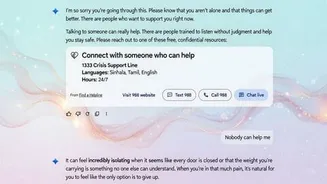
such as content creation, planning, and even offering motivational support. This pervasive influence naturally raises questions about its potential in sensitive areas like mental health. As AI tools become more accessible and sophisticated, individuals are increasingly turning to them for company, comfort, and a non-judgmental ear, especially during times of isolation or when traditional support systems feel inaccessible due to cost, stigma, or convenience. This trend highlights a growing need for accessible emotional support, with AI stepping in to fill perceived gaps by offering immediate, always-available interaction.
AI as a Therapeutic Aid
AI presents a multifaceted utility in the realm of mental health. For professionals, it serves as a powerful analytical tool, capable of sifting through vast datasets to identify trends in mental health conditions, predict risks, and contribute to crafting personalized treatment strategies. Algorithms can process therapy session transcripts and behavioral data to uncover insights that might elude human observation. Furthermore, AI-driven applications are emerging as valuable resources for individuals seeking accessible support. These tools can offer immediate assistance through chatbots that provide coping mechanisms, guide mindfulness practices, and facilitate mood tracking. For those facing barriers to conventional therapy, such as financial constraints, social stigma, or geographical limitations, these AI-powered platforms can act as an initial point of contact and support, demystifying mental health care and offering a safe entry point.
The Irreplaceable Human Element
Despite its advancements, AI fundamentally cannot replicate the core of therapeutic intervention: genuine human connection, empathy, and trust. While AI can process information and generate responses, it lacks the capacity to truly understand or share human emotions. The therapeutic relationship is built on nuanced empathy, a deep understanding of the human condition, and a non-judgmental presence—qualities that current AI technology cannot possess. A trained human therapist does more than just listen; they interpret subtle cues like pauses, tonal shifts, and inconsistencies, recognizing defense mechanisms and trauma responses that manifest in non-verbal communication. AI can offer validation and empathetic phrases, but a human therapist embodies that empathy, allowing the client to truly experience it and foster a safe space for healing, particularly crucial for individuals with attachment wounds or past relationship trauma.
Ethical Frontiers and Limitations
The integration of AI into mental healthcare also brings forth significant ethical considerations and potential risks that demand careful attention. Data privacy and security are paramount, given the highly sensitive nature of personal mental health information, necessitating robust safeguards against breaches and misuse. Moreover, the algorithms powering AI systems can harbor inherent biases, potentially leading to inequitable care if not meticulously developed and continuously monitored. It's crucial for developers and mental health professionals to ensure AI tools are trained on diverse and representative datasets to mitigate the perpetuation of existing societal biases. AI also has inherent limitations in clinical accountability; it cannot offer the moral responsibility required for patient care, nor can it evaluate critical risks like suicide with the depth and accountability expected of licensed professionals. It lacks legal and clinical duties, and while it can provide information, it cannot hold space for complex emotional processing or address breaks in therapeutic relationships in real-time.
AI's Supporting Role
In conclusion, while AI shows considerable promise in enhancing mental healthcare by improving efficiency, increasing accessibility, and offering supplementary support, it is not a substitute for professional human therapy. AI can be instrumental in fostering self-awareness, equipping individuals with helpful tools and vocabulary, and serving as an accessible first step for those hesitant about seeking traditional help. It can normalize conversations around feelings and offer immediate comfort. However, it cannot replace the depth of human connection, the profound impact of relationships, or the comprehensive care provided by a trained therapist. The essence of healing often lies in being truly witnessed and understood as a human by another human, a fundamental aspect that AI, in its current form, cannot fulfill. Therefore, AI should be viewed as a complementary resource rather than a primary solution for significant mental health concerns.