







Visualizing the Mind
The profound possibility of translating the intangible landscape of human consciousness into tangible visuals is rapidly moving from science fiction to scientific
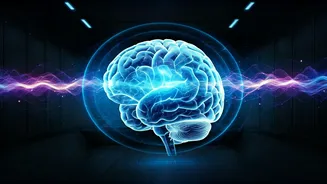
reality. Researchers are pioneering methods to interpret brain signals, aiming to decode not just what we see, but also our dreams, the vivid hallucinations of psychedelic experiences, and the inner worlds of individuals unable to communicate conventionally, such as those in comas or nearing the end of life. This breakthrough promises to make previously inaccessible realms of the human mind remarkably open to study and understanding. A key development comes from physics students at the Stevens Institute of Technology, who have successfully trained machine-learning models to reconstruct visual images based on brainwave patterns. When participants viewed specific objects like pizza or pandas, the AI could identify the category of image. While other methods like fMRI, which tracks blood flow related to neural activity, have achieved similar feats, the EEG approach is significantly more accessible and affordable. EEG devices cost hundreds to thousands of dollars and are portable enough for home use, even during sleep, unlike fMRI machines which are prohibitively expensive and confined to laboratory settings.
EEG's Portable Power
The foundation of this research rests on the understanding that the same brain regions responsible for our waking visual perceptions are also active during imagination and dreaming. Students Isaac Van Benthuysen and Jack Caputo at Stevens Institute hypothesized that if they could reconstruct what someone was looking at while awake, the same technique could be applied to visualize the imagery of dreams or other altered mental states. Their work, presented at the Innovation Expo, demonstrated a promising categorical accuracy in reconstructing images from EEG data. Although direct pixel-level reconstruction remains a challenge due to the inherent limitations in EEG's fine-grained detail, the students are exploring alternative methods to improve accuracy. The appeal of EEG lies in its portability and cost-effectiveness. Unlike the bulky and expensive fMRI, EEG is essentially a wearable device that can be used in everyday environments. This accessibility is crucial for real-world applications, such as enabling long-term monitoring for patients or facilitating dream research without complex medical equipment. The students' inspiration stemmed from a personal interest in dreams, leading them to investigate the brain's shared mechanisms for processing both external reality and internal mental imagery.
Bridging Modalities
The current research successfully decoded visual attributes like color, texture, and shape from brainwave patterns. Future advancements could potentially extract non-visual information, depending on electrode placement; for instance, temporal electrodes might be better suited for decoding speech. The team is exploring strategies to enhance image reconstruction accuracy. One promising avenue involves combining the portability of EEG with the superior spatial resolution of fMRI. By training an fMRI model, researchers could then use EEG data, matched against this model, to achieve more accurate reconstructions while retaining the convenience of EEG. This approach leverages existing technologies and clever integration rather than solely focusing on improving EEG itself. The significance of portability cannot be overstated; it democratizes access to this technology. While fMRI is a multimillion-dollar behemoth, EEG is akin to a sophisticated cap, usable anywhere from a library to a bedroom. This makes it far more practical for applications like dream reconstruction or for assisting individuals with severe mobility impairments, where continuous monitoring is essential.
Therapeutic and Exploratory Uses
Beyond dream visualization, this technology holds immense potential for various applications. For individuals with Post-Traumatic Stress Disorder (PTSD), it could revolutionize therapy. Current treatments often involve dream analysis, but an EEG decoder could provide therapists with direct visual insights into a patient's nightmares, offering a more accurate and effective therapeutic approach than relying solely on memory-based reports. Furthermore, the ability to visually document psychedelic experiences or even the subjective moments of death could open entirely new avenues for scientific study. These subjective experiences are notoriously difficult to quantify objectively, but decoding the associated visual imagery offers a novel way to scientifically investigate them. The transition from current capabilities to reconstructing complex thought or dream sequences hinges on improving EEG's spatial resolution, possibly through denser electrode arrays or novel brain imaging techniques that are less cumbersome than fMRI. The AI models are inherently limited by the quality and detail of the brain data they receive, making technological advancements in data acquisition paramount.
Future Directions and Ethics
The researchers are actively pursuing further refinements. Van Benthuysen plans to shift focus from reconstructing overall image color to identifying object forms, potentially by targeting grayscale images and emphasizing edges. They also aim to develop their own image generation models, moving beyond existing ones like Stable Diffusion. While the potential benefits are vast, ethical considerations, particularly regarding surveillance, are also significant. The possibility of non-invasive brain-to-computer interfaces like EEG being used to access private thoughts raises concerns. Although this technology is currently far from accurately capturing nuanced thoughts, the principle of accessing brain activity for interpretation remains. This development necessitates careful consideration of privacy safeguards and responsible innovation as the technology evolves, ensuring it serves humanity beneficially rather than becoming a tool for unwarranted observation.