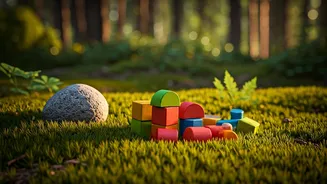







Rediscover Play's Magic
Remember the days of building forts, fixing toys, and inventing games with everyday objects? These seemingly simple activities were powerful learning tools,
fostering patience, curiosity, and problem-solving long before digital distractions became ubiquitous. In today's screen-dominated world, recreating this sense of real-world discovery is more crucial than ever for holistic child development. Such hands-on engagement nurtures independent thinking and a joy for exploration, reminding children that learning is an ongoing, delightful journey rather than an instant gratification process. It lays a foundation for critical cognitive functions and a resilient mindset, essential for navigating a complex world. By prioritizing these foundational experiences, parents can significantly contribute to their child's intellectual and emotional growth.
Unstructured Play's Benefits
Engaging in activities like deconstructing toys, tackling complex puzzles, or playing with open-ended materials such as blocks and magnetic tiles significantly stimulates independent thought and creativity. When children are encouraged to build, experiment, and imagine freely with these resources, they develop essential problem-solving abilities and cognitive flexibility. Furthermore, challenges like constructing a robot from recycled materials inspire resilience and a sense of responsibility, teaching them the value of perseverance. Research confirms that this type of child-led, unstructured play fosters creativity and problem-solving skills more effectively than structured or screen-based alternatives. It's through these free-form explorations that children truly learn to think critically and innovate, building a strong cognitive foundation.
Curiosity Through Experience
Real-world encounters are powerful catalysts for igniting a child's natural curiosity and intrinsic motivation. Simple activities like a walk in nature can spark a cascade of questions, while nurturing a plant offers gentle lessons in science and responsibility. Exposing children to diverse environments such as museums, art galleries, post offices, or railway stations helps them understand how the world functions beyond the confines of books and screens. This direct engagement with everyday life connects learning to tangible experiences, significantly enhancing their desire to know more and their capacity for long-term retention. Studies indicate that such direct immersion in real-world contexts cultivates deeper curiosity and a more profound, lasting understanding than passive learning.
Emotional Growth and Screen Time
Alongside cognitive development, nurturing a child's socioemotional intelligence is paramount. Open conversations about feelings, reading books that explore emotions, and maintaining comforting bedtime routines are vital for establishing a sense of security. When children feel supported in expressing their emotions, rather than having them dismissed, they learn empathy, confidence, and self-awareness. This secure foundation then facilitates socialization through unstructured play, where children naturally learn to share, negotiate, and resolve minor conflicts independently. Conversely, extensive screen time has been linked to diminished attention spans and lower socioemotional competence, highlighting the critical role of real-world interactions in fostering well-rounded, emotionally intelligent individuals.