


Garden Phlox's Charm
Garden Phlox stands out as a remarkably long-blooming herbaceous perennial, perfect for adding cottage charm to your summer landscape. Available in a diverse
spectrum of colors and sizes, many varieties also offer a delightful fragrance. These plants typically thrive in USDA Growing Zones 3 to 9, reaching mature heights of 12 to 60 inches with a spread of 12 to 24 inches. They prefer partial to full sun exposure and flourish in loamy, moist, well-drained soil with a slightly acidic pH. Their robust nature and extended bloom time make them a foundational choice for continuous summer color, easily adapting to various garden designs and soil conditions as long as adequate moisture and sun are provided.
Coreopsis for Pollinators
Coreopsis, with its cheerful, colorful blossoms, acts as a powerful attractant for pollinators, and its seeds provide a valuable food source for birds in the autumn. A simple yet effective gardening technique involves shearing off the initial flush of blooms; this encourages the plant to produce subsequent flowerings, thus extending the vibrant display throughout the summer. These versatile plants are suited for USDA Growing Zones 2 to 11 and can grow to a mature height of 2 to 4 feet, with a width of 1 to 2 feet. Coreopsis thrives in full sun and prefers slightly acidic, sandy, well-draining soil, making it a resilient choice for sunny borders and wildflower meadows, offering continuous color with minimal effort.
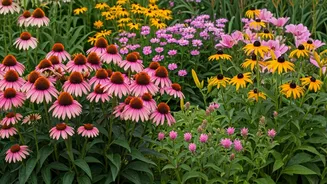
Coneflower's Resilience
Coneflowers (_Echinacea_) are celebrated for their enduring beauty, gracing gardens with blooms from midsummer all the way to mid-autumn. These hardy flowers not only provide a splash of color but also serve as a vital resource for pollinators and birds, who are drawn to their distinctive seed cones. The variety in colors, sizes, and shapes available within the coneflower family allows for immense creative potential in garden design. Generally hardy in USDA Growing Zones 3 to 9 (though specific cultivars may vary), they reach mature heights of 12 to 48 inches and widths of 24 to 30 inches. Coneflowers perform best in full sun and require average to sandy, well-draining soil, making them a low-maintenance yet high-impact addition to any summer garden.
Catmint's Fragrant Appeal
Catmint (_Nepeta_) is a highly prized perennial, renowned for its profusion of long-blooming, fragrant purple flowers that captivate a wide array of garden visitors, including bees, butterflies, and hummingbirds. Its aromatic foliage adds another sensory dimension to the garden space. This adaptable plant is well-suited for USDA Growing Zones 4 to 8, typically growing to a height of 10 to 24 inches and spreading 1 to 2 feet wide. Catmint thrives in full to partial sun conditions and demonstrates a preference for well-draining soil that can range from acidic to alkaline in pH. Its ability to bloom for an extended period and its attractiveness to beneficial insects make it an excellent, easy-care choice for borders, containers, and pollinator gardens.
Daylily's Continuous Blooms
Despite their name, daylilies offer a continuous spectacle of blooms throughout the summer months. While each individual flower typically lasts only a day, the plant produces a succession of buds, ensuring a vibrant display for weeks on end. Gardeners can further enhance this prolonged beauty by planting varieties with staggered bloom times and diligently deadheading spent flowers. Daylilies are remarkably adaptable, thriving in USDA Growing Zones 3 to 10 and exhibiting a wide range of mature sizes, from 6 inches to 5 feet tall and 2 to 4 feet wide. They perform well in both full sun and partial shade, and prefer loamy, acidic soil, making them a versatile and rewarding choice for virtually any garden setting.
Butterfly Bush's Scent
The butterfly bush (_Buddleia_) is a stunning perennial that fills the summer garden with its fragrant flower panicles, drawing in a multitude of pollinators for weeks. While some varieties can become quite large, reaching heights of 3 to 12 feet and widths of 3 to 8 feet, newer cultivars offer more compact growth habits, making them suitable for smaller spaces. The butterfly bush is hardy in USDA Growing Zones 5 to 9 and prefers full sun. It thrives in slightly acidic, moist, yet well-drained soil. Regular pruning in late autumn helps manage its size and encourages robust flowering the following season, ensuring a continuous source of nectar for butterflies and other beneficial insects.
Knock Out Rose's Bloom
The Knock Out Rose has revolutionized rose gardening with its exceptional disease resistance and a continuous display of blooms throughout the entire summer season. Available in a diverse array of colors and sizes, these roses offer both beauty and resilience. To encourage even more prolific flowering, it's recommended to prune off spent blooms, which prompts the plant to develop new buds. These robust roses are suitable for USDA Growing Zones 5a to 11a, growing to mature heights and widths ranging from 3 to 10 feet. They perform best in partial to full sun and prefer loamy, moist, well-drained soil, making them a virtually care-free and endlessly rewarding addition to any garden wanting constant color.
Cranesbill Geranium's Grace
Cranesbill geraniums, also known as hardy geraniums, are celebrated for their delicate yet colorful blooms that can persist from late spring through autumn, depending on the specific variety. These plants spread gracefully through rhizomes or clumping roots, adding a lovely texture to garden beds and borders. They are generally hardy in USDA Growing Zones 3 to 9, with mature sizes varying from 6 to 36 inches in height and 1 to 3 feet in width. Cranesbill geraniums adapt well to partial to full sun exposure and prefer moist, well-draining soil that is slightly acidic. Their long blooming period and attractive foliage make them a fantastic choice for continuous ground cover and filling in spaces with subtle, elegant color.
Bee Balm's Pollinator Magnet
Bee balm (_Monarda_) is a standout perennial for its extended blooming period and its exceptional ability to attract a wide variety of pollinators, including bees and butterflies. While heirloom varieties can grow quite tall, reaching up to 48 inches, modern cultivars offer more compact forms, making them suitable for a broader range of garden sizes. Bee balm thrives in USDA Growing Zones 3 to 9 and prefers partial to full sun. It requires rich, neutral, moist, and well-draining soil, ensuring healthy growth and prolific flowering. Its vibrant, often aromatic blooms make it a garden favorite for both visual appeal and ecological benefit.
Sedum's Enduring Color
Sedum, commonly known as stonecrop, offers exceptional value with its long season of color, spanning from early summer through autumn. Available in both creeping and upright forms, these perennials are remarkably easy to care for. Their blooms develop gradually, providing visual interest even before opening fully. Sedums are hardy in USDA Growing Zones 3 to 10, with mature heights typically ranging from 6 to 24 inches and widths from 12 to 24 inches. They are adaptable to partial to full sun and prefer loamy to sandy, acidic, well-draining soil, making them an ideal, low-maintenance choice for rock gardens, borders, and containers.
Ageratum's Autumn Hue
The perennial form of Ageratum offers a delightful surprise with its taller stature compared to its annual counterpart, boasting fuzzy purple flowers that provide brilliant color from late summer through autumn. This extended bloom time makes it a valuable addition for those seeking to maintain garden vibrancy as the season winds down. Ageratum is suited for USDA Growing Zones 2 to 11, reaching a mature size of 12 to 18 inches tall and 18 to 24 inches wide. It performs well in full sun to part shade and requires moist, well-draining soil, offering a unique textural and color element for the late-season garden.
Yarrow's Cottage Charm
Yarrow (_Achillea millefolium_) is a cherished cottage garden favorite, prized for its ease of care and its long-lasting summer blooms. Its flat-topped flowerheads are attractive to beneficial insects and provide a lovely texture in floral arrangements. To encourage a continuous display of flowers, gardeners can deadhead faded blooms, which stimulates the plant to produce new flowerheads. Yarrow is hardy in USDA Growing Zones 3 to 9, typically growing to a height and width of 2 to 3 feet. It thrives in full sun and prefers well-draining soil that can be loamy, sandy, or even clay, demonstrating its adaptability and resilience.
Lavender's Soothing Scent
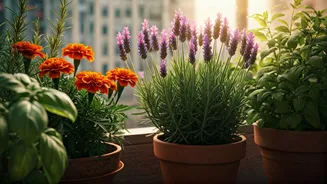
Lavender is a beloved herb originating from the Mediterranean, known for its captivating fragrance and weeks of blooming beauty. Its nectar-rich flowers not only attract beneficial pollinators but also release an aroma that can help deter mosquitoes, making it a dual-purpose addition to the garden. Lavender thrives in full sun and prefers well-draining soil that can be loamy, sandy, and alkaline. Hardy in USDA Growing Zones 5 to 9, it typically grows to a height of 1 to 3 feet and a width of 2 to 4 feet. Its calming scent and attractive purple flower spikes make it a highly sought-after plant for sensory gardens and borders.
Autumn Sage's Endurance
Autumn Sage (_Salvia greggii_) is a remarkable perennial that extends its blooming season from early summer right through autumn, offering continuous color and attracting pollinators. This resilient plant is cold-hardy to Zone 6 and also boasts resistance to deer and rabbits, making it a practical choice for many gardens. It thrives in full sun and tolerates a range of soil conditions, from acidic to alkaline, as long as it is well-draining. Typically growing to a height and width of 2 to 3 feet, Autumn Sage provides a vibrant splash of color and reliable performance throughout the warmer months, even in drier conditions.
Clematis's Vivid Blooms
Clematis flowers offer diverse blooming habits, but certain cultivars, particularly from the _Clematis viticella_ group, are renowned for their reliably long summer bloom period and large, vivid flowers. Varieties such as 'Niobe,' 'Rosemoor,' 'Arabella,' and 'Acropolis' showcase a wide array of captivating colors. These vigorous climbers are hardy in USDA Growing Zones 4 to 9 and can range significantly in size, from 3 to 20 feet in length, depending on the specific variety. Clematis prefers full sun for its foliage and roots, and thrives in loamy, well-draining soil, making it a spectacular choice for adding vertical interest and continuous floral display to pergolas, trellises, and fences.
Veronica Spicata's Spikes
Also known as speedwell, _Veronica spicata_ presents showy flower spikes that provide a consistent display of color from early to late summer. The plant's appeal is enhanced by its spectrum of flower hues, ranging from pure white to deep cobalt blue, complemented by attractive silvery foliage. This perennial is hardy in USDA Growing Zones 3 to 8, with mature sizes varying from 6 inches to 3 feet tall and 6 inches to 2 feet wide, depending on the specific cultivar. Veronica Spicata thrives in full sun and prefers neutral, well-draining soil, making it a striking and reliable performer for borders and mass plantings, adding vertical interest and vibrant color.
Pincushion Flower's Delicacy
The pincushion flower (_Scabiosa_) captivates with its delicate-looking blooms, which come in an assortment of charming colors. With consistent deadheading, these lovely flowers will continue to re-bloom throughout the summer, providing a continuous source of beauty. Pincushion flowers are hardy in USDA Growing Zones 3 to 9, reaching a mature size of approximately 12 to 18 inches tall and wide. They thrive in full sun and prefer neutral to alkaline, moist, well-draining soil. Their unique flower form and extended bloom period make them an excellent choice for adding a touch of airy elegance to mixed borders and cutting gardens.
Hummingbird Mint's Attraction
Hummingbird mint (_Agastache_), also referred to as hyssop, is a highly attractive, fragrant perennial that thrives in full sun. Its colorful flower spikes are a magnet for pollinators, including hummingbirds, bees, and butterflies, making it a dynamic addition to any garden focused on attracting wildlife. This hardy plant is suitable for USDA Growing Zones 3 to 10 and typically grows to a height of 3 to 5 feet with a spread of 1 to 3 feet. It prefers acidic, well-draining soil, ensuring good health and prolific blooming. The combination of its intoxicating fragrance and vibrant floral display makes hummingbird mint a standout performer throughout the summer.
Bellflower's Gentle Bloom
Numerous varieties of bellflower (_Campanula_) offer delightful summer-long blooming periods, adding gentle color and charm to the garden. The 'Blue Waterfall' cultivar is particularly noteworthy as a low-growing ground cover, featuring starry, sky-blue flowers that are also exceptionally well-suited for rock gardens. Bellflowers are hardy in USDA Growing Zones 4 to 7, typically reaching a height of 4 to 10 inches and spreading up to 24 inches wide. They prefer average, moist, well-draining soil and can tolerate full to part sun. Their delicate, bell-shaped blossoms provide a soft yet persistent floral presence throughout the summer months.