





Ratio is Key
The cornerstone of a great dosa lies in the right ingredient ratios. For every kilogram of rice, use a quarter kilo of urad dal. If you prefer to measure
by cups, use one cup of urad dal for every four cups of rice. This precise ratio is critical for the ideal texture and taste. To enhance both the colour and flavour of your dosas, add 50 grams of poha (flattened rice) and one tablespoon of fenugreek seeds. These additions contribute significantly to the dosa’s characteristic crispness and golden hue.
Soaking Strategy
Proper soaking is a crucial step often overlooked. The rice and urad dal should not be soaked together; it's best to soak the rice separately for a minimum of five hours or, ideally, overnight. Urad dal and fenugreek seeds should be soaked together for about four hours to allow them to soften sufficiently. The poha, which aids in the dosa's crispiness, should only be soaked for half an hour before grinding. This ensures it softens without becoming overly mushy, helping to achieve the perfect batter consistency.
Fermentation Timing
Fermentation time plays a significant role in the dosa's final texture and taste. The ambient temperature considerably influences this process. During winter, when temperatures are low, the batter may require around 10 to 12 hours for fermentation. In summer, with higher temperatures, the fermentation process typically takes about eight hours. It's crucial to add salt only after the fermentation process is complete. Adding it before can hinder the fermentation, which is essential for developing the characteristic flavour and lightness of the dosa batter.
Temperature Matters
Contrary to common practice, it's best to allow the batter to ferment at room temperature rather than refrigerating it immediately. Keeping the batter at room temperature promotes optimal fermentation. If you have stored the batter in the refrigerator, take it out at least an hour before making the dosas. Bringing the batter to room temperature allows it to spread properly on the pan, resulting in evenly cooked, thin dosas. A well-fermented batter eliminates the need for any additional ingredients like baking soda, which is sometimes added to aid in the rising process.
Preparation Steps
Before soaking, the rice and dal need thorough washing. Wash them two or three times to eliminate any dirt or dust. This step also contributes to a whiter batter. Ensure that you use large bowls with sufficient water to completely submerge the rice and dal. This allows them to soak properly and results in a softer, smoother batter. These preparatory steps help ensure that the batter is clean, and the ingredients are adequately hydrated, leading to a superior dosa.
Grinding Techniques
The grinding process directly impacts the batter’s final texture. Start by combining the soaked rice and poha and grinding them to a smooth consistency. Then, add the soaked urad dal and fenugreek seeds and grind until the mixture has a buttery texture. Blend both mixtures in a large bowl and mix them well by hand. The final batter should achieve a balanced consistency, not too watery or overly thick. This balanced consistency is critical for achieving the ideal spread and crispness when the dosas are cooked.
Cooking Perfection
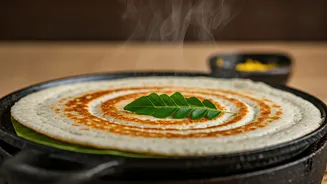
Preparing the pan and the cooking technique are critical for making excellent dosas. Before cooking, ensure that the pan is adequately heated. Sprinkle a little water onto the hot pan, and then wipe it with a wet cloth to create the right surface. Add a small amount of oil to the pan. This prevents the batter from sticking and helps achieve that thin, crispy texture. Pour the batter onto the pan using a ladle, spreading it from the centre towards the edges to give that professional hotel-style finish, creating perfectly thin and evenly cooked dosas.