





Kanpur Metro Network
The Kanpur Metro is an ambitious rapid transit system designed to significantly improve urban mobility and alleviate traffic congestion in this major industrial
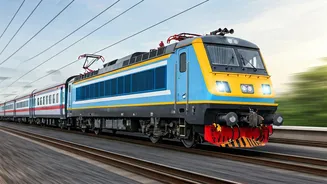
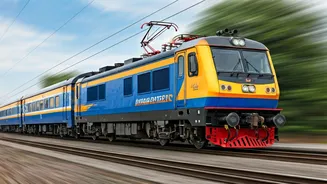
city. Managed by the Uttar Pradesh Metro Rail Corporation (UPMRC), the project was authorized by the Indian government in February 2019, with construction commencing in November of the same year. Initially, the project aimed to address the severe traffic bottlenecks faced by Kanpur's population of over 4.1 million residents. The Orange Line, the first phase of the project, covers an 8.9 km stretch from IIT Kanpur to Motijheel, offering a modern and efficient transportation solution. The project's total estimated cost for Phase 1 stands at Rs 11,076.48 crore. Funding is a collaborative effort, with the Central and State governments each contributing 20% equity (Rs 1,107.65 crore each), totaling Rs 2,215.3 crore. A substantial portion of the financing, approximately Rs 5,600 crore, comes from a loan of 650 million euros provided by the European Investment Bank (EIB), highlighting the project's scale and importance as a public infrastructure initiative. The metro trains currently operate at a velocity of 90 km/h, contributing to reduced travel times across the city.
Orange Line: Operational & Underway
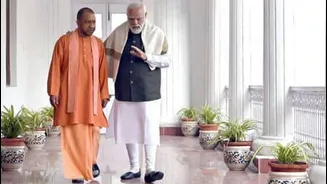
The Orange Line forms the backbone of the currently operational Kanpur Metro network. Initially covering 8.9 km from IIT Kanpur to Motijheel, it is set to expand significantly to Naubasta, encompassing a total planned length of 23.8 km. This line is designed with a mix of elevated and underground stations, strategically placed to traverse the heart of the city and connect key educational centers and important nodes. As of now, the stretch from IIT Kanpur to Kanpur Central Railway Station is operational, boasting 14 stations, which include nine elevated and five underground ones. Prime Minister Narendra Modi inaugurated the Chunniganj to Kanpur Central Railway Station stretch on May 30, 2025. The earlier segment from IIT Kanpur to Moti Jeel Metro Station commenced operations in December 2021. Further development is underway to complete the remaining seven stations, extending the total corridor length to 23.8 km. The final stretch from Baradevi to Naubasta is currently undergoing trial runs, with tracks and electrical systems ready. Public operation of this entire route is anticipated by the end of March or April 2026. Operational stations on the Orange Line include IIT Kanpur, Kalyanpur, SPM Hospital, Vishwavidyalaya, Gurudev Chauraha, Geeta Nagar, Rawatpur, LLR Hospital, Moti Jheel, Chunniganj, Naveen Market, Bada Chauraha, Nayaganj, and Kanpur Central Railway Station. Stations under construction are Jhakarkati Bus Terminal, Transport Nagar, Baradevi, Kidwai Nagar, Vasant Vihar, Baudh Nagar, and Naubasta.
Blue Line: Future Connectivity
The Blue Line, also known as Corridor 2, is a crucial upcoming addition to the Kanpur Metro's network. This line is planned to be 8.9 km long and will feature a total of 8 stations, connecting Agriculture University to Barra-8. A key feature of the Blue Line is that Rawatpur station will serve as an interchange point, allowing seamless transfers between the Orange and Blue Lines. The corridor is designed to integrate both underground and elevated sections, aiming to serve densely populated areas, major railway stations, and bus terminals within the cityscape. The underground tunnel work for this line is substantially complete, with the tunnel between Rawatpur and Double Pulia having been finished. The next steps involve laying tracks and completing the station infrastructure. The Blue Line is projected to be fully operational for passengers by early 2027, further enhancing the metro's reach and convenience for residents.
Fare Structure & Timings
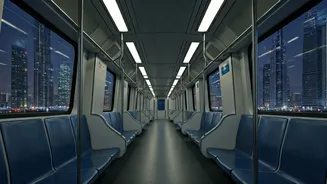
The Kanpur Metro offers a cost-effective travel solution for its commuters. The minimum fare on the Orange Line is INR 10, while the maximum fare is INR 30, making it an affordable option for daily travel. For instance, a journey from IIT Kanpur Metro Station to SPM Hospital Metro Station costs INR 15, to Gurudev Chauraha Metro Station it's INR 20, and to Motijheel Metro Station, it's INR 30. Children under 3 feet in height can travel without requiring tokens or cards, adding to the convenience for families. The metro operates daily from 6:00 AM to 10:00 PM, ensuring accessibility for commuters throughout the day. Trains run at a frequency of every 5 minutes, providing ample opportunity to catch a ride without significant waiting times. A quick trip from Kanpur Metro Station to Vishwavidyalaya Metro Station takes approximately 4 minutes, reaching Geeta Nagar Metro Station takes about 10 minutes, and arriving at LLR Metro Station takes around 13 minutes, showcasing the efficiency of the service.
Expansion Plans & Impact
The Kanpur Metro Rail Authority has ambitious plans for expansion, including extending the network to Unnao, a locality situated outside the main city. The UPMRC is actively developing blueprints for five new metro corridors totaling over 52 km. The estimated funding requirement for these new corridors is Rs 4,250 crore. The proposed routes are IIT to Mandhna (5.44 Km), Jhakarkati to Ruma (16.60 Km), CSA to Ganga Barrage (3.80 Km), Mall Road to Shuklaganj Unnao (20.40 Km), and Vijay Nagar to Bhauntikheda (8.75 Km). The implementation of the Kanpur Metro has already had a positive impact on the city's real estate market. Property prices in areas close to metro stations have seen a notable increase of 8-10%. This development is attributed to the metro's success in reducing traffic congestion and improving overall connectivity, making these areas more desirable for residents and investors alike. The metro's integration into the urban fabric is expected to further boost economic activity and improve the quality of life for Kanpur's citizens.