




The Sentient Sun
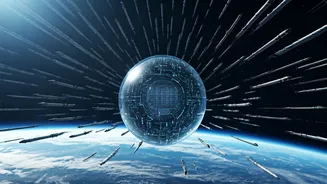
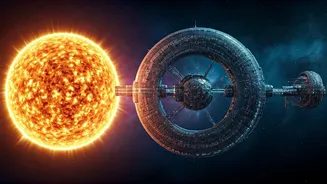
Musk opens his memo with a striking metaphor: the 'sentient sun.' This isn't a literal celestial body, but rather a concept representing an incredibly
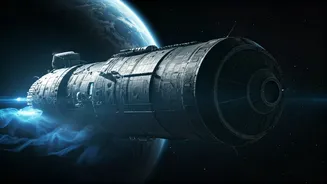
vast and energy-intensive artificial intelligence. He envisions an AI system so powerful and centralized that it mirrors a star's scale, capable of radiating synthesized intelligence back to Earth. It's a science fiction shorthand for a supremely potent AI powered by solar energy, painting a picture of immense computational power that draws inspiration from the cosmos.
Kardashev II Civilization
The memo dives into more technical scientific concepts by mentioning a 'Kardashev II-level civilization.' This phrase references the Kardashev scale, a theoretical framework developed by astronomer Nikolai Kardashev in the 1960s. This scale categorizes civilizations based on their energy consumption. A Type I civilization can harness all the energy available on its home planet, while a Type II civilization is capable of capturing the total energy output of its parent star. Humanity currently operates far below Type I, making the aspiration to reach Type II a monumental leap in technological advancement and energy mastery.
Orbital Data Centers
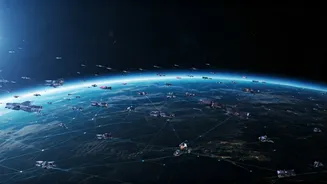
Musk proposes relocating significant computing infrastructure, like the energy-demanding data centers powering modern AI, from Earth into orbit. These 'orbital data centers' would leverage the near-constant availability of solar energy in space. The concept stems from the observation that 'it's always sunny in space,' offering a stable and abundant power source for these critical computational hubs, thereby solving one of the major limitations of terrestrial data centers: reliable and sustainable energy supply.
In-Space Propellant Transfer
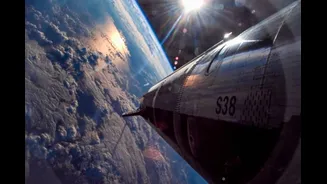
The vision includes developing an 'in-space propellant transfer' system, essentially creating a refueling capability in orbit. SpaceX aims to deploy specialized tanker-to-ship bots by 2026. This innovation would revolutionize how spacecraft are fueled. Instead of carrying all necessary propellant from Earth, rockets could optimize their payload by carrying other resources, with refueling taking place once in space. This significantly enhances mission flexibility and payload capacity for long-duration spaceflights and complex operations.
Electromagnetic Mass Driver
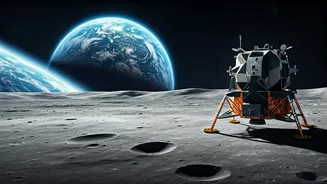
Another intriguing concept is the 'electromagnetic mass driver.' This advanced system is envisioned as a large-scale railgun that uses electrical power to launch cargo into space, bypassing the need for traditional rocket fuel. The idea has roots in science fiction, and SpaceX is contemplating its application on celestial bodies like the Moon. The Moon's lower gravity and lack of atmosphere would make it an ideal location to deploy such a device, facilitating the efficient expulsion of materials into space with reduced energy expenditure compared to Earth launches.
Ad Astra's Significance
Musk concludes his memo with the Latin phrase 'Ad Astra,' meaning 'to the stars.' This is more than just a sign-off; it encapsulates his overarching ambition for humanity's expansion beyond Earth. He has employed this phrase before, notably in naming a school focused on STEM education and problem-solving, reinforcing his long-standing commitment to space exploration and scientific advancement as guiding principles for future endeavors.