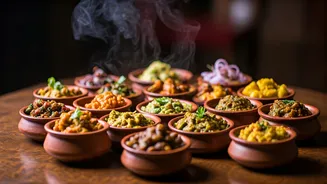

Undhiyu's Earthy Embrace
Undhiyu holds a special place in Gujarati cuisine, especially during winter. This mixed vegetable dish is traditionally cooked upside down in earthen pots,
giving it its name (undha means upside down). The dish features an assortment of seasonal vegetables, carefully seasoned with aromatic spices and herbs. Imagine a medley of brinjal, potatoes, green beans, and more, slow-cooked to perfection. This slow cooking allows the flavors to meld beautifully, creating a symphony of tastes. It’s often served with hot, fluffy puris, creating a complete and satisfying meal. The preparation itself is a labor of love, representing the warmth and togetherness of Gujarati families during festive occasions and winter feasts. It's a celebratory dish, enjoyed with family and friends and is best enjoyed during the cold season.
Methi Thepla: Winter's Comfort
Methi Thepla, a staple in many Gujarati households, is a warm and inviting dish, especially suitable for winter. These soft, thin flatbreads are infused with the earthy flavor of fenugreek leaves (methi), which is known for its warming properties. The dough is typically made with whole wheat flour, spices, and a touch of yogurt, which contributes to its soft texture. Theplas are usually cooked with a bit of oil or ghee, giving them a slightly crisp exterior. They are versatile, served for breakfast, lunch, or even as a snack. They pair perfectly with yogurt, pickles, or a simple vegetable curry. The inclusion of methi makes them a nutrient-packed option, providing essential vitamins and minerals, perfect for the winter season and keeping one feeling full.
Bajra Rotla with Butter
Bajra Rotla, or pearl millet flatbread, offers a rustic and nourishing experience, a perfect fit for cold winter days. Bajra is naturally warming, making this rotla an excellent choice to combat the chill. The coarse flour is skillfully kneaded into a dough, then flattened into a thick, round flatbread. The rotla is cooked on a griddle until it develops a slightly charred exterior and a soft interior. The magic happens when you pair it with a generous dollop of fresh butter (makhan). The combination of the hearty rotla and the rich butter is a classic. Sometimes, it’s also served with jaggery (gud) or a spicy chutney for added flavor. Bajra is also packed with nutrients, providing sustained energy, and making it an excellent meal for the season.
Methi Gaajar Nu Shaak
This dish, which translates to 'Fenugreek and Carrot Vegetable,' is a seasonal favorite, particularly relished during the winter season. The combination of methi (fenugreek) and gaajar (carrots) offers a unique blend of flavors and textures. The dish often includes other spices, such as ginger, garlic, and chilies, to elevate the taste. This creates a balanced dish that is both nutritious and delicious. The slight bitterness of the methi is beautifully balanced by the sweetness of the carrots, and the spices add a warm and comforting sensation, making it a perfect winter warmer. It's often served with roti or rice, making it a wholesome and filling meal. This dish offers a comforting and nutrient-rich experience.
Ghughra (Moong Dal)
These deep-fried pastries, filled with a savory moong dal mixture, are a popular snack during winters. The outer layer is crispy, while the filling is flavorful and satisfying. The moong dal is typically seasoned with spices like coriander, cumin, and garam masala, creating an aromatic blend. The addition of ginger and chilies adds a pleasant warmth. Ghughras are often served with tamarind chutney or mint chutney, which gives an added layer of flavor. They are a delightful treat to share with family and friends and are particularly enjoyable on a cold evening. This is a treat which is very popular amongst the young and old alike, providing a taste sensation.
Handvo's Savory Goodness
Handvo is a savory cake made from a mixture of lentils and vegetables. It's a comforting dish, ideal for winter. The batter consists of rice, lentils, and a mix of seasonal vegetables like bottle gourd, carrots, and peas. The batter is seasoned with spices and herbs and then baked or steamed until golden brown and cooked through. Handvo has a slightly tangy and savory taste. This dish is usually served with a side of chutney or yogurt. It is a one-pot meal, representing the resourceful nature of Gujarati cuisine. Handvo is an excellent choice for a light yet satisfying meal, providing a blend of flavors and textures to warm up the coldest of days.
Lapsi's Sweet Delight
Lapsi is a sweet porridge made from cracked wheat, often consumed during the winter months. Its warming nature and comforting texture make it an ideal dish for colder weather. Lapsi is made by roasting cracked wheat, then cooking it in water or milk, with sugar or jaggery. Often, ghee, cardamom, and nuts are added to enhance the flavor and richness. The slow cooking process allows the flavors to meld beautifully. Lapsi is often eaten as a dessert, and it can also be a festive treat, prepared for special occasions. It is a simple yet satisfying sweet dish that offers warmth and comfort during the winter season, as well as providing energy.
Doodhi Muthiya Comfort
Doodhi Muthiya is another winter favorite, where 'doodhi' refers to bottle gourd. These are steamed or fried dumplings made with grated bottle gourd, gram flour (besan), and various spices. The mixture is shaped into small, bite-sized dumplings and then steamed or shallow-fried. The dumplings have a slightly savory taste. Muthiya is often served with a tempering of mustard seeds, curry leaves, and other spices, adding another layer of flavor. They can be enjoyed as a snack or a side dish. The use of bottle gourd makes them a healthy choice and provides a sense of fullness. This dish brings warmth and comfort to the table.
Kachariyu's Tangy Taste
Kachariyu is a unique and flavorful dish made from raw green mangoes, a treat especially enjoyed during the winter months when the mangoes have a certain tartness. The mangoes are grated and mixed with spices, such as chili powder, asafoetida, and often a touch of jaggery to balance the flavors. Kachariyu is typically eaten as a side dish or condiment. The tangy and spicy flavors make it an excellent accompaniment to a hearty meal. It is a refreshing dish that adds a zing to the winter menu. Kachariyu, with its tangy and spicy profile, is a palate-awakening treat that invigorates the senses.
Adadiya Pak's Sweetness
Adadiya Pak is a traditional Gujarati sweet dish, particularly popular during the winter season for its warmth and energy-boosting properties. This dense, fudge-like sweet is made with urad dal (black lentils), ghee, and dry fruits. The slow cooking process, and inclusion of warming spices, helps it to provide a sense of well-being. The addition of dry fruits like almonds, cashews, and pistachios gives a rich, nutty texture. Adadiya Pak is often served during festivals and special occasions and is known for its delicious taste. It's a sweet, delicious, and nutritious option. Its richness makes it a beloved dessert.
Magaj's Golden Goodness
Magaj is a traditional Gujarati sweet made from gram flour (besan), ghee, and sugar, and is a popular sweet choice. It is cooked slowly until it turns golden brown and develops a melt-in-your-mouth texture. Often, cardamon or other warming spices are used. The combination of ghee and sugar gives the Magaj its delicious taste. Magaj is a festive sweet, eaten during celebrations and winter. This simple yet satisfying sweet is easy to prepare and has a classic appeal, offering a taste of tradition during the colder months.
Sukhadi (Gol Papdi)
Sukhadi, also known as Gol Papdi, is a simple, yet satisfying sweet treat, widely enjoyed during the winter season. Made with just three main ingredients – whole wheat flour (atta), ghee, and jaggery (gur) – it is a testament to the beauty of simplicity. The flour is roasted in ghee until it becomes fragrant, and the jaggery is added to create a cohesive mixture. The mixture is then poured onto a tray, allowed to cool and set, and cut into squares. Sukhadi offers a delightful combination of textures, and is a rich source of energy, making it a perfect winter snack. Its warm, comforting nature makes Sukhadi a cherished treat during colder months.








![[WATCH] T20 World Cup 2026: Gautam Gambhir hosts dinner for Team India players ahead of Namibia clash](https://g-mob.glance-cdn.com/public/fc/image/7gXS1xdhs5Q0.webp)