



Saffron: The Crimson Gold
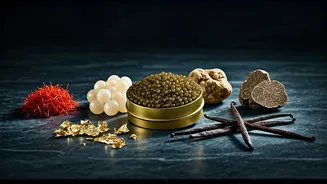
Saffron, renowned as the world's most valuable spice, originates from the delicate stigmas of the Crocus sativus flower. Each vibrant red thread is painstakingly
hand-plucked from thousands of blooms, a labor-intensive process that contributes significantly to its high cost. High-quality saffron can range from ₹400 to ₹1,500 per gram, its value dictated by grade and origin. In culinary applications, saffron imparts a beautiful hue, a subtle floral sweetness, and warm, earthy undertones. To maximize its flavor, chefs often steep these precious threads in warm liquids before incorporating them into dishes, ensuring a more profound aromatic and taste experience.
Matsutake Mushrooms: Forest Treasures
Celebrated as a delicacy across East Asia, particularly in Japan, Matsutake mushrooms are elusive forest dwellers. Unlike many cultivated varieties, these fungi thrive naturally in specific woodland environments, typically flourishing near mature pine trees that are at least 25 years old. This dependency on old-growth forests means they cannot be easily farmed, necessitating dedicated foraging expeditions. The limited annual harvest, estimated to be less than a kilotonne globally, underscores their scarcity. This rarity has elevated Matsutake mushrooms beyond mere food to a symbol of cultural significance, often presented as esteemed corporate gifts in Japan, reflecting their esteemed status and high market value.
Kopi Luwak: A Civet's Coffee
Kopi Luwak, often dubbed 'cat poop coffee,' is famed for its unconventional production method involving the Asian palm civet. This small mammal consumes coffee cherries, and it's the beans that pass through its digestive system, undergoing a unique fermentation process, that are later collected, cleaned, and roasted. Proponents claim this natural transformation results in a remarkably smooth, less acidic coffee with distinct earthy notes and hints of chocolate or caramel. The price reflects this unusual journey, with farmed Kopi Luwak typically costing between ₹4,500 and ₹9,000 per kilogram, while coffee sourced from wild civets can command prices exceeding ₹27,000 per kilogram.
Beluga Caviar: Pearls of the Caspian
Beluga caviar, the prized eggs of the Beluga sturgeon, originates primarily from the waters of the Caspian Sea. The exorbitant price of this delicacy is intrinsically linked to the long maturation period of these fish; it can take approximately two decades for a sturgeon to reach an age where its eggs are suitable for harvest. This extended lifespan and slow reproductive cycle naturally limit the supply, driving up costs significantly. Consequently, Beluga caviar often retails between ₹56,000 and ₹85,000 for just 100 grams. Historical overfishing has further exacerbated the scarcity of wild Beluga sturgeon populations, making this a truly exclusive luxury.
White Alba Truffles: Italian Earth Jewels
The White Alba truffle is a highly sought-after subterranean fungus, primarily found in Italy's Piedmont region, where it grows symbiotically with the roots of trees like oak, poplar, linden, and hazelnut. Unlike many other truffle varieties, these elusive fungi cannot be cultivated, requiring dedicated hunters to locate them in their natural habitat. Highly trained dogs, and sometimes pigs, are employed for their exceptional olfactory senses to sniff out these hidden treasures buried beneath the soil. Due to their extreme rarity and the challenging nature of their discovery, White Alba truffles command exceptionally high prices, often ranging from ₹2 lakh to ₹4 lakh per kilogram, contingent upon the season and quality, and are typically shaved thinly over dishes to preserve their potent aroma.