



The Mighty Blender
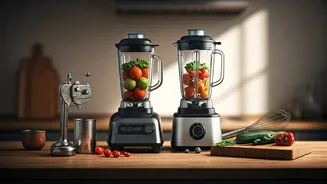
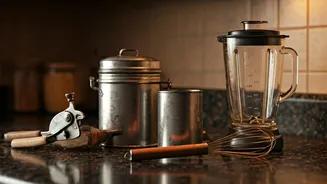
The blender, gaining widespread popularity in the 1920s, is a seemingly basic appliance that has had a monumental impact on home cooking. Its primary function,
the ability to rapidly pulverize ingredients into smooth consistencies, opened up a world of possibilities for culinary creation. Before the blender's widespread adoption, achieving smooth purees for soups, creamy sauces, or the now-ubiquitous smoothies required significant manual effort and time. This innovation not only saved considerable labor but also expanded the textural palette available to home cooks, enabling a greater variety of dishes and beverages to be prepared with ease. Its enduring presence in kitchens worldwide is a testament to its transformative power in simplifying complex preparations and making blended creations a global standard.
The Indispensable Can Opener
Emerging as a necessary companion to the rise of canned foods in the 19th century, the can opener remains one of the most fundamentally important yet frequently unacknowledged kitchen tools. Prior to its invention, opening a sealed tin was a laborious and often hazardous task, requiring considerable force and makeshift implements. The advent of the can opener provided a safe, efficient, and accessible method for accessing the preserved contents within. Its simple mechanism allows for the easy and clean removal of can lids, transforming preserved foods from a cumbersome necessity into a convenient pantry staple. Without this unassuming device, the modern ease and accessibility of canned ingredients, essential for countless quick meals and recipes, would simply not be possible, highlighting its crucial role in contemporary food preparation.
Garlic's Tiny Crusher
The garlic press, a compact tool that gained significant traction in the 20th century, offers a remarkable level of convenience for a common culinary task: crushing garlic. This seemingly minor innovation drastically reduces the time and effort required to release the potent flavor compounds from garlic cloves. Instead of mincing or pounding, a simple press yields finely mashed garlic, ready to be incorporated into dishes. This ease of use has arguably played a substantial role in popularizing the use of garlic across a wider array of global home cooking traditions. By making a key flavor ingredient so accessible, the garlic press has contributed to the enhanced complexity and aroma of countless meals prepared in kitchens around the world.
Microwave's Swift Heat
The microwave oven, a product of an accidental discovery in the 1940s, has fundamentally reshaped contemporary cooking routines through its rapid and efficient heating capabilities. Utilizing electromagnetic waves, it can quickly warm food, thaw frozen items, or even cook entire meals in a fraction of the time traditional methods would demand. This speed and convenience have made it an indispensable appliance for many households, altering meal preparation timelines and enabling quicker access to hot food. The microwave's impact extends beyond mere speed; it has become an integral part of modern life, influencing how we approach cooking, reheating, and even the types of meals we prepare on a daily basis.
Pressure Cooker's Speed
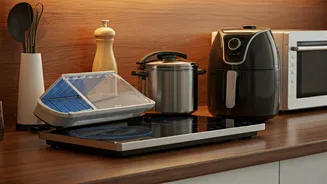
The pressure cooker, with roots tracing back centuries and a more modern iteration appearing in the 17th century, significantly reduces cooking times, particularly for ingredients that are typically slow to tenderize. By trapping steam, it creates a high-pressure environment that accelerates the cooking process, allowing tough cuts of meat or dried beans to become tender in a remarkably short period. This efficiency not only saves precious time in the kitchen but also conserves fuel, making nutritious meals more accessible and economical for households. The pressure cooker's ability to dramatically cut down on labor and energy expenditure has made it a valuable tool for preparing hearty stews, grains, and other dishes that traditionally require prolonged simmering.
Refrigeration's Freshness
The journey from the rudimentary icebox of the 19th century to the sophisticated refrigeration units of today represents a monumental leap in food preservation. By slowing down the natural processes of spoilage, these technologies have dramatically extended the shelf life of perishable goods, making a wider variety of fresh foods accessible for longer periods. This innovation has had profound implications for public health, dietary diversity, and global food systems. Refrigeration allows for better meal planning, reduces food waste, and enables access to seasonal produce year-round, fundamentally changing how we store, consume, and think about food.