





Initial Investment: Funding the Launch
The journey of a satellite into space is a costly venture, with the financial responsibility spread across various stakeholders. The Government of India,
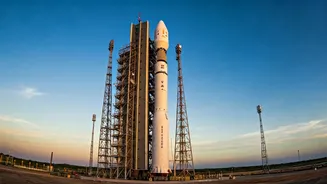
through ISRO, makes substantial investments in these projects. This funding covers research and development, building the launch vehicle (in this case, the PSLV), and the complex infrastructure required for launch operations. It is important to note that a significant portion of the budget goes towards ensuring the mission's success, including rigorous testing and quality control measures. These proactive steps aim to reduce the likelihood of failure but are not a guarantee.
Cost Breakdown: Launch Complex Details
Every space mission has diverse associated costs. Launching a rocket like the PSLV-C62 includes expenses like manufacturing the rocket itself, which encompasses the procurement of raw materials, labor, and the advanced technological systems incorporated. There are also the costs of the launch site infrastructure, which are made up of the development and maintenance of launch pads, control centers, and tracking facilities, along with the support staff and essential personnel needed to manage the launch. Additionally, there are costs of insurance to cover the loss of the launch vehicle and its payload.
Insurance: Managing the Risks
Insurance plays a crucial role in mitigating the financial risks associated with space missions. Space missions are insured to protect against losses resulting from launch failures or in-orbit mishaps. The insurance premiums are calculated depending on factors like the value of the payload, the launch vehicle's history, and the perceived risks involved. When a mission fails, the insurance provider compensates for the losses, which can cover the costs of the launch vehicle and the satellite. This insurance helps to lessen the impact of financial losses and enable ISRO to recover faster and focus on future missions.
Indirect Costs: Beyond the Launch
The failure of a mission also involves a range of indirect costs that are often overlooked. It includes the damage to the reputation of ISRO, which can impact future business opportunities and international collaborations. Furthermore, the failure can cause delays in planned projects, pushing back expected revenue and operational deadlines. Finally, the failure requires investing additional resources into failure analysis, conducting investigations to ascertain the root causes of the failure. This helps ISRO to implement corrective measures, increasing the costs and the time for future missions.
Financial Impact: ISRO and Partners
The financial fallout from a mission failure is shared among various parties, not just ISRO. The primary financial burden falls on ISRO, which is responsible for the launch vehicle, infrastructure, and operational costs. However, depending on the nature of the mission, other entities also bear the financial repercussions. These entities could include the satellite's owner, who may need to allocate funds for a replacement. Insurance companies also incur significant costs, as they are required to pay out claims for the loss. Therefore, such failures impact a broad spectrum of stakeholders within the space ecosystem.
Mitigation: Preventing Future Losses
Addressing potential losses necessitates a multi-faceted strategy. Thorough quality control and rigorous testing are essential to spot potential flaws before launch. Investing in technology to boost launch reliability is also key. Diversifying launch providers and exploring different launch vehicle options can also help manage risks. Furthermore, a strong insurance policy and comprehensive risk assessment are important tools to mitigate financial losses. Open communication and cooperation between ISRO, satellite owners, and insurance providers are also very important in handling the financial effects of future mission failures.
Long-Term Implications: Space Program
A mission failure impacts the long-term progress of India's space program. Setbacks can affect the public's confidence in ISRO and India's space capabilities, which may affect funding and support for upcoming projects. Moreover, it can delay technological advancements and the achievement of mission objectives, affecting India's standing in the international space community. However, lessons learned from a failure are crucial for improving future missions. Every failure helps the ISRO engineers to enhance their skills, adopt new technologies, and strengthen operational procedures, which promotes resilience and sustainable growth for the space program.