


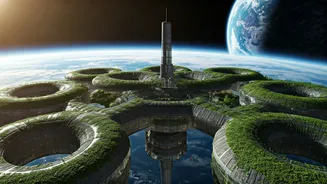


Seeking Alien Worlds
The quest to find life beyond Earth is intensifying, with astronomers identifying numerous exoplanets as potential cradles for extraterrestrial biology.
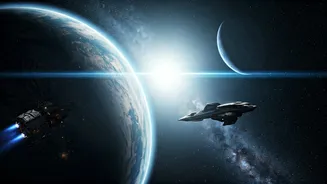
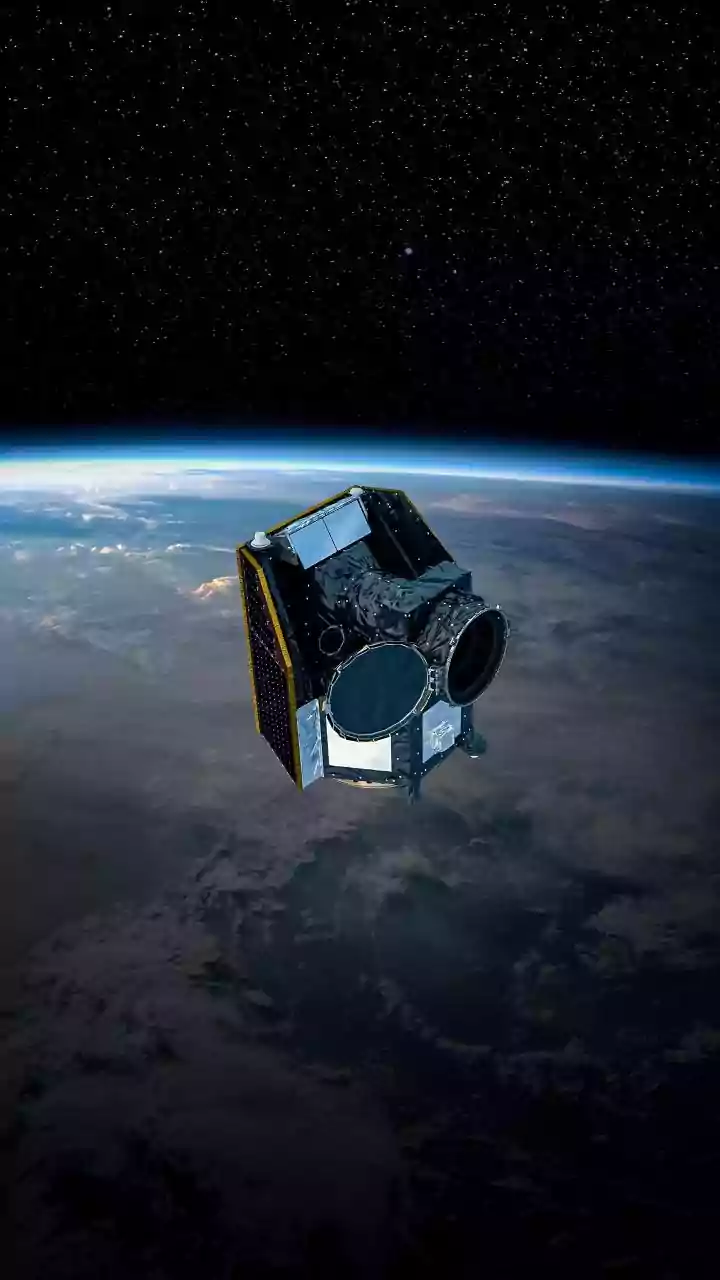
Recent discoveries highlight 45 exoplanets that are particularly promising candidates for hosting life, pushing the boundaries of our search beyond the traditional 'Goldilocks Zone.' These distant worlds, some of which are 'cold Earths' potentially within their star's habitable zone, are being meticulously studied. Scientists are developing sophisticated methods to detect biosignatures – the chemical fingerprints of life – in the atmospheres of these alien planets. Even planets previously thought to be inhospitable, like those with thick, impenetrable hazes or those orbiting starless 'rogue' planets, are now being considered as potential abodes for life. This broadened perspective suggests that the loneliest corners of the universe might, paradoxically, be the most fertile ground for discovering alien life, challenging our preconceived notions of where life can emerge and thrive.
Artemis 2's Lunar Journey
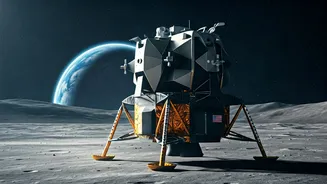
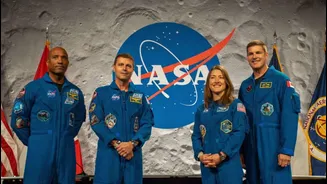
The Artemis 2 mission is poised to make history as the first crewed voyage around the Moon in decades, carrying a diverse and dedicated crew. Commander Reid Wiseman, along with astronauts Victor Glover, Christina Koch (who will be the first woman to fly around the Moon), and Jeremy Hansen, are meticulously preparing for this monumental undertaking. Having recently arrived at the Kennedy Space Center, the astronauts have expressed a profound sense of responsibility and privilege. The mission is framed not just as a scientific endeavor but as a journey for all of humanity, emphasizing a shared experience of exploration. This lunar flyby is a crucial step towards future crewed missions to the Moon's surface and beyond, signifying a bold new era of human spaceflight and a commitment to pushing the frontiers of our cosmic presence. The anticipation for this historic launch is palpable, marking a significant moment in space exploration.
Sci-Fi's Cosmic Influence
Science fiction continues to inspire and inform our understanding of space and potential future endeavors. Andy Weir's works, particularly 'Project Hail Mary,' have captivated audiences, prompting discussions about astrobiology and the science behind interstellar travel. The book's journey from page to screen, with Ryan Gosling's celebrated performance and Weir's own insights into his favorite scenes, highlights the power of compelling storytelling in engaging the public with scientific concepts. The film's success has led to a deeper appreciation for Weir's other literary contributions, encouraging readers to explore more of his science-grounded adventures. Beyond specific stories, science fiction as a genre plays a vital role in envisioning the future of space exploration, from considering the challenges of human reproduction in space to contemplating the role of AI in astronomical discovery and the possibility of life on unconventional celestial bodies like moons orbiting rogue planets.
Unveiling Celestial Mysteries
Beyond the grand narratives of exoplanet hunts and lunar missions, the universe presents a constant stream of intriguing phenomena. Fireball sightings have seen a notable surge across the United States, prompting scientific explanations that demystify these luminous atmospheric events. Astronomers are also unraveling the complex architecture of planetary systems, as evidenced by the discovery of a peculiar 'inside-out' planetary system, challenging existing models of planetary formation. Furthermore, ongoing research into celestial bodies like Saturn raises questions about their origins, with new theories suggesting its iconic rings might be the remnants of a shattered moon. These diverse celestial curiosities, from the spectacular to the subtly strange, underscore the dynamic and ever-evolving nature of our cosmos, inviting continuous observation and scientific inquiry.