





Exercise's Brain Boost
A groundbreaking study published on April 15, 2026, has illuminated a direct pathway through which physical activity enhances cognitive abilities. Researchers
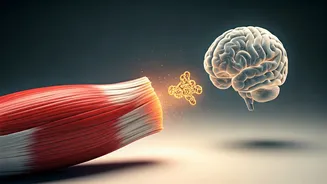
from esteemed institutions in South Korea, specifically Seoul National University and the Korea Brain Research Institute, observed a remarkable phenomenon in mice subjected to aerobic exercise. These active rodents exhibited superior cognitive performance when contrasted with their sedentary counterparts who were not provided with running wheels. The core of this discovery lies in the production of a specific protein by the skeletal muscles of exercising mice. This protein, once released into the bloodstream, embarks on a journey to the brain, where it plays a crucial role in fortifying the brain's capacity to convert fleeting short-term memories into enduring long-term recollections. This finding underscores the profound impact of aerobic activity on neural plasticity and memory formation.
The Memory Protein Unveiled
The key player in this exercise-induced cognitive enhancement is a protein identified as Serpina1e. This potent molecule is secreted in greater quantities by the skeletal muscles following periods of aerobic exertion. What makes Serpina1e so significant is its ability to traverse the blood-brain barrier and directly influence neural pathways involved in memory. In essence, the more Serpina1e produced due to exercise, the more effectively the brain can consolidate memories. This protein acts as a crucial messenger, signaling to the brain the importance of preserving information. The research suggests that by engaging in regular aerobic activities, individuals can effectively stimulate their muscles to produce more of this memory-boosting compound, thereby creating a more robust and resilient memory system. This physiological response highlights a sophisticated interplay between physical fitness and cognitive health.