





What is DHT?
DHT, or dihydrotestosterone, is a naturally occurring hormone derived from testosterone, present in both men and women, though in varying amounts. While
it plays a functional role in certain developmental aspects, such as body hair growth and voice deepening in males during puberty, it's not inherently detrimental. The issue arises when an individual's hair follicles develop a sensitivity to this hormone. This sensitivity is typically inherited, leading to what is commonly known as DHT hair loss, or androgenetic alopecia.
How DHT Causes Hair Loss
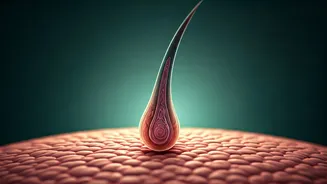
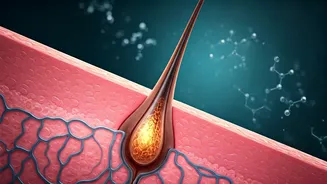
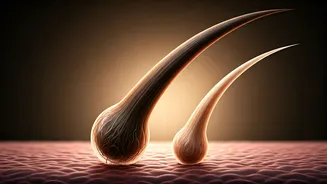
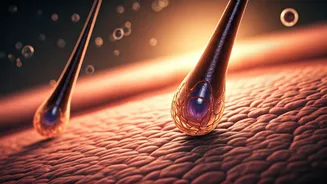
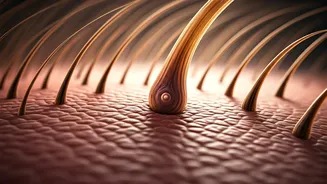
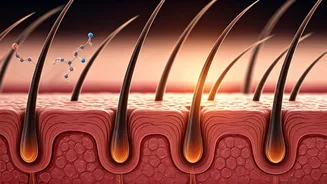
When DHT binds to hair follicles that are genetically predisposed to sensitivity, it triggers a gradual miniaturization process. Imagine the hair follicles as miniature factories responsible for hair production; DHT essentially signals these factories to slow down and eventually cease operations. This leads to a cycle where hair strands grow progressively finer, the growth phase of the hair cycle shortens, and the resting phase extends. Ultimately, the follicle may stop producing hair altogether. This is not an abrupt event but a slow, often unnoticed progression that results in thinning hair over time, rather than sudden baldness.
Key Signs of DHT Hair Loss
Identifying DHT hair loss involves looking for specific patterns and changes in your hair. A significant indicator is gradual thinning over months or years, a progressive loss of volume rather than a sudden shedding event. In men, a classic sign is a receding hairline, often starting at the temples and forming an 'M' shape, alongside thinning at the crown. Women typically experience diffuse thinning, most noticeably a widening of the hair parting or a less voluminous ponytail, rather than complete baldness. Another crucial sign is a noticeable change in hair texture, where once thick strands become finer and more wispy. A family history of hair loss also significantly increases the likelihood of experiencing DHT-related thinning.
Normal Shedding vs. DHT Impact
It's important to distinguish between normal daily hair shedding and hair loss caused by DHT. Losing between 50 to 100 strands of hair per day is considered normal and part of the hair's natural growth cycle, with hair typically regrowing. In contrast, DHT hair loss is a progressive, patterned thinning that may not result in regrowth from affected follicles. While normal shedding can be influenced by factors like stress or diet, DHT hair loss stems from hormonal sensitivity. If your hair consistently fails to regain its previous thickness or density, it might be indicative of DHT's ongoing impact.
Who is At Risk?
DHT hair loss affects a considerable portion of the population, with certain factors increasing susceptibility. Individuals with a genetic predisposition, evidenced by a family history of baldness or thinning hair, are at a higher risk. The onset often occurs in the late twenties or thirties, though it can manifest earlier. Hormonal imbalances, including conditions like Polycystic Ovary Syndrome (PCOS) in women, can also play a role. It's a misconception that women are immune; female pattern hair loss, a manifestation of DHT sensitivity, is quite common and presents differently than male pattern baldness.
Diagnosing and Managing DHT Loss
While a definitive home test for DHT hair loss doesn't exist, several observations can suggest its presence. Analyzing the pattern of thinning—whether it's localized to the hairline, crown, or parting—can be a clue. Tracking the timeline of hair thinning, noting a slow, consistent decline, also points towards DHT. Observing a change in hair strand thickness is another indicator. For a conclusive diagnosis, consulting a dermatologist is the most reliable approach. They can examine your scalp, potentially use dermoscopy for a close-up view of follicles, and recommend blood tests if necessary. Although DHT itself cannot be eliminated, its effects can be managed through DHT-blocking treatments, topical medications that stimulate growth, and lifestyle adjustments such as a balanced diet rich in protein, iron, and biotin, effective stress management, and good scalp hygiene. Early detection and intervention are crucial for slowing the progression.