





Water Intake: Beyond the Myth
For years, the beauty industry has championed the 'eight glasses of water a day' mantra as the key to achieving luminous skin. However, a recent viral
discussion has cast doubt on this widespread advice, suggesting that exceeding our body's actual hydration needs primarily leads to clearer urine, not necessarily clearer skin. Our kidneys are remarkably efficient filtration systems, processing vast quantities of fluids daily. They expertly recycle most of this fluid, releasing only the excess as urine. Therefore, if you're already adequately hydrated, the additional water you consume is simply flushed out by your body, with no proven direct impact on skin clarity. This challenges the notion that more water automatically equates to better skin, prompting a re-evaluation of our hydration strategies.
Kidney Function and Hydration
Understanding how our kidneys function is crucial to grasping why excessive water intake may not benefit our skin. These vital organs are responsible for filtering about 47 gallons of fluid each day, a staggering amount equivalent to roughly 350 water bottles. Their primary role is to maintain fluid balance within the body. They meticulously reabsorb the water that the body needs and excrete only what is surplus. This means that when you drink more water than your body requires, your kidneys efficiently identify this excess and eliminate it through urine. The resulting pale yellow or clear urine, often seen as a sign of good hydration, can in some cases indicate overhydration rather than optimal skin health benefits. This sophisticated filtering process highlights that the body has built-in mechanisms to manage water levels, making the 'more is better' approach for skin hydration potentially misguided.
Scientific Scrutiny and Diet's Role
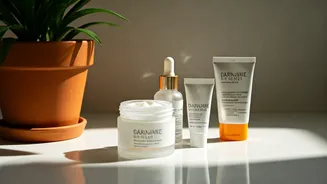
Scientific evidence supporting the claim that drinking extra water significantly improves skin health in already hydrated individuals is sparse. A 2018 review from Charité University in Berlin found no conclusive proof for this, and a 2024 study from Korea even indicated that topical moisturizers were more effective than increased water consumption for skin improvement. Furthermore, dietary factors appear to play a more substantial role in skin condition than fluid intake alone. Research published in the American Journal of Clinical Nutrition suggests that high-sugar diets can escalate breakout risks by 20-30%, while skim milk has also been linked to acne. This is attributed to its potential to spike hormones that stimulate oil glands, leading to pore blockages. Consequently, focusing on nutrient-rich foods such as healthy fats, vitamins A and C, zinc, and consistent sunscreen use is likely more beneficial for skin health than solely concentrating on water consumption.
Holistic Approach to Skin Health
Achieving clear and healthy skin isn't a one-dimensional pursuit; it requires a comprehensive and balanced approach. Integrative wellness experts emphasize that optimal skin health is a result of synergistic factors, not just isolated habits. While hydration is undoubtedly important, it's only one piece of the puzzle. The body's ability to utilize water effectively is also influenced by nutritional status. Being nutrient-deficient, even while drinking ample water, can impede skin health. Conversely, maintaining a good diet while being chronically dehydrated will also yield subpar results. Therefore, the key lies in a holistic strategy that combines adequate hydration with proper nutrition, diligent skin protection, and overall healthy lifestyle choices. Overlooking any of these components can hinder progress, highlighting the importance of a well-rounded regimen for radiant skin.