
A Year of Setbacks
2025 was a year of mixed fortunes in space exploration, marked by both triumphs and considerable challenges. Several missions encountered difficulties,
with launches failing and spacecraft encountering issues. Numerous countries and private companies had to face setbacks in their attempts to reach new heights and achieve their goals, demonstrating the ever-present risks within this field. The following sections will look into different events of the past year that showed how difficult space travel can be.
Japan's Rocket Woes
The year included significant disappointments for Japan's space program. The launch of the H3 rocket, intended to send a navigation satellite into orbit, resulted in failure. In a separate incident, a private Japanese lander suffered a crash during its landing attempt on the Moon. These events underscored technological hurdles and operational issues, raising questions about the future trajectory of Japan's space exploration endeavors. These setbacks showcased the complexities of space missions and the need for rigorous testing and development.
India's Launch Challenges
India's space program also experienced its share of problems during 2025. An Indian rocket failed during its attempt to launch a satellite into orbit, causing a setback for their space missions. Although the specific reasons behind the failure were not immediately released, the incident highlighted difficulties in the technology and processes involved. This occurrence emphasized that there are always risks, even for organizations with a great deal of spacefaring experience.
Private Landings Gone Wrong
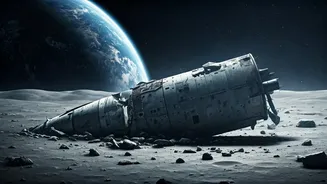
The realm of private space exploration faced its own hurdles in 2025. An American private lander encountered problems, resulting in a crash on the lunar surface. The incident highlighted the demanding aspects of lunar missions. These private-sector ventures, despite their potential, must overcome substantial technical and financial difficulties to achieve success. These challenges demonstrate the complicated nature of space exploration and the need for relentless development, as well as operational caution.
Other Launch Failures
Various other entities suffered launch failures in 2025. Galactic Energy's Ceres-1 rocket experienced issues. South Korea's first private orbital rocket faced similar challenges, and the first orbital launch from European soil crashed and burned. Australia's first homegrown orbital rocket also came up short, all of these setbacks added to the year's overall challenges in space exploration. These instances highlight the persistent risks associated with space travel.
Firefly Aerospace's Setbacks
Firefly Aerospace faced a challenging year, experiencing difficulties with its operations. The company's setbacks reflect the competitive and risky nature of private space endeavors. These events underscore the need for resilience and adaptability within the fast-paced and ever-changing space industry. Firefly Aerospace's experience is a reminder of the many obstacles facing companies looking to be successful in this field.
The Return of Boosters
One of the challenges encountered was related to returning boosters. Several attempts to land boosters were unsuccessful, resulting in damage or complete failure. These situations highlighted the difficulties of returning and reusing rockets, a critical element in lowering space travel expenses. Despite advances in technology, reliably recovering boosters is a hurdle that space agencies and businesses must overcome to have continued operations and development.
Starship's Test Fireworks
The test flight of Starship also contributed to the eventful year. The flight ended with an explosion, which highlighted the inherent risks of space exploration. These incidents, while unfortunate, also offer essential learning opportunities for companies and engineers. The setbacks act as motivation to refine designs, enhance safety protocols, and push the boundaries of space technology.
Landspace's Rocket Failure
The Chinese firm Landspace faced difficulties with its Zhuque-2 rocket. The launch ended in failure, demonstrating the complexity of achieving a successful orbital launch. These issues reveal that, even with increased global space capabilities, technological challenges and operational risks remain. For Landspace, this failure underscores the necessity of continuous improvement and adaptation.
A Challenging Year
The year 2025 presented a tough landscape for space exploration, marked by various challenges and failures across multiple global programs. From rocket launch failures to lunar crashes, these setbacks reveal the persistent risks and technical hurdles inherent in space travel. The year's events served as a reminder of the need for sustained innovation, thorough testing, and operational precision. The progress of space exploration has been marked by many ups and downs, but it perseveres in the face of setbacks, fueled by ambition and technological advancements.