





Understanding the Cowlick
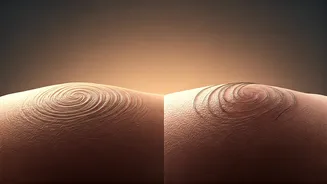
A cowlick is essentially a stubborn section of hair that grows in a direction contrary to the rest of your mane. This phenomenon is rooted in genetics,
specifically the angle at which your hair follicles emerge from the scalp, often creating a distinct swirl or spiral pattern. The crown of the head is a particularly common location for these natural whorls. Regardless of styling efforts, a cowlick will always resist lying flat. It’s important to recognize that this is a normal, inherent trait and not an indicator of hair damage or thinning. When you look at old photographs, you'll likely notice it’s been present since childhood. Its defining characteristics include its persistent nature, its tendency to be at the crown or along the hairline, its resistance to styling, and its more pronounced appearance when hair is short or wet.
Identifying a Bald Spot
In contrast to a cowlick, a bald spot signifies a genuine loss or thinning of hair within a specific area of the scalp. This isn't about growth direction but rather a reduction in hair density. While genetics, particularly male and female pattern baldness, are common culprits, other factors like significant stress, hormonal fluctuations, or prolonged wear of tight hairstyles can also trigger this condition. Key indicators that you might be looking at a bald spot include a gradual expansion of the affected area over a period of months, increased scalp visibility compared to before, and a noticeable increase in the amount of hair found in your shower drain or on your pillow. Additionally, the hair within the area might feel finer or "fuzzy" compared to the hair on other parts of your head.
Key Differences to Note
Distinguishing between a cowlick and a bald spot involves observing several crucial elements. Firstly, consider the timeline: a cowlick is a permanent feature that remains consistent in size throughout your life, whereas a bald spot is dynamic and tends to enlarge or become more apparent over weeks or months. Secondly, examine hair density: with a cowlick, hairs are present but simply lie in a different direction, while a bald spot shows a reduced number of hairs or completely bare skin. Pay attention to shedding; increased hair loss across your head often accompanies a bald spot, while a cowlick doesn't cause shedding. Scalp visibility also differs; a cowlick's apparent thinness can often be masked by repositioning the hair, but a true bald spot's scalp remains exposed regardless of styling. Finally, hair texture can be a clue; if the hair in the area feels consistent with the rest of your head, it's likely a cowlick, but a noticeable difference in texture might point to thinning.
Avoiding Common Traps
It's easy to misinterpret certain hair conditions due to environmental factors or the natural state of wet hair. After showering, hair tends to clump together, forming spikes that can inadvertently expose the scalp, especially at the crown. If the perceived bald spot disappears once your hair dries and regains its volume, it's almost certainly just a cowlick. Furthermore, harsh, direct overhead lighting, like that found in many bathrooms, can create an illusion of sparsity even in a full head of hair. It's advisable to assess your hair in natural, indirect light before jumping to conclusions. The key takeaway is that significant hair loss doesn't typically occur overnight. If you're not experiencing excessive shedding and the area hasn't changed in size over a couple of months, it's highly probable that you're simply observing a persistent cowlick.
When to Seek Help
While many scalp anomalies are harmless, there are specific signs that warrant consulting a professional, such as a dermatologist or a trichologist. If you notice that the patch in question is visibly increasing in size, or if your hairline is receding alongside it, this could indicate a more serious issue. Itching, redness, or irritation of the skin in the affected area are also red flags. Another critical indicator is the presence of very short, thin, "miniature" hairs within the patch, which differ significantly in appearance from the rest of your hair. If you observe any of these symptoms, it's prudent to seek expert advice to accurately diagnose the condition and explore appropriate treatment options.