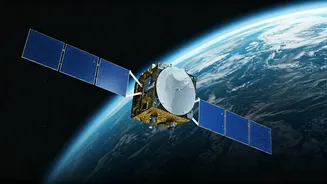








Orbiting 5G Progress
The recent completion of initial 5G tests by Tyvak International's LIDE satellite in orbit is a remarkable advancement in space-based communication capabilities.
These tests were carefully conducted to evaluate how effectively 5G signals function within the unique environment of space. The results of these initial tests are crucial for understanding the potential of using satellites to enhance communication technology. Successful tests suggest the feasibility of future space-based communication systems, which are poised to improve connectivity. This achievement builds upon the existing infrastructure and is a significant step toward future satellite communication technologies. The deployment of 5G tests in space has the potential to enhance global connectivity and provide reliable communication services in remote areas. This is a very interesting project for the tech field and will impact the future greatly.
Testing in Space
Conducting 5G tests from space provides various benefits, one of the most significant being the ability to provide communication coverage over vast distances. During the experiments, the LIDE satellite collected important data on signal strength, latency, and overall network performance. This data helps engineers and scientists evaluate the technical challenges. Space-based 5G has a distinct advantage over terrestrial networks in terms of coverage. The tests revealed how the unique characteristics of the space environment affect 5G signals, helping to refine the design of future satellite communication systems. The ability to bring high-speed internet to remote and underserved areas is a game changer for the technology sector. The outcomes of these tests are crucial for developing better and more robust 5G networks in the future.
Future Implications
The successful 5G tests aboard the LIDE satellite have considerable implications for the future of communication technology. This accomplishment is a very important step towards globally accessible, high-speed internet connectivity. The lessons acquired during these tests will guide the construction and deployment of new satellite communication systems. It is also important to consider the potential of space-based 5G in areas such as disaster relief and emergency response, providing critical communication capabilities when terrestrial networks fail. Future developments in this area are likely to include improvements in satellite design and network management. These advancements can enhance signal performance and ensure reliable communication under challenging circumstances. These tests also emphasize the importance of global collaboration and innovation in the communication sector.