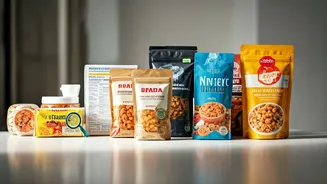







The 'Organic' Maze
The allure of organic food for its potential health advantages is undeniable, but the surge in demand has unfortunately paved the way for fraudulent practices.
Many products adorn the 'organic' label without truly meeting the rigorous standards required, making it increasingly challenging for consumers to differentiate between genuine produce and deceptive marketing. The Food Safety and Standards Authority of India (FSSAI) has issued a critical warning, urging shoppers to be exceptionally vigilant. Merely trusting the word 'organic' on a package is no longer sufficient; understanding specific verification steps is paramount to ensuring that what you bring home actually aligns with certified organic principles and is free from misleading claims, safeguarding both your health and your investment.
Spotting the Jaivik Bharat Mark
A key indicator of an authentic organic product is the presence of the 'Jaivik Bharat' logo. This signifies that the food item has undergone a stringent certification process overseen by the Indian government, confirming its adherence to certified organic standards. In conjunction with this logo, it is crucial to locate a valid FSSAI license number prominently displayed on the packaging. The absence of either the 'Jaivik Bharat' logo or a legitimate FSSAI license number should be treated as a significant warning sign, indicating that the product may not be genuinely organic and should likely be avoided.
Decoding Accreditation Numbers
Every product that has been certified as organic will carry a unique accreditation or certification number. This number serves as a direct link to the authorized agency responsible for its verification, confirming that all stipulated organic cultivation, processing, and packaging protocols have been meticulously followed. If the product packaging fails to mention a certifying body or its corresponding number, it strongly suggests that the 'organic' claim is merely a superficial marketing ploy, lacking any substantive backing or verifiable certification. Consumers should prioritize products that transparently provide this essential accreditation detail.
Beyond the Price Tag
Consumers often mistakenly associate a higher price with guaranteed authenticity when it comes to organic products. However, this is a misconception that can lead to purchasing counterfeit goods. Many fake organic items are deliberately priced higher to create an illusion of superior quality and legitimacy. Instead of allowing the cost to influence your decision, it is far more effective to concentrate on thoroughly inspecting the verified labels and certifications present on the packaging. True authenticity is confirmed through official markings and regulatory approvals, not solely by a premium price point.
Meticulous Packaging Scrutiny
Before completing a purchase, a careful examination of the product's packaging is highly recommended. Genuine organic products typically provide comprehensive and clear information regarding their certification, the origin of their ingredients, and their compliance with regulatory standards. Conversely, any packaging that presents vague, incomplete, or ambiguous details should immediately raise suspicion. Authorities consistently emphasize the importance of consumer vigilance; understanding these fundamental checks not only helps in circumventing fraudulent products but also ensures that one consistently opts for food items of superior quality and genuine organic integrity.