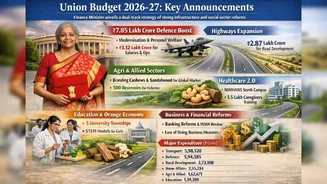







Budget's Strategic Overview
The Indian budget recently presented underscored a strategic focus on propelling the manufacturing sector forward. The allocation of resources and the formulation
of policies indicated the government's commitment to transforming the sector into a key driver of economic growth. This commitment was evident through various initiatives aimed at addressing specific challenges and fostering overall industry competitiveness. The budget outlined several critical measures designed to facilitate this transformation. These included fiscal incentives, infrastructure development, and regulatory reforms, all of which were carefully designed to foster an environment conducive to investment and innovation. A significant portion of the budget was channeled towards enhancing infrastructure, particularly in sectors essential for manufacturing operations such as transportation and logistics. The government's strategic outlook also extended to the enhancement of existing industrial corridors. This involved upgrading facilities, reducing bottlenecks, and providing better connectivity. These infrastructure improvements were critical for attracting investments and improving the efficiency of manufacturing processes, helping the sector meet its full potential.
Fiscal Incentives Offered
The budget strategically incorporated multiple fiscal incentives to encourage investment and boost production within the manufacturing sector. These incentives took diverse forms, each intended to address specific needs. Tax breaks and subsidies were introduced to help companies lower their operational costs, making them more competitive both domestically and globally. These were particularly beneficial for small and medium-sized enterprises (SMEs), which often face significant financial constraints. Additionally, the budget included provisions to streamline tax procedures and reduce compliance burdens. This was designed to reduce the administrative overheads and improve the ease of doing business for manufacturers. The incentives encouraged innovation and technological upgrades by providing financial support for research and development activities. The measures were intended to encourage adoption of advanced manufacturing technologies, fostering efficiency improvements and enhanced product quality. The budgetary allocations included targeted subsidies for specific sectors and products, further encouraging domestic production and reducing reliance on imports. These incentives were carefully structured to align with the government's broader economic objectives, including job creation and sustainable growth. The emphasis on providing these incentives reflected a long-term vision of making India a major global manufacturing hub.
Infrastructure Development Focus
A core aspect of the budget's strategy involved extensive infrastructure development aimed at bolstering the manufacturing sector's operational capabilities. The government recognized that efficient infrastructure is indispensable for the success of manufacturing industries, which is why it dedicated substantial investments to enhance various infrastructural facets. Priority was given to upgrading and expanding transportation networks, encompassing roads, railways, ports, and airports, to facilitate seamless movement of raw materials and finished goods. These enhancements were intended to reduce logistics costs, shorten delivery times, and boost overall efficiency. Simultaneously, the budget included significant allocations for developing industrial corridors, specifically designed to connect key manufacturing hubs and facilitate the efficient movement of goods. These corridors were accompanied by the creation of specialized economic zones (SEZs) and industrial parks, which provide integrated infrastructure and simplified regulatory frameworks for manufacturing units. The government's infrastructure push also involved modernizing the energy sector, ensuring a stable and reliable power supply, which is critical for continuous manufacturing operations. The investment in digital infrastructure was aimed at enhancing connectivity, supporting smart manufacturing practices, and fostering data-driven decision-making within the sector. These improvements were designed to make Indian manufacturing more competitive on a global scale.
Regulatory Reforms and Support
Along with fiscal incentives and infrastructure enhancements, the budget also focused on streamlining regulations and offering robust support to enhance the manufacturing environment. The government recognized that a cumbersome regulatory landscape could impede business operations, therefore, undertook initiatives to reduce red tape and simplify compliance procedures. These regulatory reforms were designed to improve the ease of doing business and encourage both domestic and international investments. The budget addressed labor law reforms to provide flexibility while ensuring employee welfare. These measures aimed to create a balanced environment that promotes business expansion while protecting workers' rights. Further support included the establishment of single-window clearance systems to expedite approvals and permits for manufacturing projects, removing bureaucratic hurdles and accelerating project timelines. The government introduced measures to promote skill development and training programs to ensure that the workforce is well-equipped with the necessary skills for the modern manufacturing sector. The budgetary allocations also covered support for research and development, providing resources for innovation and technological advancements. This proactive regulatory approach and support system collectively aimed to create a more dynamic and competitive manufacturing ecosystem, making India a preferred destination for global manufacturing investments. This integrated strategy was expected to drive industrial growth and stimulate economic expansion.