






The Alert Reptile
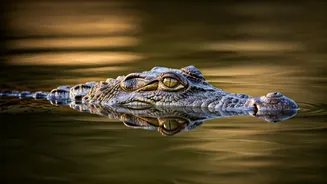
The common phrase 'sleeping with one eye open' perfectly encapsulates the reality for crocodiles, a species renowned for its perpetual state of awareness.
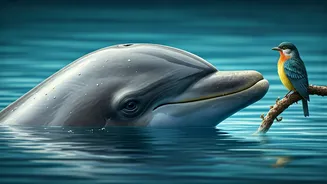
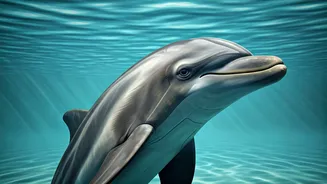
Unlike humans who experience complete unconsciousness during sleep, crocodiles possess an extraordinary capability to rest while maintaining a degree of vigilance. This peculiar behaviour, first rigorously studied in 2015 by researchers from La Trobe University and the Max Planck Institute for Ornithology on young saltwater crocodiles, revealed that these reptiles could appear to be resting yet keep one eye open, specifically directed towards any perceived stimulus. This wasn't a mere reflex, but a deliberate biological function. The scientific explanation points to unihemispheric slow-wave sleep, a phenomenon where one half of the brain enters a sleep state while the other remains fully awake and operational, enabling the crocodile to simultaneously conserve energy and monitor its surroundings with a vigilant eye. This adaptation is not exclusive to crocodiles, as similar sleep patterns have been documented in other animals like dolphins, seals, and certain avian species, all of whom inhabit environments where constant awareness is crucial for survival.
Evolutionary Survival Blueprint
Crocodiles are ancient survivors, having navigated the Earth for over 200 million years, a testament to their remarkable resilience. Their physiology is a product of this extended evolutionary journey, equipping them with a suite of survival mechanisms, with their unique sleep pattern being a prime example. In their natural habitat, crocodiles are not solely apex predators; they also face threats, particularly during their younger stages of life. This makes continuous alertness absolutely essential. Whether confronting a rival crocodile, a different predator, or even human intervention, this ability to maintain one eye open during rest allows them to detect danger promptly and respond effectively. As highlighted in scientific discourse, this form of sleep likely emerged as a critical evolutionary advantage, enabling crocodiles to essentially 'doze' while simultaneously scanning for potential threats or advantageous opportunities. It’s akin to dedicating half of one's cognitive capacity to a constant lookout while the other half rejuvenates.
The Nature of Rest
A pertinent question arises: if crocodiles are only ever partially asleep, do they ever achieve complete, restorative rest? The answer appears to be yes, but this deep sleep is likely reserved for specific circumstances. In environments perceived as safe and secure, such as secluded resting spots or when they are alone and undisturbed in the water, crocodiles may indeed enter a deeper sleep, closing both eyes and allowing both hemispheres of their brain to rest. However, in more precarious or socially complex situations, they revert to their unihemispheric sleep strategy to maintain their evolutionary edge. This can be likened to a human dozing on public transport, where one part of the mind is occupied with personal affairs while the other remains partially aware of the immediate surroundings. While this state might not represent the most profound rest for humans, it is perfectly suited for a crocodile's needs, significantly reducing the risk of becoming prey or losing a territorial dispute.
Confirmed Phenomenon
The notion of crocodiles sleeping with one eye open is not a myth or a mere anecdotal observation; it is a scientifically validated phenomenon. Crocodiles possess the undeniable capacity to sleep while keeping one eye open, effectively utilizing half of their brain to stay vigilant. This is not a sporadic occurrence but rather a fundamental aspect of their survival strategy, deeply rooted in evolutionary processes and corroborated by extensive scientific research. Therefore, the next time one encounters a crocodile in a state of apparent repose, it is crucial to understand that its stillness might be deceptive. While one eye could be closed, the other may be actively observing, a constant reminder of the predator's inherent alertness and the sophisticated biological adaptations that ensure its continued dominance.