






Urban Smoke Signals
Morning in Indian cities like Varanasi, Guwahati, and Ludhiana often begins with the comforting glow of traditional chulhas and the aroma of fried delights
from bustling roadside eateries. However, beneath this familiar scene lies a significant environmental concern: smoke. A recent study reveals that these small commercial establishments, ranging from tea stalls to mid-day meal kitchens, are substantial contributors to PM2.5 emissions, accounting for approximately 10% in these surveyed cities. Their pollution is particularly impactful as it concentrates during peak morning and evening hours, directly affecting urban air quality. While a shift towards Liquefied Petroleum Gas (LPG) had offered some reprieve, recent supply disruptions and escalating prices are forcing many businesses to consider reverting to dirtier fuels like coal and biomass, threatening to worsen the air pollution situation in the coming months.
The Cost Calculation
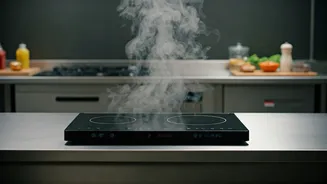
When dissecting the economics of cooking in India, LPG emerges as the priciest option for commercial operations. A standard 19 kg LPG cylinder, costing around Rs 3,100-3,300, offers roughly 240 kWh of thermal energy. However, due to typical burner efficiencies of 55-65%, only about 130-160 kWh of useful cooking heat is realized, translating to a cost of approximately Rs 22.5 per kWh. In stark contrast, induction cooking presents a more favorable financial picture. Even with a high commercial electricity tariff of Rs 15/kWh and an assumed 85% efficiency, induction cooking costs about Rs 17.5 per useful kWh, making it roughly 20% cheaper than LPG. At more common commercial tariffs of Rs 9-10/kWh, induction cooking becomes nearly 50% more economical. For LPG to match induction at these rates, its cylinder price would need to drop by almost 50%, an unlikely scenario. This fundamental shift in cost-effectiveness, making electricity cheaper for cooking, has been in play for some time, yet many eateries continue using more expensive LPG without realizing it.
Beyond Price Barriers
Despite the clear economic advantage of electric cooking, numerous factors hinder its widespread adoption in commercial kitchens. The primary obstacles are not financial but rather rooted in a lack of awareness, ingrained habits, and infrastructural limitations. Most eateries are largely unaware of how induction technology can be integrated into their operations. The familiarity and comfort associated with open flames and traditional cooking methods create a strong inertia against change, with many cooks also believing that switching fuels might alter the taste of their food. Furthermore, a significant hurdle is the inadequate sanctioned electrical load in many small establishments. They often lack sufficient approved power capacity to run multiple induction hobs simultaneously during busy periods. Crucially, there is a noticeable absence of a robust, centralized government program aimed at guiding and supporting businesses in Ludhiana, Guwahati, or Varanasi through the transition to electric cooking.
Charting a New Course
The path forward for India's clean cooking initiative needs a strategic redirection away from LPG and towards electrical solutions. While the past decade's focus on subsidizing LPG to replace biomass was appropriate for its time, addressing indoor smoke and modernizing energy access, the landscape has evolved. Electricity is now demonstrably cheaper than gas at the burner, with renewable energy sources continually driving power costs down. Moreover, the geopolitical vulnerabilities associated with imported LPG, including risks in crucial shipping lanes and global market fluctuations, are increasingly significant. A comprehensive national program aimed at electrifying both commercial and residential cooking, prioritizing segments like small eateries, mid-day meal kitchens, and government canteens, promises multifaceted benefits. This includes fostering a domestic market for induction cooking equipment, significantly improving urban air quality, reducing operational expenses for small businesses, and bolstering kitchen energy security. The economic rationale for this shift is compelling, and effective policy implementation is now essential to accelerate this transition.