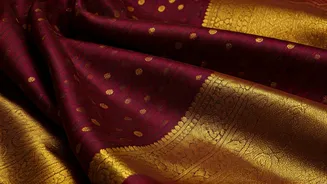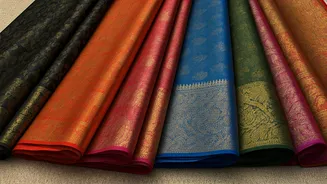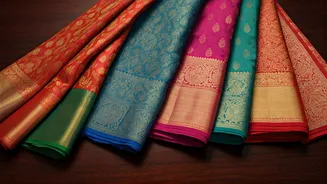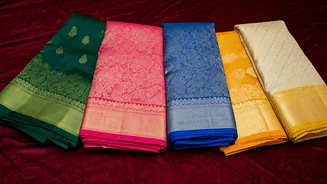






Zari's Subtle Glow
Don't be fooled by excessive shine; genuine zari possesses a refined, elegant sheen rather than a flashy glitter. Authentic zari work, historically crafted
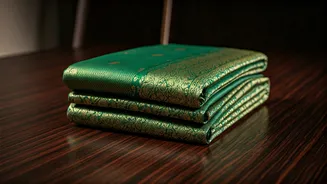
with gold-coated silver threads, exudes a softer luminescence. In contrast, imitation zari often appears overly bright, coppery, or feels rough. A simple test involves gently rubbing the zari between your fingers. High-quality woven zari feels smoother and integrates seamlessly into the fabric, whereas cheap synthetic versions may feel stiff or plasticky. If a saree sparkles aggressively from every angle, it might be an attempt to mask a lack of true craftsmanship. True luxury in zari is understated and sophisticated.
The Tactile Test
Your sense of touch is a powerful tool for authenticity. Genuine Banarasi silk offers a rich feel without being slippery. It possesses a delightful balance of weight, structure, and inherent softness, allowing the saree to drape beautifully without clinging awkwardly or feeling excessively thin. Imitations, often made from polyester or synthetic blends, can feel overly smooth, excessively glossy, or surprisingly light. Seasoned shoppers can often gauge authenticity within moments of handling the fabric. Once you've experienced the distinct luxuriousness of a real Banarasi weave, the difference becomes undeniable. Authentic silk conveys inherent opulence without needing to be overtly ostentatious.
Inspect the Weave Details
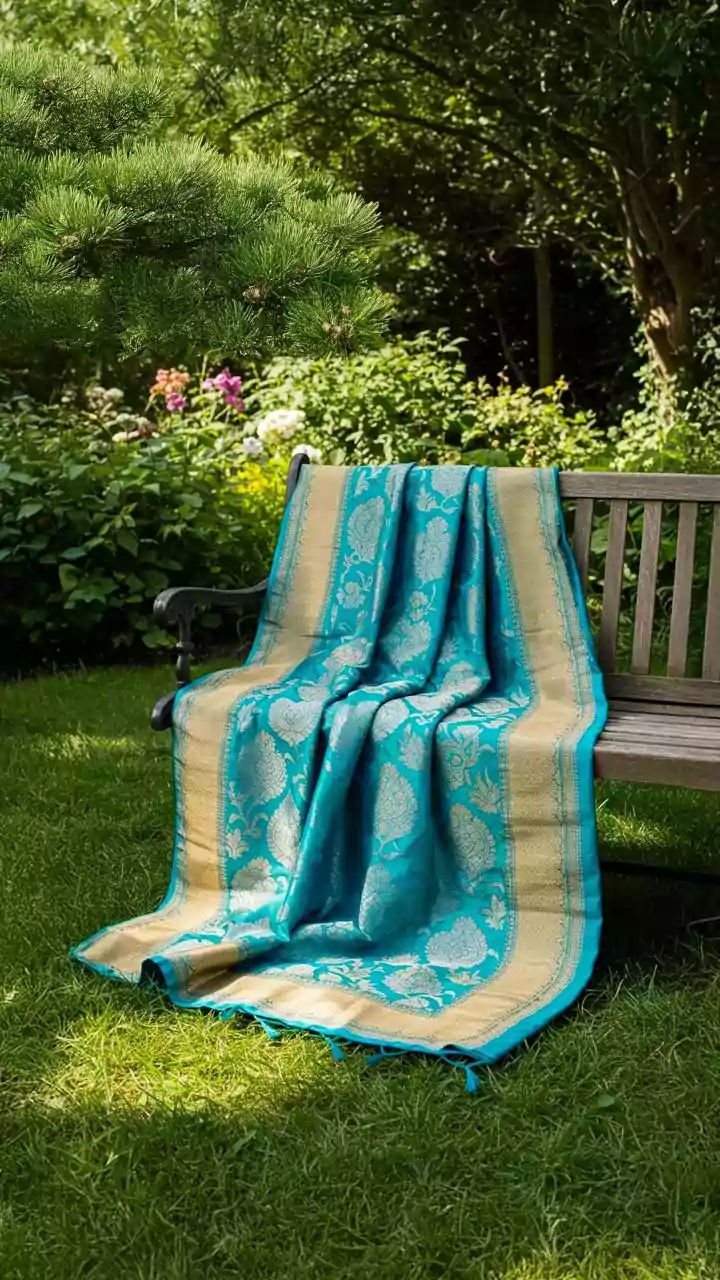
Many shoppers mistakenly focus solely on a saree's shine, overlooking the intricate beauty of its weave. Authentic Banarasi sarees are characterized by their meticulously woven motifs, paisleys, jaal patterns, and detailed borders that are integral to the fabric itself, not merely printed on top. When you run your fingers over the design, you should feel a subtle texture indicative of handcrafted artistry. Fake sarees often rely on a superficial shine and may present patterns that appear flat or unnaturally plastic-like upon closer inspection. Embrace the beauty of minor imperfections, as these are often tell-tale signs of an artisan's touch, differentiating human craftsmanship from machine-made uniformity.
The Backside Clue
A surprisingly effective method to verify authenticity involves examining the reverse side of the saree. For genuine, particularly handwoven, Banarasi sarees, it's common to observe small loose threads or thread floats behind the intricate motifs. This is a natural consequence of the weaving process and contributes to the saree's unique character. The backside won't necessarily appear perfectly polished, and that's perfectly normal. Machine-made imitations, however, often exhibit a consistently clean finish on both sides, as their patterns are typically printed or produced using power looms. If the backside looks indistinguishably smooth and identical to the front, it warrants a second, more critical look before you decide to purchase.
Certification & Tags
When investing in a valuable Banarasi saree, looking for official certifications is a prudent step. Many authentic sarees bear a Geographical Indication (GI) tag, which confirms their origin and connection to the traditional Banaras weaving heritage. Furthermore, reputable sellers may provide Silk Mark certification, verifying that the saree is made from pure silk. While these tags are strong indicators, it's important to remember that they alone do not guarantee authenticity, as counterfeit sellers can attempt to replicate them. However, proper certification significantly enhances credibility and provides buyers with greater assurance. Always verify seller legitimacy and closely examine product details, especially when shopping online.