









Cannonball Tree's Drama
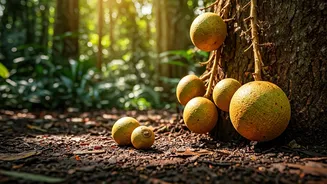
Prepare to be amazed by the Cannonball Tree, a tropical spectacle producing enormous, rust-colored fruits that resemble cannonballs. These hefty fruits,
weighing several kilograms, grow directly from the tree trunk, creating a truly dramatic display. This captivating tree can be found gracing botanical gardens in Sri Lanka and southern India, where it holds cultural significance and is known as the 'Nagalingam' tree.
Miracle Fruit's Taste Twist
Experience a taste bud transformation with the Miracle Fruit, a small fruit native to West Africa that looks like a lemon but delivers an intensely sweet flavor. Its secret lies in a protein called miraculin, which temporarily reconfigures your taste receptors, making sour foods taste sweet. Botanical enthusiasts can seek out farms cultivating this marvel in Ghana, Japan, and parts of Florida, where tasting sessions have become a popular tourist attraction.
Jabuticaba's Bark Surprise
The Jabuticaba presents an otherworldly sight, with its dark purple, grape-and-lychee-like fruits appearing to be directly attached to the tree's bark. This unusual growth pattern creates a mesmerizing visual that many travelers find surreal. You can witness this unique phenomenon and sample the delicious fruit in Brazil, particularly within the states of Minas Gerais and São Paulo, offering a truly alien-like culinary encounter.
Durian's Polarizing Aroma
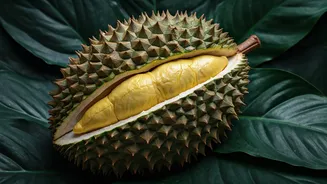
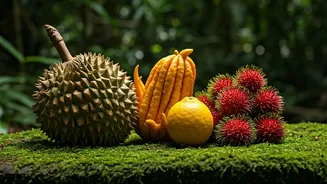
Renowned as the 'smelliest fruit in the world,' the Durian is a polarizing powerhouse that divides opinions like no other. Its spiky exterior conceals flesh described by some as heavenly custard, while others compare its potent aroma to decay. The towering durian tree itself is an impressive sight to behold. This controversial yet beloved fruit is a staple across Southeast Asia, commonly found in Thailand, Malaysia, Singapore, and Indonesia.
Sausage Tree's Giants
Africa's Sausage Tree lives up to its name by producing immense, sausage-shaped fruits that dangle from thick, rope-like stems, with some specimens exceeding two feet in length. While these striking fruits are not typically consumed fresh, they are a significant feature of the African landscape. Travelers on safari in countries like Kenya, Tanzania, and South Africa can easily spot these distinctive trees, often found near rivers and within wildlife reserves.
Buddha's Hand Oddity
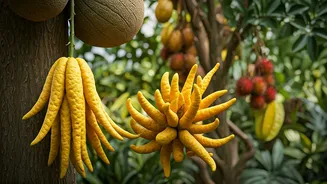
The Buddha's Hand Citrus defies conventional fruit appearances, resembling more of an octopus with its segmented, finger-like protrusions. Unlike typical citrus fruits, it yields very little juice, making it primarily valued for its aromatic zest and unique form. These distinctive fruits can be discovered in temple gardens and vibrant fruit markets throughout China and Japan, adding an unusual touch to local produce.
Baobab's Iconic Silhouette
The Baobab tree is an instantly recognizable icon, often appearing as if it has been planted upside down with its roots reaching for the sky. Its velvety fruit encloses a vitamin-rich pulp, widely utilized in various African drinks and culinary preparations. For a truly majestic encounter, travelers should visit Madagascar, where the famous Avenue of the Baobabs stands as one of the world's most photographed tree-lined landscapes.
Ackee's National Pride
Jamaica's national fruit, the Ackee, is a vibrant red fruit that splits open naturally when it's ripe, revealing a creamy yellow flesh surrounding shiny black seeds. It's crucial to consume ackee with caution, as unripe portions are toxic. Visitors to Jamaica often participate in local food tours to learn about the proper preparation and enjoyment of this distinctive national treasure.
Mangosteen's Tropical Crown
Often overshadowed by its more infamous counterpart, the Mangosteen reigns as the undisputed 'Queen of Tropical Fruits.' This exquisite fruit features a deep purple exterior, protecting sweet-and-tangy white flesh that is highly prized. The slow-growing tree thrives in humid tropical environments, and travelers can savor its delightful flavor in Thailand and Vietnam, particularly during the monsoon season.
Snake Fruit's Scaly Charm
The Snake Fruit, also known as salak, is one of the most visually striking tropical fruits, characterized by its reddish-brown, scaly skin that remarkably resembles snake leather. Growing in clusters at the base of palm trees, its interior offers a crunchy, cream-colored texture with flavor notes reminiscent of apple, pineapple, and banana. This unique fruit is a must-try for travelers exploring Indonesia, especially in regions like Bali, Java, and Yogyakarta.