




A New Upper Stage
NASA has made a significant procurement decision, selecting the United Launch Alliance's (ULA) Vulcan Centaur upper stage to serve as the replacement for
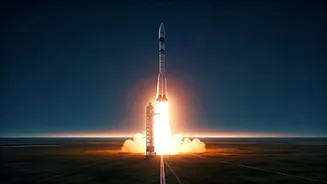
the current second stage on the Space Launch System (SLS) rocket, starting with Artemis IV and continuing for subsequent missions. This change, formalized through a filing on March 6th, is a strategic move to guarantee the SLS remains a functional and powerful launch vehicle for many years, supporting NASA's ambitious lunar exploration objectives. The decision to halt development of the more advanced Block 1B and Block 2 versions of the SLS, which were slated to use the Exploration Upper Stage (EUS), has led to this immediate need for a new, readily available upper stage. The current Interim Cryogenic Propulsion Stage (ICPS), itself based on ULA's retired Delta 4 rocket, necessitated a new solution, and the Centaur upper stage from ULA fits this requirement admirably. This ensures that NASA has a dependable means to send astronauts and cargo back to the Moon, bolstering its capabilities in the ongoing race to establish a sustained presence on the lunar surface.
Centaur vs. ICPS Specs
The newly selected Vulcan Centaur upper stage presents a compelling alternative to the existing Interim Cryogenic Propulsion Stage (ICPS) on NASA's SLS rocket. The ICPS measures 45 feet in height and possesses a gross mass of 70,693 pounds, capable of generating a maximum thrust of 24,800 pounds. It achieves a specific impulse of 465.5 seconds, providing a delta V of 4,565 km/s. In contrast, the Centaur, with its planned upgrades, will stand at 41 feet tall and weigh approximately 118,200 pounds. Its maximum thrust will be higher, at 48,240 pounds, and its specific impulse is rated at 460.9 seconds, delivering a delta V of 4,520 km/s. While there are notable differences in height, weight, and thrust, the critical factor is the deliverable delta V to the payload, which is expected to be remarkably similar between the two stages. This means that the Centaur's integration will likely maintain the SLS's core performance capabilities for reaching lunar destinations.
Reliability and Options
NASA's choice of the Vulcan Centaur upper stage is underpinned by ULA's extensive experience and the Centaur's proven track record. The Centaur stage has a long and successful history, having been deployed in various configurations since the 1960s, making it a highly reliable component. NASA also evaluated the Blue Origin New Glenn upper stage as a potential replacement. However, this option was deemed too experimental, having only completed a limited number of flights. The established production line for Centaur, which is already a key part of ULA's Vulcan rocket, offers NASA a consistent and dependable supply for future SLS missions. This established infrastructure, combined with ULA's resources and familiarity with human-rating the Centaur, made it the clear and viable choice for achieving NASA's Artemis mission objectives and programmatic goals, ensuring continuity and predictability in the lunar exploration schedule.
Future of Lunar Missions
While SpaceX's Starship is envisioned as a future replacement for the SLS, current delays and technological hurdles mean it is not yet ready for the critical missions required for NASA's long-term lunar strategy. Until Starship matures, the SLS remains a vital launch vehicle for America's return to the Moon. The integration of the Vulcan Centaur upper stage ensures the SLS can continue to support missions beyond the upcoming Artemis II and III, offering NASA more launch flexibility and increasing the probability of successful lunar landings. This strategic adaptation of the SLS infrastructure provides essential redundancy and expands the operational window for deep-space exploration, allowing NASA to maintain momentum in its ambitious lunar endeavors while awaiting the full readiness of next-generation launch systems.