




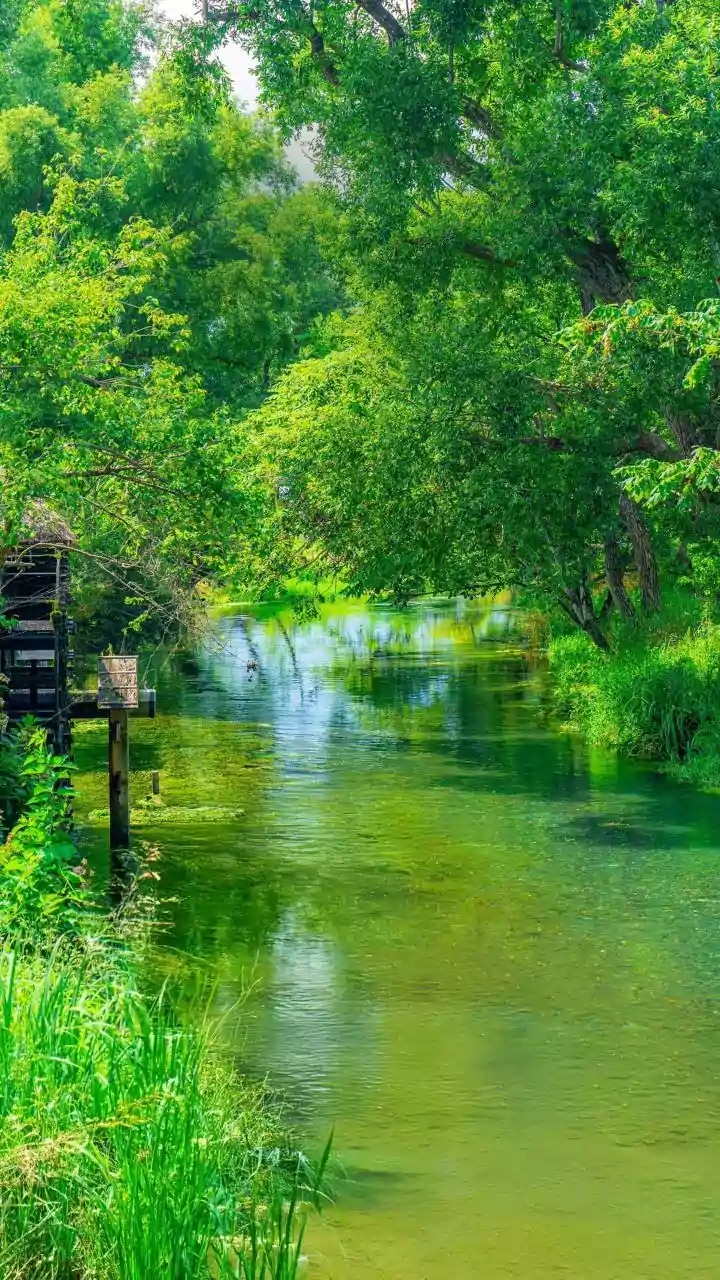



A River's Quiet Existence
Nestled away from the bustling cities and popular pilgrimage sites of India, a remarkable river flows with an almost unheard presence, yet its ecological
value is profound. This is the Kunthipuzha River, a waterway that has earned the distinct moniker of the “Silent River of India” due to its exceptionally pristine and unblemished state. Unlike many of its counterparts that navigate through populated urban landscapes or are deeply intertwined with religious practices and industrial activities, the Kunthipuzha carves its path through an area of unparalleled natural beauty and tranquility. Its very name evokes a sense of peace and seclusion, a stark contrast to the often noisy and chaotic waterways elsewhere in the country. This unique characteristic stems from its journey through an environment that has remained largely undisturbed by human intervention, allowing nature's symphony to prevail.
Location and Ecosystem
The Kunthipuzha River finds its home in the southern Indian state of Kerala, a region renowned for its lush greenery and natural splendor. Its course winds through the heart of the Silent Valley National Park, a sprawling expanse of dense tropical rainforest situated within the Nilgiri Hills, which are themselves part of the larger, ecologically significant Western Ghats mountain range. Originating from these ancient hills, the river embarks on its journey, eventually merging with the Bharathapuzha River, one of Kerala's most significant and extensive river systems. The Silent Valley National Park, through which the Kunthipuzha flows, is recognized as one of India's last remaining tracts of untouched tropical rainforest. This biodiverse haven is crucial for the survival of several rare and endangered species, including the iconic Lion-tailed Macaque, the Nilgiri Langur, and the Malabar Giant Squirrel. The river itself is an indispensable component of this vibrant ecosystem, supporting a rich variety of aquatic life, including numerous fish species, amphibians, and a wide array of birdlife, making it a vital lifeline for the region's biodiversity.
The 'Silent' Distinction
The epithet 'silent' bestowed upon the Kunthipuzha River is intrinsically linked to the unique environment it traverses: the Silent Valley National Park in Kerala. This river stands apart because it flows through a virtually undisturbed tropical rainforest, a rarity in a country where many rivers are bordered by towns and are closely associated with religious ceremonies or industrial processes. The absence of significant human settlements along its banks means minimal human interference, and consequently, pollution levels remain exceptionally low. This natural isolation is the very essence of the river's 'silence'—a sanctuary where the sounds of the natural world, from rustling leaves to the calls of exotic birds, dominate, unmarred by the clamor of human activity. This pristine condition is a testament to the area's protection, especially after it was designated a national park in 1984, safeguarding it from a proposed hydroelectric project and setting a precedent for successful conservation efforts in India.