






Ancient Rock-Cut Wonders
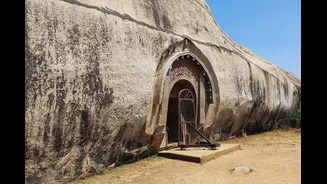
Nestled in the rugged terrain of Bihar's Jehanabad district, the Barabar Caves stand as India's most venerable rock-cut structures, dating back to the 3rd
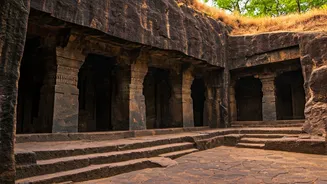
century BCE. Commissioned by Emperor Ashoka and his grandson Dasharatha during the Mauryan Empire, these caves are an unparalleled showcase of ancient Indian architectural and engineering brilliance. The four primary caves – Karan Chaupar, Lomas Rishi, Sudama, and Vishwakarma – are carved directly from hard quartzite rock. What truly sets them apart is the legendary Mauryan polish applied to their interiors, resulting in surfaces so incredibly smooth that they still exhibit a mirror-like sheen, reflecting light even after more than two millennia. This meticulous craftsmanship not only highlights the advanced techniques of the era but also serves as a vital historical record. Among the earliest Brahmi inscriptions found within these caves, some directly reference Emperor Ashoka and are dedicated to the Ajivika sect, positioning Barabar as a crucial site for understanding early Indian history, religion, and the evolution of rock-cut architecture, predating later famous sites like Ajanta and Ellora.
Transforming into Eco-Tourism
Recognizing the immense historical and cultural value of the Barabar Caves, the Bihar government, under the initiative of the Department of Environment and Forest, is actively developing the site into a premier eco-tourism destination. This strategic move aims to place Barabar on par with established heritage circuits like Bodh Gaya, Rajgir, and Nalanda. The project seeks to enhance visitor facilities while prioritizing responsible tourism practices to preserve the delicate archaeological integrity of the caves. Historically, the site has been challenging to access due to its remote location, limited infrastructure, and difficult terrain, attracting primarily dedicated history enthusiasts and scholars. The new development plans, however, are set to improve accessibility and visitor comfort significantly, making this ancient marvel more approachable for a wider audience while ensuring its preservation for future generations. The goal is to create a sustainable model where tourism benefits local communities and supports the conservation of this irreplaceable heritage.
Planning Your Visit
The Barabar Hills are strategically located in the Makhdumpur block of Jehanabad district, making them accessible from key Bihar cities. Approximately 40 km from Gaya and around 100 km from Patna, the nearest major air travel hub is Patna's Jayprakash Narayan International Airport, with Gaya International Airport serving as a closer alternative, particularly convenient for those planning to combine this visit with explorations of Bodh Gaya. The ideal period to experience the Barabar Caves is between October and March, when the weather is most pleasant and conducive to exploration. Following this period, the climate can become intensely hot and dry from April onwards, and the monsoon season from July to September can render pathways slippery and increase the difficulty of navigation. Visitors should anticipate a degree of physical activity, as reaching the caves involves some climbing. It is strongly recommended to wear sturdy walking shoes, use sun protection including hats, and carry ample water. While new facilities will enhance comfort, the experience is designed to remain a relatively low-density, immersive encounter with history, rather than a crowded tourist spot.
Responsible Exploration Guidelines
To ensure the preservation of the Barabar Caves for generations to come and to foster a positive impact on the local environment and community, visitors are encouraged to adhere to responsible travel practices. It is crucial to stay on designated paths and refrain from touching the cave walls, as direct contact can lead to irreversible damage to the ancient rock surfaces. Visitors are urged to utilize the interpretation facilities provided and, once available, engage local guides. These guides can offer invaluable historical context and insights, enriching the visitor's understanding of the site's profound significance. Furthermore, supporting the local economy is a key aspect of responsible tourism. This can be achieved by purchasing souvenirs from village-based vendors and opting for local transportation where feasible. By embracing these guidelines, travelers can contribute to the sustainable development of Barabar as an eco-tourism destination, ensuring that its historical and natural beauty are protected.