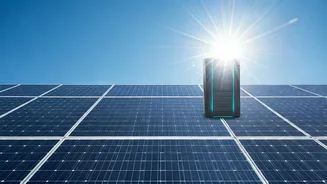

Energy Storage Funding
One of the primary requests from the solar industry centers on the crucial need for viability gap funding (VGF) to support energy storage solutions. The
implementation of VGF plays a vital role in making energy storage projects financially feasible, especially in their early stages. Without such funding, the high upfront costs associated with energy storage technologies can deter investment, thereby slowing down the transition to more sustainable and efficient energy systems. The provision of VGF is viewed as a necessary tool to reduce the financial risks for developers, encouraging greater adoption of storage solutions. This support is intended to act as a catalyst, helping to lower costs over time, and therefore fostering the deployment of storage technologies on a broader scale. Such measures will ultimately strengthen the overall resilience and stability of India's power grid by enabling more effective management of intermittent renewable energy sources.
PLI for Components
Another significant expectation from the industry involves production-linked incentives (PLI) for capital-intensive components used within the solar sector. The primary goal is to provide financial assistance to manufacturers to boost the production of critical parts domestically. These incentives are specifically targeted to support the local manufacturing of components that involve significant capital investments, and this support could boost indigenous production capabilities, reducing reliance on imports. A robust PLI scheme can foster competitiveness among local manufacturers, driving innovation and efficiency improvements. By backing the domestic manufacturing sector, it is anticipated that the industry will become more self-reliant, which contributes to the government's broader 'Make in India' initiative. Such measures are particularly relevant as India increases its renewable energy capacity. The incentives will help secure the supply chain for critical components, thereby providing stability in the long term.
Kusum 2.0 and Surya Ghar
The solar industry's wishlist for the Union Budget also emphasizes the need to accelerate the PM-KUSUM 2.0 and PM Surya Ghar schemes. The PM-KUSUM 2.0 scheme focuses on supporting farmers by providing subsidies for installing solar-powered irrigation pumps and setting up solar power plants on their lands. Industry leaders are keen to see accelerated implementation, as this can enhance the sustainability of agricultural practices. The PM Surya Ghar initiative is designed to promote rooftop solar installations in households, improving the adoption of solar energy at the consumer level. The solar industry is looking for policy support in the budget to expedite these initiatives. These accelerated measures would drive increased demand for solar products and encourage the participation of both rural and urban consumers in the renewable energy transition. The budget provisions for these schemes will directly impact India's efforts to grow its solar energy sector sustainably.