



Potato Variety Timelines
The time it takes for potatoes to mature from planting to harvest is largely dictated by the specific variety you choose. Potatoes are broadly categorized
into three groups based on their growth duration. Early varieties are typically ready for harvest in up to 110 days. Medium varieties fall into the 111 to 120-day range. Late-season potatoes require more time, often exceeding 120 days from planting to reach full maturity. Understanding these classifications is the first step in planning your harvest. For instance, a Russet Norkotah, a brown-skinned russet, matures in about 110 days, fitting into the early category. The Dakota Jewel, a red-skinned type, takes between 111 and 120 days, placing it in the medium category. For a longer-season crop, the white-skinned Kennebec potato, needing over 120 days, represents a late variety. Even a popular yellow-skinned Yukon Gold is considered an early variety, typically ready within 110 days. This diversity in maturation times allows gardeners to stagger their harvests and enjoy potatoes throughout the season.
Harvesting Cues Unveiled
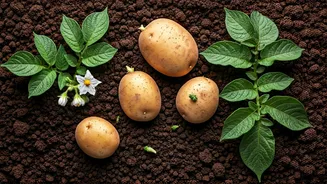
Knowing precisely when your potatoes are ready to be unearthed involves observing several key indicators. The most direct guidance comes from the seed potato packaging itself, which usually provides an estimated maturity date based on the variety planted. Keeping a garden journal to note your planting date and the projected harvest date is invaluable. As this date approaches, it's time to investigate further. A crucial physical sign is the skin's condition; it should feel firm and have developed a good thickness, indicating the tubers are well-formed and ready. If you're still uncertain, wait for the foliage above ground to naturally die back. This is a definitive signal that the potatoes have reached full maturity and are ready for digging. For those interested in harvesting tender, young potatoes early in the season, the appearance of flowers on the plant serves as a visual cue, indicating that smaller, new potatoes are available for a premature dig.
Environmental Growth Influences
While the variety dictates the general timeframe for potato growth, several external factors can significantly alter the actual time it takes for your crop to mature. Environmental conditions play a substantial role, potentially shortening or extending the growth period. Insufficient sunlight, for example, can reduce photosynthesis, slowing down tuber development. Potatoes thrive in full sun, and planting them in partial shade will noticeably delay their harvest. Damage to the plant's leaves, often caused by pests like Colorado potato beetles, also hinders photosynthesis and slows growth. Temperature fluctuations are another critical element. A sudden cold snap after planting can cool the soil significantly, causing growth to stall until the soil warms up again, pushing back your harvest date. Furthermore, maintaining the right level of humidity is essential. Both excessively dry and overly moist conditions can negatively impact growth. High humidity, in particular, can make plants susceptible to fungal diseases, weakening them and retarding their development. A balanced environment is key for optimal potato growth.
Tips for Bountiful Yields
To maximize your potato harvest, adopting specific cultivation techniques is essential. The soil itself is paramount; potatoes flourish in a friable loam that is deep and rich in nutrients. Practicing crop rotation, avoiding planting potatoes in the same spot year after year, is vital for disease prevention. Ensure your potato plants receive ample sunlight by planting them in a location that gets full sun exposure. Consistent soil moisture is also crucial; aim to water thoroughly once or twice a week, ensuring the soil remains evenly moist. A technique known as 'hilling' is highly recommended. Once the plants reach about a foot in height, use a hoe to draw soil up around the base of the stems. Hilling serves a dual purpose: it expands the underground area where tubers can form, potentially increasing yield, and it also prevents sunlight from reaching the developing tubers. Exposure to sunlight can cause tubers to turn green, rendering them inedible.