
Family Fun at Arone
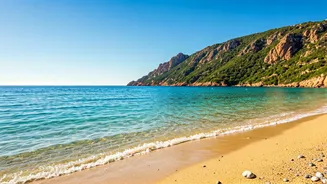
Nestled near the UNESCO World Heritage site of Calanques de Piana, Arone beach offers a gentle embrace for families. Its easily accessible car park and
shallow, warm waters create a safe environment for even the youngest swimmers, extending far from the shore. The surrounding foothills, cloaked in aromatic maquis, meet the sea at the southern end, while low-lying rocks at either side invite little adventurers to explore tide pools teeming with marine life. During summer months, swimming is supervised for added peace of mind. Three charming straw beach huts provide essential amenities like loungers, parasols, and showers, alongside casual dining options. For a more refined experience, a seafood restaurant sits on rocky outcrops at the western edge, offering spectacular sunset views over the Calanques de Piana. Plan to arrive early, especially during peak season, as the free car park fills up quickly. Arone is approximately a 15-minute drive from the village of Piana, accessible via the scenic D824 road.
Sunbathing Bliss at Santa Giulia
Santa Giulia, located about 8km south of Porto-Vecchio, is a sun-worshipper's delight. This south-facing beach is characterized by a narrow strip of land bordering a tranquil lagoon to the west and the sea to the east, offering excellent protection from the wind. Its shallow waters stretch out quite far, making it ideal for extended relaxation. Arrive early in summer, as it quickly becomes a popular spot for families. For those seeking a slightly less crowded experience, head towards the left side where larger, rounded grey pebbles emerge from the sea. These are fantastic for snorkeling, though water shoes are recommended due to the pebbly seabed. Here, you can also enjoy watching novice paddle-boarders and kayakers, as well as sailors practicing on small dinghies or catamarans. Sun loungers and parasols are available for rent from adjacent restaurants and beach huts, which also stay open into the evening. Swimming is supervised during summer, and the car park operates on a cash-only basis. A fascinating winter sight is the potential for spotting pink flamingos in the lagoon.
Water Sports Paradise: Palombaggia
Just 12km south of Porto-Vecchio, Palombaggia beach is a 1.5km stretch of fine white sand, contrasted by pink and grey granite rocks and umbrella pines that stand further back from the shore. The beach is easily accessible by car, with free parking, and in summer, a shuttle bus service operates from Porto-Vecchio. Its popularity, especially in summer, is partly due to its supervised swimming conditions and gentle slope into the calm sea, making it suitable for individuals with accessibility needs and children. The northeastern end features a unique, flat pink rock formation, akin to a natural armchair, perfect for sitting with your feet in the water while observing snorkelers. Palombaggia stands out with its public toilets, a rarity on Corsican beaches. Parasols and sun loungers can be rented from beachside restaurants and paillotes, and the area boasts a diving club, a sailing club, and a nautical club. It's located roughly 30km north of Bonifacio. Driving is the most convenient way to reach the beach, provided you arrive early for parking, though summer shuttle services from Porto-Vecchio are also available.
Hiking Adventure: Piantarella & Spérone
For those who enjoy a beach-to-beach hike, Piantarella and the neighboring Spérone beaches offer a rewarding experience. The northern end of Piantarella is a hotspot for kitesurfing and windsurfing. If Piantarella gets too crowded, a short 250-meter walk through vegetation, passing Roman ruins, leads to Petit Spérone, which, along with Grand Spérone, boasts some of Corsica's whitest sands. For an even more secluded spot, continue south, climb rock-cut steps to the corniche, and follow a shaded path through the golf course for another 500 meters to reach Grand Spérone beach, which is considerably less populated even in peak season. Notably, neither of the Spérone beaches offers amenities. The location is about a 15-minute drive from Bonifacio, and it's best to drive, with parking available along Rt de Piantarella. From these beaches, you'll have stunning south-facing views of the Lavezzi islands, with Sardinia visible on clear days.
Wildlife Encounters at Barcaggio
At the northernmost tip of Corsica, on the Cap Corse peninsula, Barcaggio beach offers a unique chance to share the sand with local cattle. While these animals appear docile, it's best to admire them from a distance to avoid disturbing them. Access to the beach is via a 1-kilometer walk from a paid parking lot, or through a more adventurous trek along the Sentier des Douaniers coastal path. This path, unsuitable for wheelchairs and young children, connects to Macinaggio (requiring a 2.5-hour walk) or Tamarone beach (nearly a 2-hour walk). The beach itself features one or two paillotes, with restaurants available in the nearby village. Be aware that Cap Corse beaches can experience seagrass meadows, known as Posidonia oceanica, after storms. While they might not look or smell pleasant, these meadows are vital to the Mediterranean ecosystem and harbor small sea creatures. Barcaggio is situated about 18km from Macinaggio and 34km from Bastia, and can be reached by boat from Macinaggio or by car via the D253.
Serene Rondinara
Rondinara beach, often lauded as one of Europe's most beautiful, is a perfectly formed, shell-shaped cove with shallow, crystal-clear turquoise waters and white sand. However, its fame means it can become quite crowded from June to September, with boat anchors sometimes clouding the water. Visiting during the shoulder seasons or very early or late in the day can help recapture some of its initial magic. The sole permanent structure is a restaurant nestled amongst trees behind the beach. During summer, a paillote is set up near the paying parking lot (€5/day, cash only). A small nautical center offers rentals for parasols and sun loungers. Wild cows are also known to frequent this beach, even in summer, but maintaining a respectful distance is advised. If the main beach is too busy, a 5-minute walk through the maquis from the southern end reveals a smaller, crescent-shaped beach with rougher sand and less calm seas, but significantly fewer people. Rondinara is equidistant (about 20-25km) from Porto-Vecchio and Bonifacio, and is most easily reached by car via the D158.
Calvi's Urban Appeal
Calvi beach offers an urban energy, particularly during the early July Calvi on the Rocks music festival, when the beach and shallow waters buzz with lively crowds enjoying electro-dance music. While the festival was paused for 2026, it's an event to watch for its potential return. Outside of this period, the beach is calmer. The central section is lined with paillotes, complementing one of Corsica's longest beaches, which features incredibly soft sand. The gentle slope into the water makes it perfect for young children to paddle safely. For older children, a treetop adventure course is available midway along the beach, offering a thrill amongst the pine trees. Sun loungers and parasols are rentable, and public amenities include showers, toilets, and a playground. Supervised swimming is available in summer. As the sun sets behind the Calvi citadel, the view inland reveals Corsica's highest peak, Monte Cinto. For a change of scenery, a small train can take you north to Île Rousse, or you can explore diving opportunities near the citadel to see a World War II bomber wreck. Calvi is about an hour's drive from Bastia and 20 minutes from Île Rousse, accessible by car or the scenic coastal railway.
Wild Beauty: Ostriconi
Located about 30km from Bastia, Ostriconi beach is an 800-meter stretch of white sand situated between the Ostriconi river and the sea. Its west-facing orientation means it can be too rough for swimming on days with strong swells, but it is an exceptional spot for witnessing sunsets that paint the northern rocks in vibrant red hues. On calmer days, the water is warm, shallow, and incredibly still, creating a natural paddling pool perfect for children. Swimming is supervised in summer, but visitors should be self-sufficient as there are no amenities on the beach. Nudist sunbathers are accommodated at the northern end amongst the rocks. Reaching the beach involves a 5-minute walk from the free car park, crossing a sandy path and a wooden bridge, which may not be ideal for wheelchairs. The Sentier des Douaniers hiking path begins here, heading east towards Saint Florent over a two-day journey via Ghignu and Saleccia beaches. Access is easiest by car, parking along the main road and walking down a sloped path to the pristine, untouched beach.
Adventure Awaits: Ghignu
Tucked away in the Agriates Desert region, Ghignu beach remains a relatively well-kept secret, offering a more secluded experience than the nearby Saleccia beach, while sharing its crystal-clear turquoise waters and white sands. Reaching this wild gem is an adventure in itself, either by boat or via a challenging 12-kilometer drive down an extremely bumpy unpaved track, best suited for 4WD vehicles or guided tours. It's essential to bring ample water and a picnic, and the eastern end of the 400-meter sand stretch provides a great vantage point from atop a dune. For those seeking an overnight experience, restored shepherds' huts ('paillers') accommodating 4-6 people are available, offering a rustic stay with communal toilets but no running water or electricity. While free to use on a first-come, first-served basis in winter, summer stays require booking. Ghignu is located about 13km from the village of Casta and is accessible from the D81 via an unpaved track, ideally navigated with a 4WD or a tour operator.
Surf's Up: Grand Capo & Petit Capo
For surf enthusiasts, Grand Capo and Petit Capo (also known as Sevani) beaches west of Ajaccio offer excellent conditions. Grand Capo is expansive enough to rarely feel crowded, while the smaller Petit Capo to the south attracts fewer visitors. The drive to Grand Capo involves a paved road that can be rough, with a fork near the coast; both the dirt track and the paved road lead to the beach, with more free parking available at the end of the dirt track. Petit Capo is accessible by walking south from Grand Capo across a field or by splashing through rocks. Swimming can be hazardous when the surf is high, so heed the lifeguard's flag system (yellow or red indicates danger). Supervised swimming is available in July and August. Beachfront 'paillotes' offer parasol and sun lounger rentals. The Grand Capo restaurant provides a perfect spot to enjoy a cocktail, watch the sunset, and listen to live music on some summer evenings, though cash is required as cards are not accepted. It's important to note that the far left of Grand Capo is a nudist section; to avoid this when heading to Petit Capo, drive back up the D111B and take the turnoff for Plage de Sevani, driving through the housing development to reach the beach car park. These beaches are located 15km west of Ajaccio, best reached by driving the scenic Rt de la Terre Sacrée.