



Booster's Second Flight
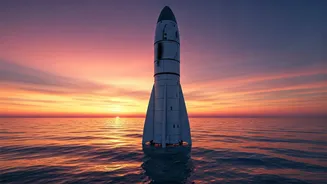
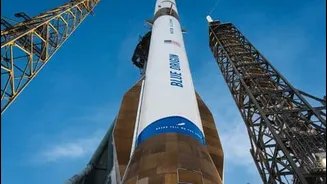
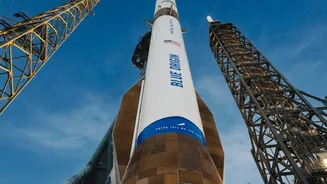
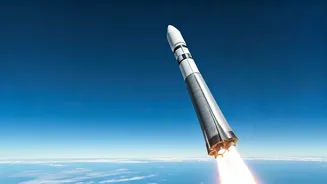
In a remarkable feat of engineering, a rocket booster, aptly nicknamed 'Never Tell Me The Odds,' has achieved its second successful mission. This marks
a pivotal moment for reusable launch vehicle technology. Previously deployed on the NG-2 mission in November, the booster was recovered and subsequently prepared for its next flight. The third New Glenn mission, NG-3, saw the rocket lift off at 7:25 AM ET, carrying a crucial payload. Approximately ten minutes later, the booster made a triumphant return to the 'Jacklyn' droneship positioned in the Atlantic Ocean. This successful reuse not only demonstrates the viability of recurring rocket flights but also positions the company to more effectively contend with competitors in the rapidly evolving field of reusable spaceflight, signaling a significant advancement in operational efficiency and cost reduction for space missions.
Satellite's Giant Leap
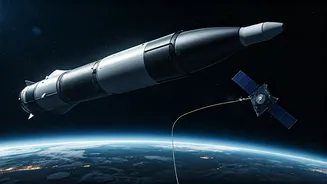
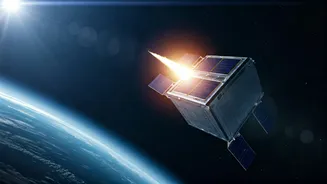
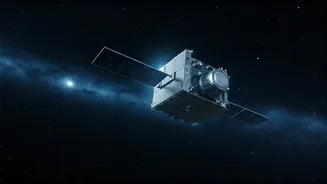
The payload on this historic NG-3 mission is the AST SpaceMobile BlueBird 7 satellite, a technological marvel designed to function as a colossal cell tower in space. Its impressive antenna spans a massive 2,400 square feet (223 square meters), representing a substantial stride towards achieving global satellite coverage for contemporary smartphones. This satellite aims to enable direct connectivity for everyday phones without requiring any specialized hardware or software modifications. The ambition is for these satellites to emulate the functionality of terrestrial cell towers, offering robust 4G and 5G speeds from orbit. While the complete satellite network for non-emergency communication is expected to take years to fully deploy, and will involve ironing out pricing and carrier partnerships, the BlueBird 7 satellite serves as a tangible indicator of the direction in which space-based communication is heading.
Future of Connectivity
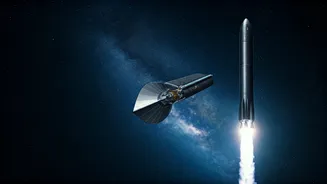
The advancement of reusable rockets and sophisticated satellite networks places companies like Blue Origin and Amazon in direct competition with SpaceX and its Starlink constellation. As SpaceX progresses with its plans to launch thousands of Starlink V2 satellites, the race to establish comprehensive global internet coverage intensifies. The vision is a future where modern smartphones can seamlessly connect to these orbital assets, bypassing the need for any user-level upgrades. These advanced satellites are engineered to possess the intelligence and power to replicate the service of a local cell tower, delivering high-speed 4G and 5G capabilities from the vastness of space. Although a fully operational, beyond-emergency-only satellite communication network will require considerable time and strategic development, including the finalization of commercial agreements and pricing models, the successful deployment of BlueBird 7 underscores the inevitable trajectory towards this interconnected future. The reception of this launch on social media has been overwhelmingly positive, with many describing the event as a 'wonderful show' and 'amazing,' further fueling excitement for what's next in space exploration and communication.