




Warm-up: Get Ready
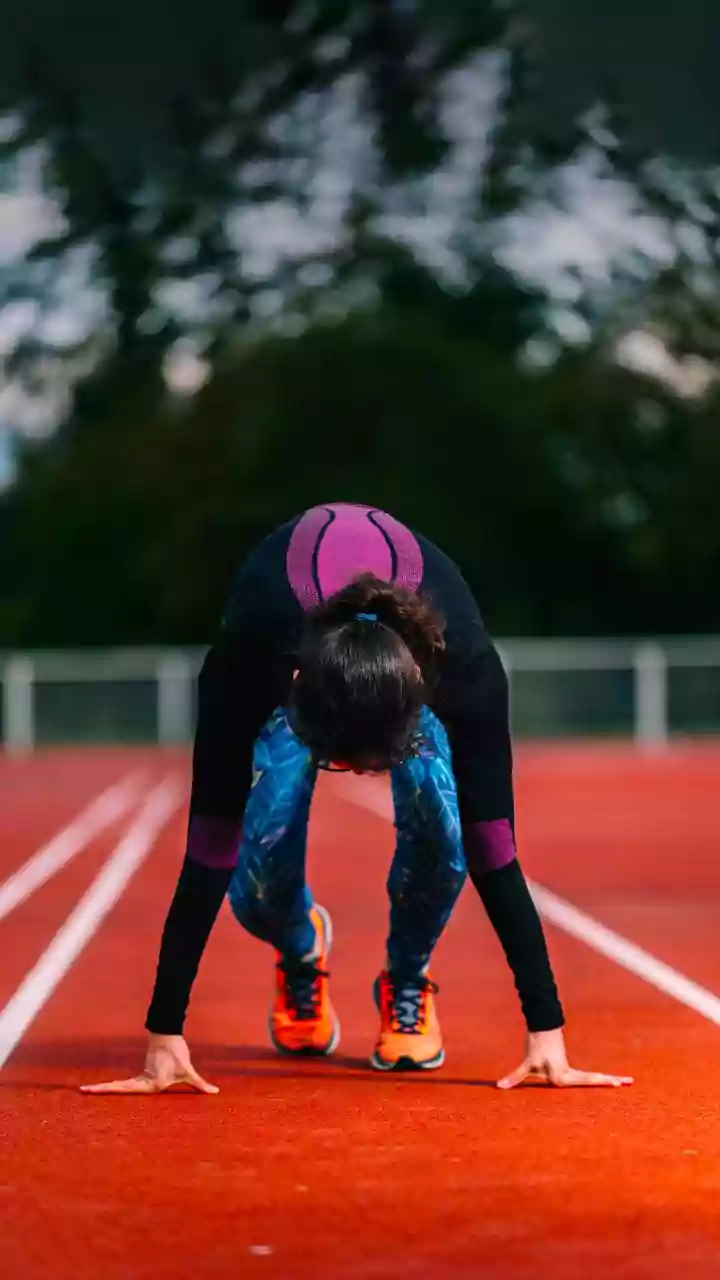
Before diving into any workout routine, preparing your body is paramount, and a warm-up is the initial phase of any effective exercise plan. This pre-exercise
ritual helps in preparing the muscles, joints, and cardiovascular system for the upcoming physical exertion. As blood flow intensifies, muscles become more pliable, and the range of motion is amplified, subsequently diminishing the risk of injuries. Common warm-up exercises encompass activities such as light cardio and dynamic stretches, which involve movement, helping to elevate the heart rate and enhance flexibility. This preparatory stage ensures that your body is adequately primed and can perform optimally during the subsequent workout. Starting with a warm-up is a proactive step towards a safer and more effective fitness regimen.
Wall Push-Ups: Build Strength
Wall push-ups serve as a modification of the traditional push-up, making them ideal for beginners looking to build upper body strength. They are exceptionally accessible, as they can be performed against any sturdy wall in your home. The exercise primarily targets the chest, shoulders, and triceps, while also engaging the core muscles for stability. To execute a wall push-up, stand an arm's length away from the wall, with your feet shoulder-width apart. Lean forward and place your hands on the wall at shoulder-width, similar to the position of a regular push-up. Then, lower your body towards the wall by bending your elbows, maintaining a straight line from your head to your heels. Once your chest lightly touches the wall, push back to the starting position. It's imperative to control the movement, avoiding any jerky motions, and to maintain the straight body alignment throughout the exercise. Performing multiple repetitions of wall push-ups can progressively increase strength and prepare you for more challenging exercises.
Chair Dips: Arm Strengthener
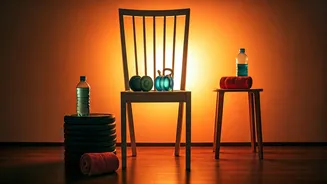
Chair dips are an effective exercise that zeroes in on the triceps, the muscles at the back of your upper arms. These are particularly useful if you want to enhance the strength and tone of your arms. To perform a chair dip, you will require a sturdy chair. Position yourself in front of the chair and place your hands on the edge, fingers pointing forward. Extend your legs out in front of you, with your heels on the floor. Lower your body by bending your elbows until they reach a 90-degree angle. Then, push yourself back up, extending your arms until you return to the starting position. It's crucial to ensure that your back stays close to the chair throughout the exercise, preventing any unnecessary strain. The chair dip is a versatile exercise and can be adjusted to suit different fitness levels. Beginners can start with fewer repetitions and sets, gradually increasing as their strength improves. Chair dips are a great exercise to build upper body strength.
Crunches: Core Workout
Crunches are a fundamental exercise primarily targeting the abdominal muscles, known for their effectiveness in building core strength and enhancing stability. To perform a crunch, lie on your back with your knees bent and feet flat on the floor. Place your hands behind your head, gently supporting your neck, or cross them over your chest. Engage your abdominal muscles to lift your head and shoulders off the floor, curling upwards towards your knees. It is important to avoid pulling on your neck during this movement; the focus should be on the abdominal contraction. Slowly lower your head and shoulders back to the starting position, maintaining control. Crunches are very versatile and can be adapted to various fitness levels. Beginners can start with a few repetitions and sets and gradually increase the number as their core strength improves. Regular crunches can also help in improving posture, which helps in preventing back pain. Remember, consistency is key, and combining crunches with other core exercises can lead to comprehensive abdominal strength.
Squats: Leg Day
Squats are a highly effective exercise for strengthening the legs and glutes, and they are easily performed at home without any equipment. To do a squat, stand with your feet shoulder-width apart, keeping your toes pointing slightly outwards. Extend your arms out in front of you for balance. Lower your body as if you're sitting in a chair, keeping your back straight and your core engaged. Ensure that your knees don't go past your toes. Go as low as you comfortably can, ideally until your thighs are parallel to the floor, before pushing back up to the starting position. Throughout the exercise, maintain a controlled motion, avoiding any jerks. This can be adapted to suit your fitness level. Beginners can start by doing shallow squats. Regular squats can help build lower-body strength and improve balance. Make sure to maintain proper form to avoid injury. Squats are an efficient exercise to build lower body strength.
Lunges: Balance Builder
Lunges are an excellent exercise that focuses on the legs and glutes while enhancing balance and coordination. To perform a lunge, stand with your feet together, then take a step forward with one leg, lowering your body until both knees are bent at a 90-degree angle. Your front knee should be directly above your ankle, and your back knee should hover just above the floor. Ensure that your core is engaged and your back remains straight throughout the exercise. Push back up to the starting position using the front leg and repeat on the other side. You can modify lunges to fit your fitness level. Beginners can start with fewer repetitions or use a chair for balance. Lunges are very helpful for improving balance. Make sure your form is correct to prevent injuries. Remember, consistently performing lunges will help improve overall strength.
Cool-down: Relaxing End
Cooling down is an essential part of any workout regime, acting as a crucial phase to slowly lower your heart rate and ease your muscles back to their resting state. After finishing your workouts, it is beneficial to engage in light cardio, such as walking or slow jogging, for about 5 to 10 minutes. This helps the cardiovascular system adjust gradually. Following this, incorporate static stretches, where you hold each stretch for 20-30 seconds. Focus on the muscles you worked during your routine, such as your legs, arms, and core. Cooling down aids in reducing muscle soreness, decreasing the risk of injury, and improving flexibility. This also helps in the recovery process, and allows the body to prepare for the next workout. By incorporating a cool-down routine, you optimize your workout for long-term fitness gains and well-being. This will make your muscles stronger.