




Southern Silken Grandeur
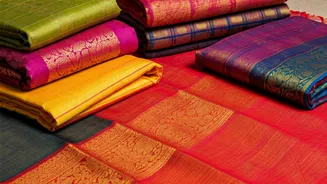
The southern states of India are renowned for their sophisticated weaving traditions, with Tamil Nadu's Kanjeevaram sarees standing as a paragon of luxury.
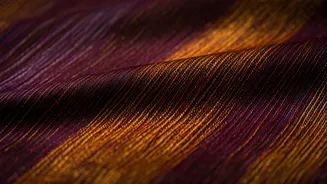
These creations are distinguished by their use of pure mulberry silk, meticulously woven with broad zari borders, often featuring intricate temple motifs that echo architectural marvels. Moving west, Kerala's Kasavu sarees offer a minimalist yet striking aesthetic, primarily featuring crisp white cotton adorned with delicate gold borders, embodying understated elegance. Karnataka's Ilkal sarees are celebrated for their distinctive pallus, known as 'tope teni,' characterized by a vibrant red hue and a unique patterned weave. Andhra Pradesh presents the ethereal Uppada Jamdani, a remarkably lightweight fabric woven with zari, offering a lustrous sheen and exceptional breathability. Telangana concludes this southern quartet with the Pochampally Ikat, a masterpiece of geometric precision achieved through resist-dyeing techniques applied to the yarn before weaving, resulting in incredibly smooth silk-cotton blends and sharp, interlocking patterns that are both visually stunning and a testament to the weaver's skill.
Northern Royal Threads
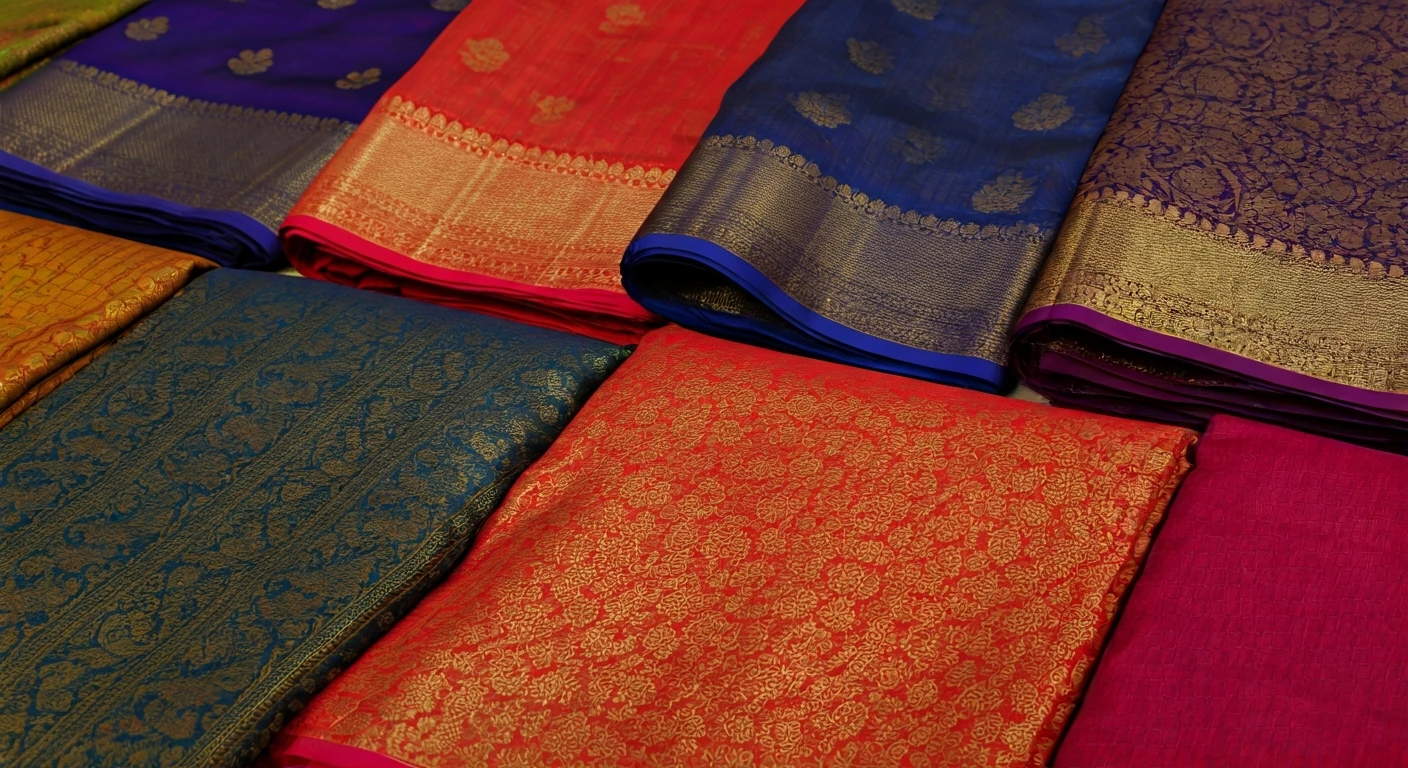
In North India, textile traditions blend regal influences with practical, handcrafted aesthetics. Uttar Pradesh's Banarasi sarees are synonymous with opulence, featuring elaborate brocades woven with gold and silver threads into intricate floral and paisley motifs that exude a sense of grandeur. Punjab contributes the visually exuberant Phulkari, a joyous explosion of colour and intricate floral embroidery stitched onto a contrasting fabric, creating a vibrant, tapestry-like effect. Haryana offers the Resham Dhuria, a comforting yet festive saree that combines soft cotton with delicate silk embroidery, often in diagonal patterns. Venturing into the Himalayan region, Himachal Pradesh's Kullu Patti sarees showcase bold, geometric patterns inspired by traditional shawl borders, typically woven onto wool or cotton, offering warmth and distinctive visual appeal. Uttarakhand's Panchachuli weaves provide a subtler elegance, characterized by fine, understated designs crafted by women in the Himalayan foothills, reflecting a connection to their natural surroundings and traditional artistry.
Western Dyeing Artistry
Western India excels in the art of dyeing and intricate weaving, showcasing a diverse range of techniques. Rajasthan's Bandhani sarees are a quintessential representation of tie-dye artistry, characterized by vibrant, deeply saturated colours and fluid, often symbolic patterns created by meticulously tying and dyeing small sections of the fabric. Gujarat, in contrast, is home to the Patola, an extraordinary example of double-ikat weaving where both the warp and weft yarns are resist-dyed before weaving, resulting in mathematically precise, mirror-image patterns that demand months of painstaking labor and extraordinary skill. Maharashtra's Paithani sarees are celebrated for their luxurious silk fabric and particularly for their distinctive pallus, which often feature exquisite motifs of peacocks, lotuses, and other natural elements rendered in vibrant colours. Goa offers the Kunbi saree, a functional and culturally significant drape made from breathable red-checked cotton, representing the heritage of the coastal tribal communities. Central India's Madhya Pradesh is famous for its Chanderi sarees, renowned for their feather-light weight and semi-translucent texture, making them an ideal choice for warmer climates. Neighboring Chhattisgarh presents Kosa Silk sarees, which feature a beautiful, slightly coarse matte finish derived from the Kosa silkworm, often embellished with intricate tribal art and motifs that reflect the region's rich cultural identity.
Eastern Narrative Textiles
The eastern states of India are custodians of textile traditions steeped in storytelling and natural textures. West Bengal's Baluchari sarees are remarkable for their elaborately woven pallus, which often depict entire narrative scenes from ancient Indian epics like the Ramayana and Mahabharata, transforming the saree into a wearable work of art. Bihar offers the Bhagalpuri Tussar, known for its eco-friendly production and unique rustic finish, a versatile fabric that transitions seamlessly between casual and formal settings. Jharkhand's Tribal Tussar sarees and Odisha's Sambalpuri Ikat feature designs deeply inspired by natural motifs and traditional tribal art, with the Sambalpuri Ikat distinguished by its hazy, tie-dyed patterns that give it a distinctive soft appearance. The Northeast region is a treasure trove of sustainable and intricate artistry. Assam's Muga Silk is legendary, prized for its natural golden sheen that intensifies with every wash, offering unparalleled durability and lustre. Meghalaya's Eri Silk, often referred to as 'peace silk' as the silkworm is not harmed in its production, provides a beautiful matte finish and excellent thermal-regulating properties. Arunachal Pradesh's Apatani weaves and Sikkim's Lepcha sarees incorporate earthy tones and minimalist tribal stripes, adding a modern yet authentic aesthetic to the wardrobe. Nagaland showcases striking geometric clan patterns in its Naga Motif drapes, while Mizoram's Puan-inspired sarees feature tight weaves and bold stripes, reflecting traditional Mizo designs. Tripura's Risa-inspired fabrics add distinct tribal elements, and finally, Manipur's Moirang Phee sarees stand out with their sheer cotton fabric and delicate, temple-like edge motifs, exemplifying refined craftsmanship.