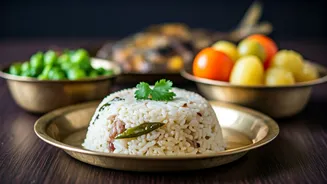








Khichuri: A Staple
Khichuri, a harmonious blend of rice, lentils, and spices, holds a prominent place in Bengali Saraswati Pujo. The preparation of khichuri typically begins
with the careful selection of ingredients. The rice and lentils, often moong dal, are thoroughly washed before being combined with vegetables like potatoes and cauliflower. Aromatic spices, including turmeric, ginger, and cumin, are added to create a flavorful base. The mixture simmers until the rice and lentils soften, reaching a porridge-like consistency. Khichuri isn't just a meal; it's an emblem of the festival, often prepared communally and shared among family and friends. Its comforting warmth and nourishing qualities represent the spirit of togetherness and auspicious beginnings that characterize Saraswati Pujo. The recipe varies slightly from household to household, with some families adding extra ghee or a dash of garam masala for an enhanced taste. The ease of preparation makes it a favorite, and its simple yet satisfying nature embodies the essence of the celebration.
Gota Sheddho: Boiled Vegetables
Gota sheddho, a medley of boiled vegetables, is another integral part of the Saraswati Pujo feast. This dish typically includes a variety of seasonal vegetables such as sweet potatoes, radishes, green beans, and carrots. These vegetables are boiled together until tender, and then seasoned with salt and sometimes a light tempering of mustard oil and green chilies. The simplicity of gota sheddho highlights the emphasis on fresh ingredients and natural flavors, reflecting the seasonal bounty of the region. The preparation of gota sheddho is a communal effort in many Bengali households, with family members contributing to the washing, chopping, and boiling of the vegetables. It symbolizes the harvest season and is often served as an accompaniment to khichuri, providing a refreshing contrast to the richness of the rice and lentil dish. The vegetables are typically boiled with minimal spices to preserve their individual flavors, making it a healthy and light element of the festive meal. Its presence indicates the holistic approach to the celebration, acknowledging both the culinary traditions and the community spirit.
Hilsa: The Celebratory Fish
Hilsa, a prized fish, is often a star attraction during Bengali Saraswati Pujo. Its inclusion in the festive meal is a reflection of the Bengalis' deep affection for this flavorful fish. Hilsa can be prepared in various ways, but popular choices include steaming, frying, or cooking it in a mustard-based gravy. Its rich, oily flesh and unique taste make it a delicacy. Sourcing a good quality hilsa is considered a mark of culinary excellence, with the fish being a symbol of prosperity. The preparation of hilsa requires skill, as the fish is delicate and can easily fall apart if not handled carefully. Dishes often include mustard oil and a medley of aromatic spices to enhance the fish's taste. Eating hilsa during Saraswati Pujo is a time-honored tradition that emphasizes the importance of sharing special foods during celebratory times. Whether enjoyed as a standalone dish or paired with rice and other accompaniments, hilsa remains a pivotal part of the culinary experience. Its presence adds to the festive ambiance, contributing to the overall sense of enjoyment and cultural expression.
Rituals and Customs
Beyond the specific dishes, the culinary rituals of Bengali Saraswati Pujo embrace wider cultural significance. The preparation and serving of food are often accompanied by specific customs and traditions. Before the cooking begins, the kitchen is cleaned and often decorated. Families come together to help with the preparation, transforming the task into a group activity. Offerings of food are made to the goddess Saraswati, representing gratitude and reverence. The meal is then shared by family and friends. The act of eating together reinforces community bonds and strengthens the shared identity. Many families also observe fasting or partial fasting, focusing on specific foods to honor the goddess. The atmosphere is festive and joyful, with conversations, laughter, and the sharing of stories. The food is seen as not only a source of nourishment but also a symbol of cultural identity, heritage, and devotion. This intricate interplay between food, rituals, and customs contributes to the enduring appeal and significance of Bengali Saraswati Pujo.