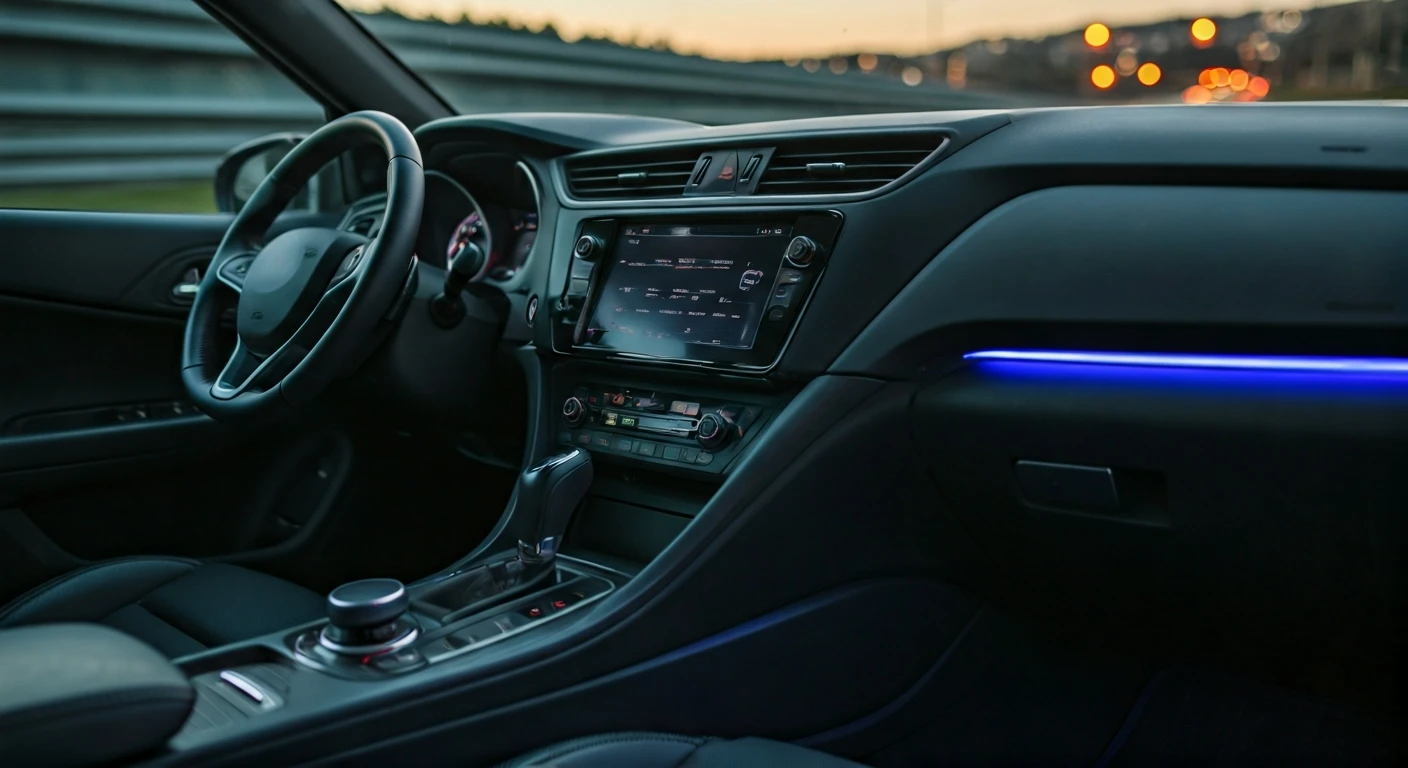








Effortless City Driving
One of the most celebrated aspects of an automatic transmission is its sheer simplicity, especially in congested urban environments. The absence of a clutch
pedal and the need to manually shift gears transforms the often-stressful experience of stop-and-go traffic into a far more relaxed affair. You can simply ease off the accelerator to slow down and gently press it to move forward, without the constant coordination required in a manual car. This makes long commutes and navigating busy streets significantly less demanding on the driver. It caters to a wide range of drivers, from beginners who might find manual shifting daunting to seasoned drivers who simply appreciate the added comfort during daily commutes. The ease of operation also contributes to a less fatiguing driving experience, allowing you to focus more on the road and surroundings rather than the mechanics of gear changes.
Smoother Ride Quality
Automatic transmissions are engineered to deliver a notably smoother driving experience compared to their manual counterparts. The gear shifts happen with a fluid, almost imperceptible transition, minimizing any jarring sensations that can sometimes accompany manual gear changes, particularly if not executed perfectly. This smoothness enhances the overall comfort for all occupants in the vehicle, making journeys more pleasant, whether it's a short trip to the grocery store or a long road trip. The consistent and controlled power delivery ensures that the acceleration feels more linear and refined. For families with young children or passengers who are sensitive to abrupt movements, this refined ride quality is a significant advantage, contributing to a more serene cabin environment throughout the drive.
Potential Fuel Efficiency Gains
While historically manual transmissions were often lauded for superior fuel economy, modern automatic transmissions have significantly closed this gap, and in many contemporary vehicles, they can even offer better mileage. Advanced automatic systems, especially continuously variable transmissions (CVTs) and dual-clutch transmissions (DCTs), are meticulously programmed to keep the engine operating within its most efficient RPM range for a given speed and load. This intelligent management of gear ratios means the engine isn't unnecessarily revving or lugging, optimizing fuel consumption. This benefit is particularly noticeable during highway cruising, where the automatic can hold a specific gear for extended periods, maximizing efficiency. For budget-conscious buyers and environmentally aware consumers, this potential for improved fuel economy is a compelling reason to consider an automatic.
Enhanced Ease for New Drivers
The inherent simplicity of operating an automatic car makes it an incredibly accessible option for individuals who are new to driving. The elimination of the clutch pedal removes a significant hurdle that often causes anxiety and difficulty for learner drivers practicing manual gear changes. This allows new drivers to concentrate on essential skills like steering, braking, signaling, and observing traffic, rather than being preoccupied with mastering clutch control and gear selection. The result is often a quicker and more confident progression towards independent driving. The intuitive nature of an automatic transmission fosters a sense of security and control from the outset, empowering new motorists to navigate roads with greater ease and less stress, building a solid foundation for their driving journey.
Higher Purchase Price
A primary consideration when opting for an automatic transmission is the often-higher initial purchase price compared to an equivalent manual model. The complex engineering and additional components required for an automatic gearbox, such as torque converters, planetary gearsets, or sophisticated valve bodies and electronic control units, contribute to increased manufacturing costs. This premium can translate into a noticeably higher sticker price on the showroom floor. For buyers on a tight budget, this upfront financial difference can be a significant factor in their decision-making process. It's important for prospective buyers to factor this into their overall budget, as the initial investment for an automatic vehicle is typically greater than for its manual counterpart.
Increased Maintenance Costs
Beyond the initial purchase, automatic transmissions can also incur higher maintenance and repair expenses over the vehicle's lifespan. The intricate nature of automatic gearboxes means that specialized knowledge and tools are often required for servicing and repairs, which can lead to higher labor costs at repair shops. Furthermore, automatic transmission fluid needs regular replacement and can be more expensive than manual transmission fluid. In the event of a major mechanical failure, the repair or replacement of an automatic transmission is generally a more substantial financial undertaking than that of a manual gearbox due to the complexity of the internal components and the integrated electronic systems involved.
Reduced Driver Engagement
For automotive enthusiasts and those who relish the direct connection with their vehicle, an automatic transmission might present a perceived drawback in terms of driver engagement. The automated gear selection means the driver has less direct control over when and how the car shifts gears, which can diminish the visceral feeling of being in command of the vehicle's power delivery. While modern automatics are highly efficient, some drivers miss the tactile feedback and the strategic decision-making involved in manually selecting gears to optimize performance, especially during spirited driving or on challenging terrain. This aspect is subjective, but for individuals who view driving as a more engaging, hands-on experience, the reduced control offered by an automatic can be a point of dissatisfaction.