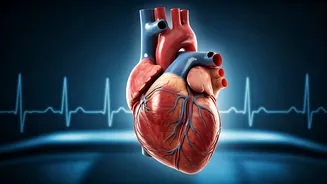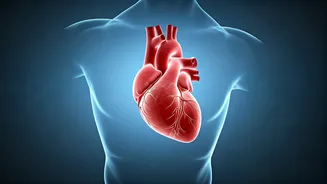







The X-ray Appearance Explained
Encountering an "enlarged heart" in an X-ray report can trigger significant anxiety, leading many to question their health status. However, medical professionals
often deem such findings to be perfectly normal, a discrepancy that can cause confusion. As illustrated by a user's query on Quora, where a doctor reassured them about an X-ray showing an abnormally large heart, this situation prompts a deeper understanding of imaging interpretations. Cardiovascular surgeon Dr. Bipeenchandra Bhamre clarifies that an X-ray is merely a single piece of diagnostic information. He elaborates that an apparent enlargement on an X-ray can be illusory, stemming from factors such as an individual's physical build, the heart's specific position during the scan, or even technical elements related to how the X-ray image is captured, like the angle of exposure. Therefore, the visual representation on the scan doesn't always translate to an actual underlying health issue.
Harmless Reasons for Size
Several everyday factors can lead to a heart appearing larger on an X-ray without indicating any disease. Dr. Bhamre points out that a person's natural body build or the presence of obesity can cause the heart's shadow on the X-ray to seem bigger than it is. Furthermore, technical aspects of the X-ray procedure play a crucial role. For instance, a portable X-ray taken from an anterior-posterior (AP) view can magnify structures, making the heart appear larger. Similarly, if a patient doesn't take a deep enough breath during the scan, the lungs won't expand fully, pushing the heart forward and making it seem enlarged. In some instances, a larger heart is actually a sign of robust health, particularly in athletes. Regular, intense physical training leads to what's known as 'athlete's heart,' where the heart muscle becomes stronger and slightly larger to efficiently pump blood, which is a normal and healthy adaptation. For individuals with a naturally larger frame, the heart may also appear proportionally bigger on imaging. If subsequent tests like an ECG or echocardiogram are normal and no symptoms are present, doctors typically consider this a healthy variation.
Temporary Enlargement Factors
Beyond inherent body characteristics and imaging techniques, certain temporary physiological conditions can also cause the heart to appear enlarged on an X-ray. Dr. Bhamre highlights that transient states such as sudden spikes in blood pressure, acute infections, or an overload of fluid in the body can temporarily increase the heart's size. In these situations, once the underlying cause is addressed and resolved, the heart often reverts to its normal dimensions. This transient enlargement is a response to the body's temporary stress or imbalance rather than a chronic structural problem. Understanding these temporary influences is vital for accurate interpretation of X-ray findings, ensuring that necessary medical interventions are pursued only when a genuine, persistent issue is identified.
When to Seek Concern
While many instances of an enlarged heart on an X-ray are benign, it is crucial to be aware of the symptoms that warrant medical attention. Dr. Bhamre advises vigilance for signs such as experiencing shortness of breath, chest pain, noticeable palpitations, or unusual and persistent fatigue. Other indicators that should not be ignored include swelling in the legs, dizziness, or episodes of fainting. These symptoms suggest that the heart may be struggling to function effectively. Doctors differentiate between a heart that appears enlarged but is functioning efficiently and one where enlargement is a consequence of disease or weakness. A 'healthy' enlarged heart is characterized by a strong muscle that pumps blood effectively, representing an adaptation to increased demand. Conversely, conditions like cardiomyopathy involve enlargement due to damage or weakening of the heart muscle, leading to impaired pumping efficiency and the manifestation of symptoms.
Maintaining Heart Wellness
Receiving reassurance from a doctor that an enlarged heart finding is not cause for concern is certainly comforting. However, this should not lead to complacency regarding one's cardiovascular health. Dr. Bhamre emphasizes the importance of continuing to adopt and maintain heart-healthy lifestyle practices. This includes engaging in regular physical activity, adhering to a balanced and nutritious diet, abstaining from smoking, and effectively managing stress and body weight. Furthermore, attending regular medical check-ups, particularly for consistent blood pressure monitoring, is essential for proactively managing one's heart health. The focus should always remain on the heart's functional capacity and overall well-being, rather than solely on its visual appearance on a single diagnostic image.