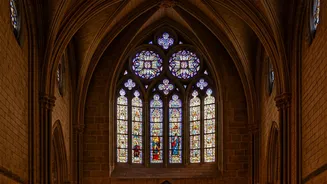







Chartres Cathedral's Windows
Chartres Cathedral in France is renowned for its remarkable stained-glass windows, a testament to the artistic and engineering achievements of the medieval
period. These windows, primarily dating back to the 12th and 13th centuries, are a vibrant tapestry of colors and images. The windows serve as a primary means of storytelling, portraying biblical narratives and historical figures. The 'Rose Window' is a particularly impressive example, dominating the north, south, and west facades, with its intricate details and radiant display of colors. These windows are more than mere decorations, serving as a didactic tool to communicate religious teachings to a largely illiterate populace. The luminosity of the windows, especially on a sunny day, fills the cathedral with a heavenly light, creating a breathtaking and spiritual experience for visitors. Their longevity and preservation showcase the high standards of medieval craftsmanship and the profound importance placed on artistic expression during that era. The stained-glass windows of Chartres Cathedral still stand as one of the most remarkable collections of medieval art.
St. Peter's Basilica Windows
St. Peter's Basilica in Vatican City features several magnificent windows that enhance its grandeur and spiritual atmosphere. The basilica’s windows, made of clear glass with intricate tracery and decorative elements, play a vital role in illuminating the vast interior. These windows allow natural light to stream into the basilica, accentuating its impressive architecture and illuminating the artworks within. The most famous is the 'Holy Spirit Window,' located in the apse, which depicts the Holy Spirit in the form of a dove. Designed by Gian Lorenzo Bernini, the window is encircled by radiant sunlight. Another significant window is the 'Window of the Confession,' which provides light to the high altar and the tomb of St. Peter. These windows are carefully positioned to enhance the overall aesthetic of the basilica, creating a serene and uplifting environment for visitors. They also offer a historical context, providing insights into the artistic and architectural styles that evolved over centuries. The use of natural light and artistic detailing gives a spiritual dimension to St. Peter's Basilica, making it a masterpiece of religious architecture.
Sagrada Família's Windows
The Sagrada Família in Barcelona, designed by Antoni Gaudí, is recognized for its extraordinary stained-glass windows that are integral to its design. The windows are an amalgamation of colors, light, and architectural innovation, creating a unique visual experience. Gaudí's innovative use of light and color is evident throughout the structure, with windows intentionally designed to create specific atmospheres. The windows on the east side, which face the rising sun, are designed with warm colors like red and yellow, creating a vibrant effect. The windows on the west side are designed with cooler colors like blue and green. The windows not only illuminate the interior but also symbolize various biblical themes, with each color and image carefully chosen to represent different elements. The interplay of light and color through the windows changes throughout the day, providing an ever-changing spectacle. The Sagrada Família's stained-glass windows are, therefore, an exemplary representation of Gaudí’s innovative approach to architecture and design, making it an architectural marvel.
Hagia Sophia's Windows
Hagia Sophia in Istanbul features windows that contribute to its magnificent aesthetic and historical value. Originally built as a Byzantine church, the Hagia Sophia’s large windows were a significant element in its design. These windows allow a generous amount of light into the vast interior, enhancing the architectural features and mosaics. The placement of the windows, particularly at the base of the dome, creates the illusion that the dome is suspended in the air. This, together with the reflective surfaces and the filtered light, helps create an ambiance of serenity and spiritual transcendence. The windows, having survived through centuries of different uses, from being a church to a mosque, have been an important aspect of its architectural brilliance. The historical context of the windows also adds to the significance of the Hagia Sophia as a cultural landmark, which illustrates the evolution of architectural and artistic styles. The windows of the Hagia Sophia are therefore a testament to the ingenuity of the builders and a symbol of its cultural heritage.
Palace of Versailles' Windows
The Palace of Versailles, located near Paris, showcases windows that exemplify the opulence of French Baroque architecture. The palace's windows, particularly in the Hall of Mirrors, are a testament to the era's focus on grandeur and luxury. The Hall of Mirrors, with its large windows and mirrored walls, provides a spectacular display of light and reflection. The windows give breathtaking views of the extensive gardens and allow the outside light to flood the interiors. The design integrates the inside and outside, enhancing the aesthetic appeal of the palace. Moreover, the extensive use of windows contributes to the overall effect of luxury and magnificence that defined the Palace of Versailles. The windows were significant for displaying the wealth and power of the French monarchy, serving as a symbol of royal authority. These windows add to the historical and architectural importance of Versailles, attracting visitors from around the globe.